Promo material — short for promotional material — is any branded item or asset you use to promote a product, a brand or a campaign. That is the plain answer, and the phrase then does two different jobs.
Ask a marketing team and they will say promotional material is the branded stuff you hand out. Ask a factory and they will say it is the substance an item is made from. Both answers are right. If you are the one signing the purchase order, you need both.
This guide is written for buyers, importers and brand managers ordering custom beer promotional items. It covers the word, the materials hiding inside it, and the one line worth adding to every order you place.
What Does Promo Material Mean?
Promotional material means any branded asset that carries your message to a customer. Print, digital files, physical goods, displays, packaging. That is the short answer, and it is where most pages stop.
The word actually carries two meanings at once:
- Meaning A: the collection. Everything branded you produce for a campaign. Print, digital files, physical items, displays, packaging. This is how marketing teams use the term.
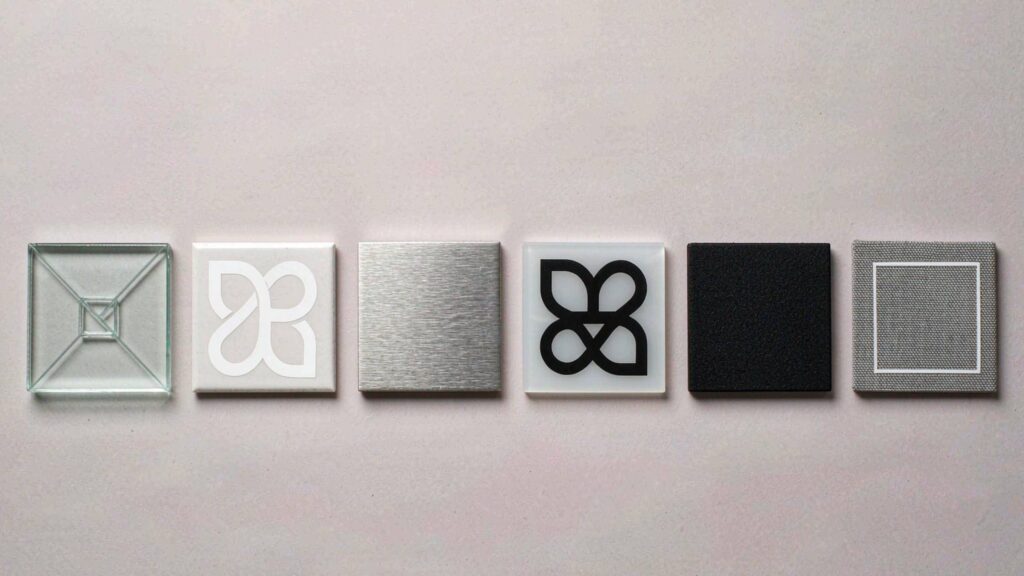
- Meaning B: the substance. What a physical item is physically made of. Glass, stainless steel, PVC, polyester, cork, silicone. This is how factories use the term.
Meaning A decides what you order. Meaning B decides what you receive. They sound like one conversation, and that is exactly where orders go wrong.
Here is the practical version. A quote saying “stainless steel beer mug” has told you nothing you can check. AISI 201 and AISI 304 are both stainless steel. One of them starts rusting in a beach bar before August. So the useful answer to “what is promo material” is this: promo material is the line on your order that nobody writes down, and it is the line behind nearly every complaint.
Does Promo Material Include Digital Files?
By the umbrella definition, yes. A campaign usually runs three kinds of promotional material at once:
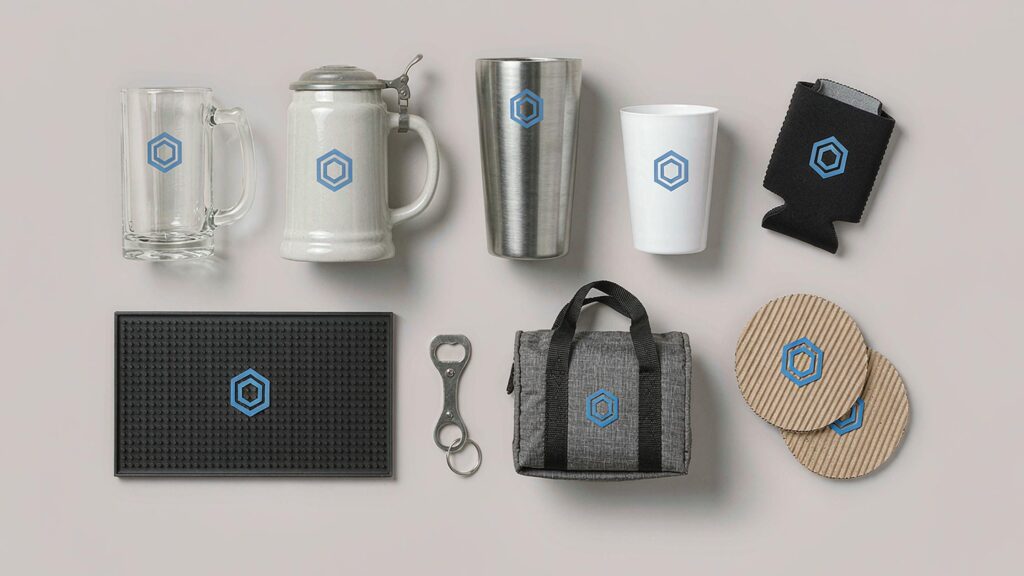
- Physical goods — mugs, coasters, bar mats, bags, buckets, signs.
- Printed pieces — brochures, flyers, cards, posters, menus.
- Digital assets — social graphics, email templates, web banners, PDF sell sheets.
This guide covers the first group only, and for one simple reason. A digital file has no material grade, no MOQ, no customs code and no food-contact test. You can email a social graphic. You cannot email a container of stoneware steins.
One other use of the phrase is worth naming, because it sends the wrong reader to pages like this one. In music, film and gaming, “promo materials” often means a press kit or EPK — the bio, photos and media files an artist sends to bookers and journalists. That is a media package, not a purchase order.
What Is the Difference Between Promo Material, Collateral and POSM?
These words get used as if they were interchangeable. They are not, and the difference changes who you talk to.
| Term | What it covers | Who uses it | Overlap with promo material |
|---|---|---|---|
| Promo material | Anything branded, physical or digital | Marketing, events, procurement | The umbrella term |
| Marketing collateral | Printed and digital sales support: brochures, flyers, cards, decks | Marketing, sales | A slice, mostly content |
| Promotional products | Physical goods people keep: mugs, bags, pens, apparel | Procurement, gift trade | A slice, physical only |
| POSM (point-of-sale materials) | Branded items placed where buying happens: bar mats, signs, displays | Brand, distributor, trade marketing | A slice, defined by location |
| Swag / merch | Branded goods with fan or lifestyle pull | Consumers, events | A slice, informal |
| Giveaway | Anything handed out free | Events | A slice, defined by price to recipient |
Promo material is the umbrella. The rest are the pieces under it. That matters when you brief a supplier: “promo material” is not a specification, it is a category. Our guide to branded promotional items maps the category in detail. The custom beer POSM guide covers the point-of-sale slice on its own.
What Jobs Does Promo Material Do?
Sorting promo material by product type is how most suppliers present it, and it is the least useful way to choose. Sort it by job instead, and the material question answers itself.
| Job | What it has to do | What you optimise for | Typical beer items |
|---|---|---|---|
| Reach | Leave the venue in someone’s hand | Low unit cost, low weight | Coasters, can coolers, opener keyrings |
| Dwell | Stay in one place and be seen for months | Durability, cleanability | Bar mats, tap handles, signs, glassware |
| Display | Win the shelf or the floor | Assembly speed, visibility | Racks, shelf talkers, brewery signs |
| Pack | Carry or present the product | Print quality, structure | Gift boxes, carriers, cartons |
The job sets the material, not the other way round. A giveaway needs to be cheap and light; a venue asset needs to survive six months of service. Those two briefs never land on the same material.
For a full walk-through of picking the right format for an objective, see how to choose beer POSM. If you are new to the category entirely, how to source beer promotional products from China walks through the whole route.
The Six Material Families Buyers Actually Order
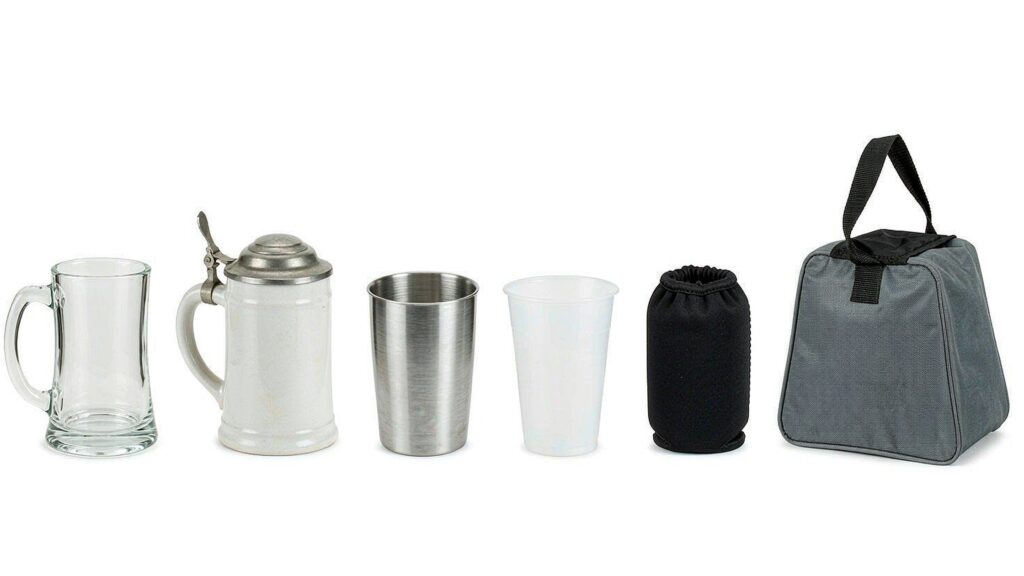
Beer promo material is made from six families. Learn these six and you can read almost any quote.
| Family | Typical items | How the logo goes on | How long it lasts | Watch out for |
|---|---|---|---|---|
| Glass | Mugs, steins, pint glasses, pitchers | Screen print, UV print, etch/sandblast | High, but it breaks | Weight, breakage in transit, print vs. dishwasher |
| Ceramic / stoneware | Steins, tankards, coasters, ashtrays | Decal, under-glaze, on-glaze | High for the body; decoration varies | On-glaze sits closest to the drink — biggest lead/cadmium risk |
| Stainless steel | Tumblers, growlers, buckets, shakers | Laser engrave, screen print, heat transfer | Very high | Grade (304 vs. 201 vs. 430), rust, magnetism |
| Plastics | Cups, buckets, trays, acrylic signs | Screen print, pad print, heat transfer, IML | Medium | Surface energy (PP/PE need pre-treatment), heat, scratching |
| Rubber / soft polymers | Bar mats, silicone coasters, PVC patches | Screen print, mould-in, deboss | High | Plasticiser content (phthalates), smell, curl |
| Textiles | Cooler bags, aprons, banners, flags | Screen print, sublimation, embroidery | Medium to high | Denier, coating, colour fastness, UV fade |
Glass
Glass is still the default for beer because it shows the product and survives commercial washing. The two things to lock are the capacity and the print method. Printed logos are the weak point, not the glass.
Etching and sandblasting put the mark into the surface, so there is no ink to lose. Screen prints and UV prints sit on top and can wear. If the glasses go through a bar dishwasher every night, ask for a wash-cycle test on the printed sample, not just a photo.
Our custom beer mugs, what is a beer mug explainer, beer pitchers and printed drink glasses guides go through each shape in more detail.
Ceramic and Stoneware
A ceramic stein feels substantial and takes full-colour artwork well. Where the decoration sits is the whole story. Under-glaze and decal-fired marks are sealed under a clear layer. On-glaze decoration is applied after firing and sits nearest to the drink.
That matters because of the rule below (Section 4). It also matters for washing: on-glaze colour is the first thing to dull. See personalized beer steins for how the glaze route changes lead time.
Stainless Steel: The 304 / 201 / 430 Question
This is the single most expensive ambiguity in beer promo. Three grades get sold as “stainless steel”:
| Grade | Nickel | Notes for beer promo |
|---|---|---|
| AISI 304 (18/8) | ~8–10.5% | Food-contact standard. Holds up outdoors and in dishwashers. Costs more. |
| AISI 201 | ~3.5–5.5% | Cheaper, manganese-substituted. Rusts much sooner in salt air and wet service. |
| AISI 430 | ~0% | Ferritic, magnetic, lower corrosion resistance. Fine for indoor trays; risky for drinkware. |
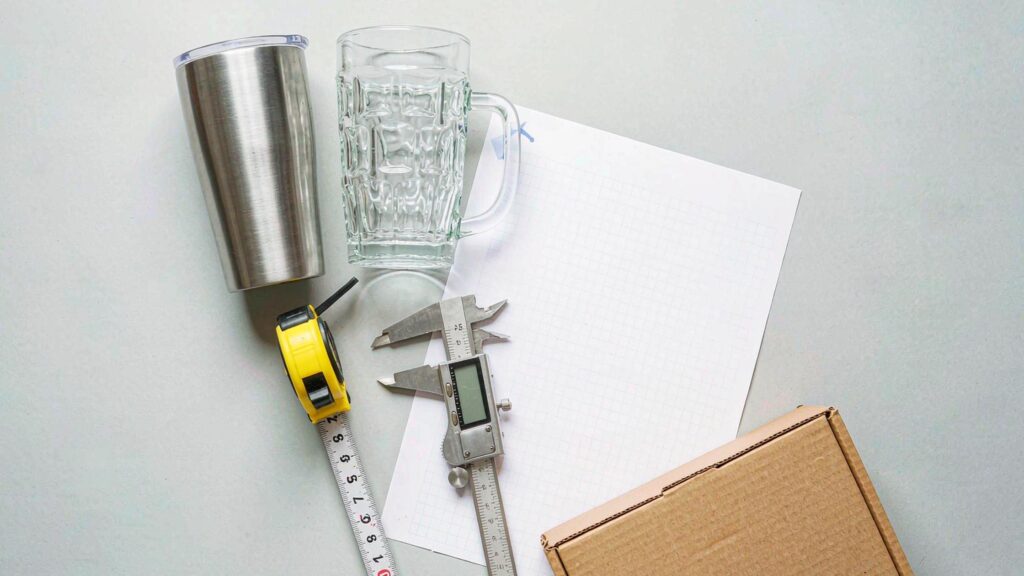
Two grades can sit 20–35% apart in cost and years apart in service life. So “stainless steel” is not a spec. Write the grade into the PI, and ask which grade the sample was made from. If the sample is 304 and the bulk order is 201, you will find out in the second summer, not at inspection.
Steel also covers growlers and ice buckets. Both get the same question. See personalized beer growlers and insulated ice buckets with lid.
Plastics
Plastics cover reusable cups, ice buckets, trays and acrylic signage. Two things drive performance: the polymer and the surface.
PP and PE are cheap and tough, but ink does not grip them without flame or corona treatment. If you skip that step, the logo rubs off. PET and PS give better print surfaces. Acrylic reads as glass and machines cleanly, which is why it dominates illuminated signs. Melamine is used for unbreakable tableware but is not microwave-safe.
Match the polymer to the use before you ask for a price, because the price follows the polymer. The plastic beer buckets guide and acrylic ice buckets page cover the two most common plastic routes.
Rubber, PVC and Soft Polymers
Bar mats, silicone coasters and flexible badges live here. This is the family most likely to fail a compliance check, not a drop test.
Soft PVC gets its flexibility from plasticisers. Some of those are restricted. In the EU, REACH Annex XVII entry 51 caps DEHP, DBP, BBP and DIBP at 0.1% by weight of the plasticised material — and since 7 July 2020 that cap covers all articles, not just toys. So “PVC bar mat” on a quote is not enough. Ask for phthalate-free or entry 51 compliant, and get it in writing.
Nitrile and TPR alternatives exist and avoid the question entirely. They cost more per unit and are worth it for EU programmes. The custom bar mats guide compares the three options side by side.
Textiles
Cooler bags, aprons, banners and flags. The two numbers worth knowing are denier and coating.
Denier is yarn thickness: 600D is heavy and abrasion-resistant, 420D is the common mid-weight, 210D is light and cheap, and non-woven is the cheapest of all. Coating decides water resistance and hand feel: PVC backing is waterproof and stiff, PU backing is softer and breathes better, and TPU is the premium option.
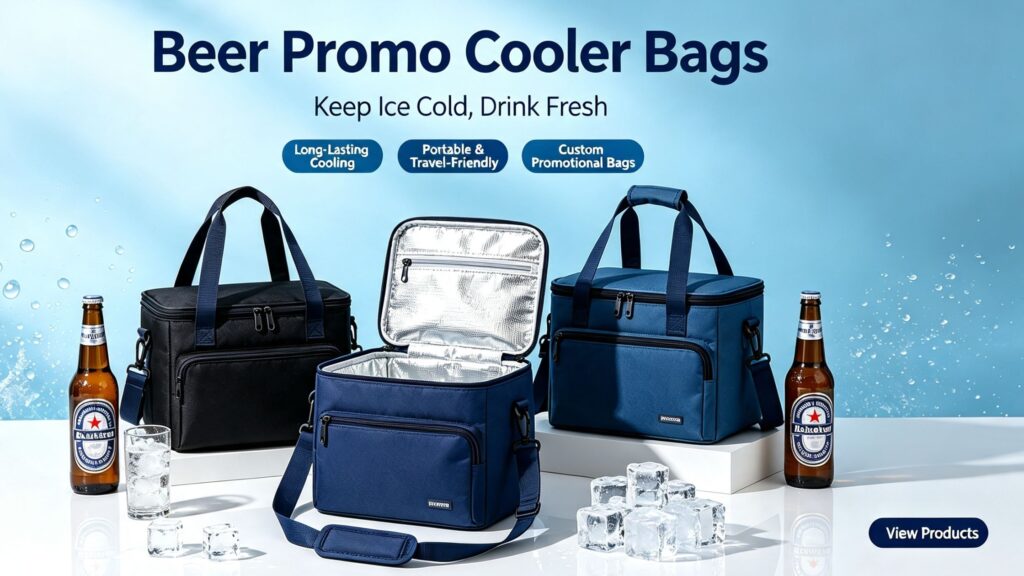
Outdoor items also need UV-stable ink. A banner that fades in one season is a material failure, not a printing one. See types of cooler bags and custom patio umbrellas for the outdoor end of this family.
Does the Material Change Your Compliance Paperwork?
Yes, and this is where most of the cost of a bad material choice actually lands. Different families trigger different destination-market requirements.
| Material family | What the destination market usually asks for | What to ask the factory for |
|---|---|---|
| Plastics (food contact) | EU: Framework Reg. (EC) 1935/2004 + Plastics Reg. (EU) 10/2011, overall migration limit 10 mg/dm² | Declaration of Compliance + migration test report, per (EU) 10/2011 |
| Ceramic (food contact) | EU: Directive 84/500/EEC as amended by 2005/31/EC; US: FDA CPG 7117.06 / 7117.07; DE: LFGB | Pb/Cd migration test report, named to the standard and the article category |
| Glass (food contact) | No EU harmonised rule for glass; by convention the 84/500/EEC limits are applied. US: FDA CPG; CA Prop 65 | Migration test report + Prop 65 statement if shipping to California |
| Stainless steel (food contact) | Grade evidence plus migration testing; LFGB common for Germany | Mill certificate for the grade + food-contact test report |
| PVC / rubber (non-food) | EU: REACH Annex XVII entry 51 phthalate cap | Phthalate test report, or switch to TPR / nitrile / silicone |
| Any consumer product | EU: GPSR (Reg. (EU) 2023/988), applicable since 13 December 2024 — EU responsible operator + traceability | Operator details on product or packaging, plus technical documentation |
The Three Facts Worth Memorising
One: the EU ceramic test is a day-one safety test, not a durability promise. Directive 84/500/EEC tests migration in 4% acetic acid at 22 ± 2 °C for 24 ± 0.5 hours. That is a safety check on the glaze. It is not a dishwasher test and not a logo-adhesion test. A mug can be fully compliant and still lose its logo in week three. Ask for two separate things: a food-contact test report, and a wash-cycle test on the printed sample.
Two: cups and pitchers carry the strictest US lead limit. Under FDA CPG 7117.06 / 7117.07, the lead action level is 3.0 mg/L for flatware, 2.0 mg/L for small hollowware, and just 0.5 mg/L for cups, mugs and pitchers. Those are exactly the shapes beer brands order. Decoration near the rim is the usual cause of a failure, because that is where the mouth goes.
Three: phthalates are not a children’s-product issue any more. REACH entry 51 paragraph 3 extended the 0.1% cap to all articles from 7 July 2020. If your programme includes PVC bar mats, PVC-lined cooler bags or PVC leather, this line belongs in your specification.
How Do You Pick the Right Material?
Work back from how long the item has to last, who ends up with it, and how far it travels.
| Campaign | Choose | Avoid | Cost band | Why |
|---|---|---|---|---|
| One-day festival or sampling run | Pulpboard coasters, PP/PS cups, non-woven bags | Glass, stoneware | $ | Weight and breakage beat brand feel at a one-day event |
| Summer bar programme (3–6 months) | PVC or nitrile bar mats, tempered glass, 304 steel, 600D cooler bags | 201 steel outdoors, printed paper | $$–$$$ | Heat, spillage and nightly washing kill weak materials |
| Oktoberfest or heritage stein (kept for years) | Stoneware or glass stein with lid | Thin plastic | $$$–$$$$ | This is a kept object; the material is the message |
| Retail shelf and floor POSM | Acrylic, metal, corrugated board | Uncoated fabric | $$–$$$$ | Needs to assemble fast and stay bright under store lighting |
| Client gift or premium tier | Stoneware, 304 steel, PU leather, wood | Light polyester | $$$–$$$$ | The gift is judged by weight and finish |
| Long freight route, multiple drops | Light, stackable, nestable | Heavy glass | $–$$ | Freight can cost more than the item |
Cost bands are relative, not prices. They run from $ (cheapest per unit, pulpboard and non-woven) to $$$$ (304 steel, lidded stoneware, illuminated acrylic). Real numbers move with grade, quantity, artwork and freight. Treat the bands as a rough guide, not a promise — and never compare two quotes until you have confirmed both are quoting the same grade.
Here is where the coaster question lives. Pulpboard, cork and silicone all work, and they work for different reasons — see custom drink coaster materials for the full comparison, and coaster design ideas for how the artwork changes with the substrate.
For the retail end, custom retail displays and POSM signage covers the structural side, and beer display ideas covers layouts that assemble without tools.
Three questions settle most choices. How long must it last? Who keeps it? How far does it travel? Answer those and the material usually picks itself — the remaining question is only what the logo process will tolerate.
What Should You Write Down Before You Approve the Order?
This is the part that saves money. Copy this list into your RFQ and your PI.
| Spec line | Why it matters | Example of a good entry |
|---|---|---|
| Material + grade | “Stainless steel” and “polyester” are not specs | “AISI 304 (18/8), not 201” |
| Thickness / weight | Gauge drives price, durability and freight | “0.6 mm wall” / “600D polyester” |
| Capacity and what it is measured with | With ice vs. without changes the number | “2.0 L to rim, 1.2 L with ice” |
| Fill line position | Decides how much the venue pours | “Fill line at 500 ml below rim” |
| Logo method | Method and material must suit each other | “Laser engrave, no ink” / “screen print, 2 spot colours” |
| Print area and colour reference | Prevents “close enough” | “35 × 45 mm centred, Pantone 032 C” |
| Food-contact requirement | Named to a market and a standard | “EU food contact, (EU) 10/2011, DoC required” |
| Wash / dishwasher claim | Must be tested, not assumed | “Commercial dishwasher, 500 cycles, no logo loss” |
| Finish and coating | Affects feel, grip and fade | “Matte powder coat, UV-stable ink” |
| Packaging | Damage and unboxing both matter | “Bulk pack, 24 per carton, mailer optional” |
| Approved sample reference | This is the standard at inspection | “Production to match sample ref. ABC-01” |
| Payment tied to inspection | Your deposit protects nothing on its own | “30% deposit, 70% after passed inspection” |
| Remedy if material differs | Without this, the clause is decoration | “Replacement or credit at buyer’s option” |
The payment line does the enforcing. A deposit you have already paid buys you nothing if the material is wrong. Keep the balance against a passed inspection, and ask for inspection photos of the real production run with your carton marks visible.
Each of these lines has a page of detail behind it. Start with MOQ on custom promotional products in China for minimums, lead time on custom promotional products for scheduling, and quality control on promotional products for what to check before you release the balance.
If you would rather not build the brief from scratch, there is a copy-and-paste RFQ template inside how to source beer promotional products from China, and a list of screening questions in questions to ask promotional product suppliers.
Mistakes Buyers Make With Promo Material
- Writing the category instead of the spec. “Promo material” on a PI is a blank cheque. The factory will fill it with whatever is cheapest.
- Comparing unit prices across different grades. A 304 quote and a 201 quote are not the same product. You are not saving 25%; you are buying something else.
- Assuming “certified” means the logo lasts. Compliance is about safety on day one, as the test conditions above show.
- Picking the material before the venue. A stoneware stein is right for a beer garden and wrong for a beach festival.
- Skipping the sample-to-bulk check. The sample is made carefully; the batch is made quickly. Ask for the grade again at the production stage.
- Forgetting the destination rules. EU programmes need a responsible operator under GPSR and, for soft PVC, phthalate evidence.
Frequently Asked Questions
What Is the Difference Between Promo Material and Promotional Products?
Promo material is the umbrella. Promotional products are the physical goods inside it — mugs, bags, pens. Marketing collateral is the printed and digital side. So every promotional product is promo material, but not all promo material is a product.
Is a Business Card Promotional Material?
Yes. Under the umbrella definition, anything carrying your brand and used to promote the business counts. In practice, most people filing by function would call a card *collateral* and a mug a *product* — both sit under the same roof.
Is Promotional Material Always Free?
No. “Promotional” describes the purpose, not the price to the person who gets it. Giveaways are handed out free, staff kits are issued, and premium pieces are sold or given as gifts. The word tells you why the item exists, not who paid for it. What matters on your side of the deal is the other number: what each unit costs you, landed.
What Does POSM Stand For?
Point-of-sale materials. It means branded items placed where the buying or serving happens: bar mats, tap handles, shelf talkers, floor displays. It is one slice of promo material, defined by location rather than by what it is made of. Our custom beer POSM guide covers it in full.
What Is Promo Material Made Of?
Mostly six families: glass, ceramic and stoneware, stainless steel, plastics, rubber and soft polymers, and textiles. The family you pick decides the logo method, the service life, the compliance paperwork, and the freight cost.
Is “Stainless Steel” Enough on a Quote?
No. Ask for the grade. AISI 304 is the food-contact standard and holds up outdoors; AISI 201 is cheaper and rusts much sooner in wet or salty service. The same words on a quote can describe two very different products.
Do Promotional Items Need Food-Contact Certification?
If the item touches a drink, yes in practice. The EU applies Reg. (EC) 1935/2004 with the Plastics Reg. (EU) 10/2011 (overall migration limit 10 mg/dm²) or the ceramic rules in Directive 84/500/EEC. The US applies FDA CPG 7117.06 / 7117.07, where cups, mugs and pitchers carry a 0.5 mg/L lead action level. Ask for a test report named to the standard.
Are PVC Bar Mats Allowed in the EU?
PVC is not banned, but the plasticiser can be. REACH Annex XVII entry 51 caps DEHP, DBP, BBP and DIBP at 0.1% by weight of the plasticised material, and since 7 July 2020 that cap covers all articles. Ask for phthalate-free PVC, or use nitrile, TPR or silicone instead.
Which Print Method Lasts Longest?
Any method that puts the mark into the material rather than on it. Laser engraving and etching remove surface, so there is no ink to wear. Fired decals and under-glaze sit beneath a clear layer. Screen prints and UV prints sit on top and are the first to go in a commercial dishwasher.
What Is the Cheapest Promo Material for a Big Event?
Pulpboard coasters and non-woven bags, because they are light, flat and disposable by design. Glass and stoneware cost the most to ship and break most easily. Match the material to how many hands it passes through.
Can I Mix Materials in One Container?
Usually yes, and it is the normal way to ship a full campaign. Plan it early, because each family has its own MOQ, lead time and carton size. Our quality control guide covers inspecting a mixed shipment.
Do I Need Finished Artwork Before I Ask for a Quote?
Not finished artwork, but you do need two things: the print method and the print area. A factory can price “laser engrave, 35 × 45 mm, one position” without seeing your logo. It cannot price “some printing somewhere”. Send the vector file when you have it. Never approve bulk production before your real artwork has been applied to a real sample.
How Far Ahead Should I Order?
Work back from the date the venue needs the goods, then add sampling, production and freight. For seasonal programmes, most buyers start 90 to 120 days out. Treat any price or lead time you read here as a rough guide, not a promise.
Turn “Promo Material” Into a Line You Can Check
The word has two meanings, and they meet on your purchase order. One decides what the campaign needs. The other decides whether the shipment survives it.
So do not send a supplier a category. Send them a material and a grade, a thickness, a capacity, a print method and a colour reference. A vague brief gets a cheap answer, and you only notice in the second month.
If you want a second pair of eyes on a specification, send us your use case and we will tell you which material and decoration route actually fit it. We also source custom bar mats, branded drinkware and beer ice buckets from the same factories, so a mixed programme ships in one container.