Custom Beer Coolers with Logo — Ice Chests, Drink Tubs and Wheeled Units
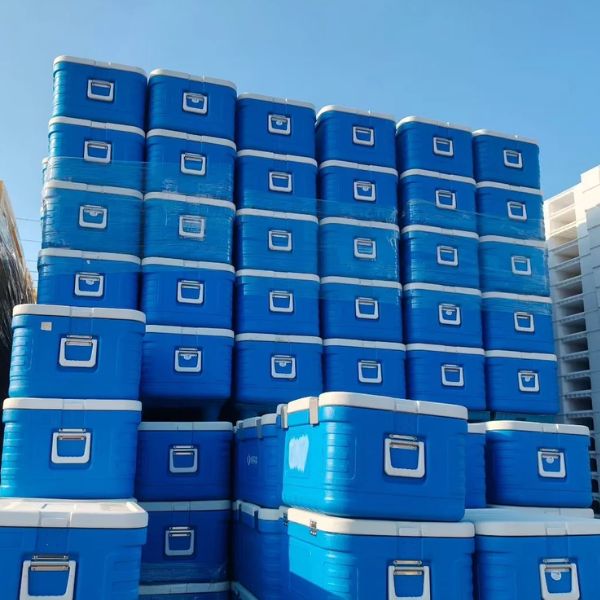
Keep the beer cold and the brand in view for as long as the event lasts. BeerPromoPro supplies custom beer coolers for brewery promotions, beer gardens, festivals, distributor programs and retail on-packs — rotomolded ice chests, injection-molded coolers, drink tubs and wheeled units, specified around how long they hold ice and what they cost to ship.
OUR PRODUCT
Choose the Cooler Around the Ice, Not the Colour
Three numbers decide almost every cooler order: how many hours the ice has to last, how far the loaded unit has to be moved, and how many cubic metres it occupies on the way to you.

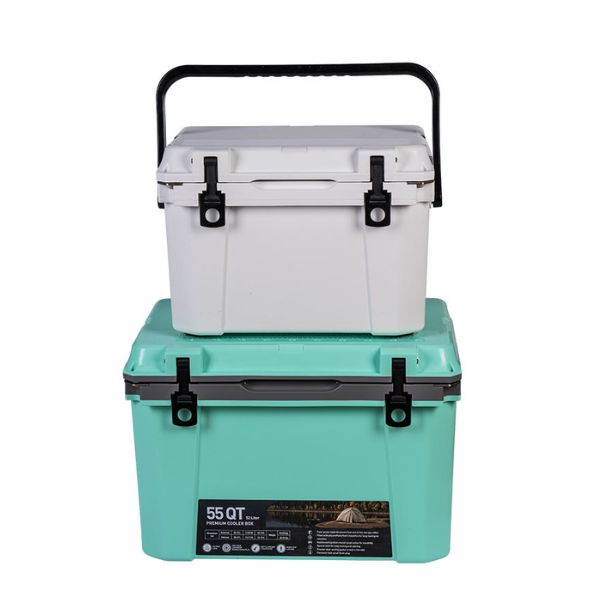
Rotomolded Ice Chests
One-piece polyethylene shell with 30–50 mm of polyurethane foam sealed inside the wall, and no seam to leak air. That is what takes ice retention to three to ten days and lets the body survive being dropped, sat on or dragged across gravel. It is also the heaviest option — a loaded 50-quart chest takes two people — and the mould is the tooling, so a custom shape is a project.
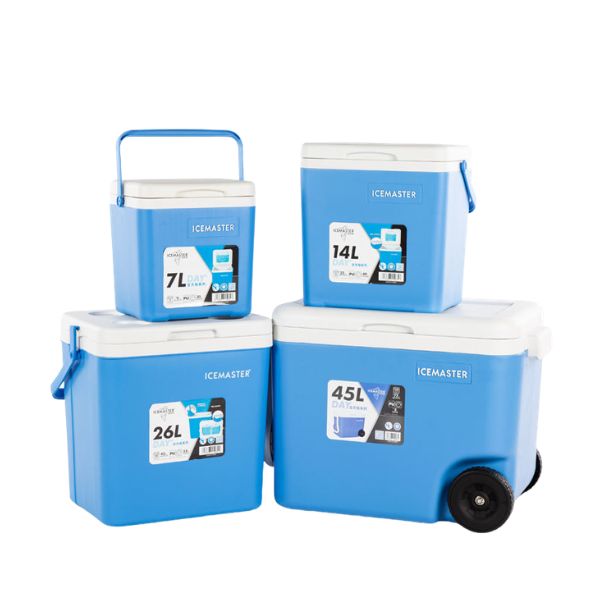
Injection-Molded Hard Coolers
Two shells joined at a seam, with no foam core or a thin panel. Expect roughly one to three days of ice, a body that weighs about a third of a rotomolded equivalent, and a unit price in a different band. Right for giveaways, on-packs and single-day events — but a budget unit left in the sun will not hold ice overnight.
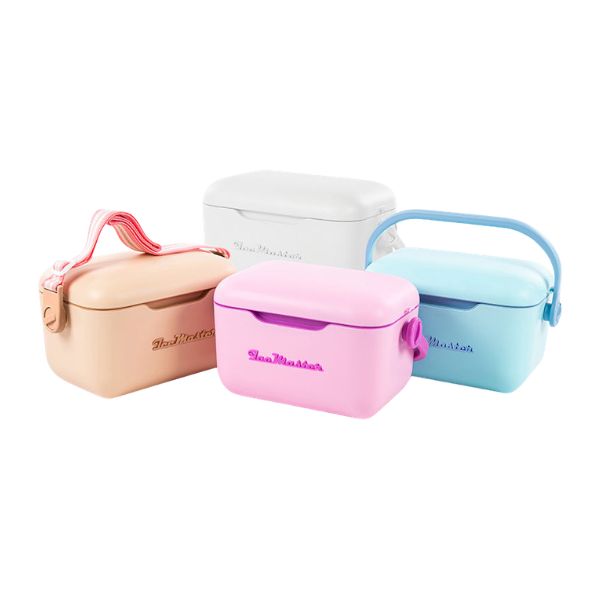
Compact and Personal Coolers
Under about 20 quarts, or 19 litres. Small enough to hand out at a tasting, cheap enough to give away, and the format that ships best of any on this page — hundreds of compact bodies occupy the container space a few dozen large chests would.
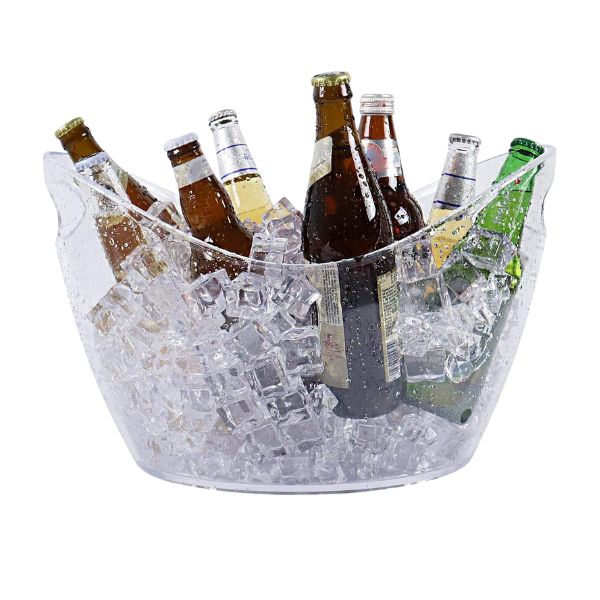
Party Coolers and Drink Tubs
Open-top tubs and wide-mouth chests that stand ice and bottles upright on a table or terrace. Fast to load, easy to see into, and the shortest ice life here, because every time someone reaches for a bottle the lid is open. Specify it for table service, not transport.

Wheeled and High-Capacity Coolers
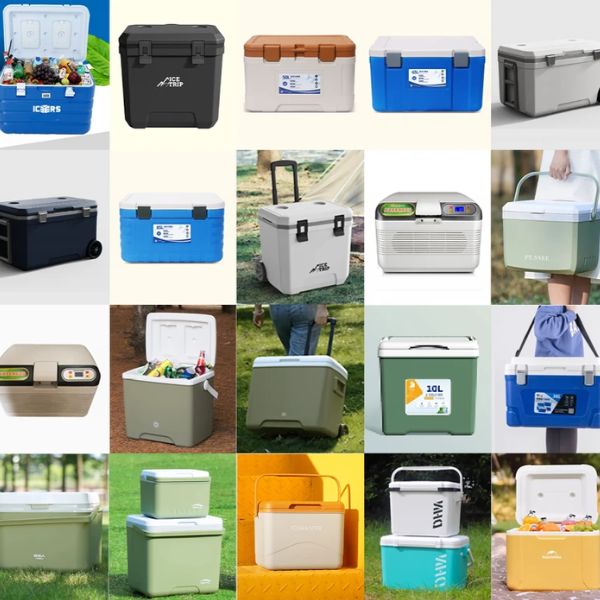
Fifty quarts and up, on wheels with a tow handle, for event logistics rather than personal use. Check what the wheels and the tow handle are rated for before you check anything else — on a full unit those fail first, and a chest with a broken wheel is a chest nobody moves.

Cooler Gift Sets and Retail Packs
A cooler filled with glasses, openers or bottles as a distributor gift or a retail pack. The cooler is rarely the long lead item in a set — the second product usually is. Plan it as one project with one carton specification, or the halves arrive weeks apart.
TAG
Make the Logo Last as Long as the Cooler
A cooler lives outdoors, in the sun, full of meltwater, and it gets dragged. Choose the decoration method against that, not against how the artwork looks on a flat proof.
Screen-Printed Logos
The lowest-cost route for bold spot-colour marks on a flat shell panel, best at one to three Pantone colours. The ink sits on the surface, so it abrades long before the body does.
Heat-Transfer Graphics
Handles multi-colour artwork and fine detail, and reaches curved panels a flat print bed cannot. Colour shift, edge definition and resistance to sun and meltwater have to be signed off on a physical sample.
UV and Full-Colour Printing
For gradients, photography and edge-to-edge coverage. Needs an adhesion and abrasion check on the actual shell material, and a protective layer wherever the surface is handled daily.
Molded-In and Debossed Logos
On a rotomolded body the mark can be formed into the shell, so it cannot peel, fade or scratch off. It needs a logo insert cut into the mould, which fixes the artwork before tooling and means a new mark needs a new insert.
Metal Plates, Rubber Patches and Labels
A small brand detail that repeats across several shell colours without re-tooling the print. Confirm the fixing method — screwed, riveted or bonded — and how the edge behaves when the cooler is hosed down.
Ask What the Ice-Retention Number Was Measured Against
Every cooler advertised as holding ice for five days measured that under somebody’s conditions, and those conditions are rarely printed next to the number. Ask four things: the ice-to-contents ratio, where the common test standard is two parts ice to one part contents, so a cooler sold as holding 24 cans carries roughly eight once the ice is in; the ambient temperature, because a figure taken at 25°C does not survive 35°C in direct sun; whether the body was pre-chilled; and whether it was block ice or cubed, because block ice lasts two to three times longer. Then ask where the cold actually leaves — almost never the wall, usually the lid gasket, the drain plug and the hinges. A thick wall under a loose lid loses to a thin wall under a good seal.
Price the Freight Before You Price the Cooler
A cooler is mostly air, and you pay to ship air. Sea freight is billed on volume — roughly 68 to 76 cubic metres in a 40ft high-cube — and unlike a bag or a cup, a hard cooler does not collapse, so the packed carton dimension sets your landed cost. Air freight is worse: volumetric weight runs at around 167 kg per cubic metre, and a hollow box reaches that long before it reaches its real weight. Before you compare unit prices, ask what nests, whether lids ship detached, whether handles and wheels ship loose, and whether the order can share a container with the rest of your campaign. On a bulky item the freight line is often the difference between a promotion that makes money and one that does not.
FAQ About Custom Beer Coolers
About a third of the headline number, once the ice is in. Stated capacity is total inner volume, not can count, and the standard loading ratio is two parts ice to one part contents. Size it to your ice plan, not to the name.
Rotomolded if it has to hold ice beyond a day, survive rough handling or last more than one season — one-piece shell, 30–50 mm of foam, three to ten days of ice, at two to three times the weight and the price. Injection-molded for a giveaway, an on-pack or a single-day event, where one to three days is enough and unit cost and shipping volume matter more. If the drinks are carried rather than stored, a soft cooler bag is the lighter answer.
Not fully watertight, and deliberately so. A sealed body builds pressure as the contents warm, which is why a well-built lid gasket includes a pressure-relief gap — it is also what makes the cooler safe to use with dry ice. Upright in normal use it holds meltwater; tipped on its side, or with a worn gasket or drain plug, it will weep. Those two parts are the ones worth specifying properly.
Longer if it is in the shell than on it. A molded-in or debossed mark cannot peel or fade, because there is no applied layer to lose. Screen print and heat transfer sit on the surface and will abrade under sun, grit and meltwater; UV printing holds more detail and should carry a protective layer. Tell us how long the cooler has to look like your brand.
From 100 pcs for your logo on an existing rotomolded body, 200–500 pcs for injection-molded units, higher again for a new mould or a custom shape. As a guide, USD 15–50 per injection-molded cooler and USD 60–150 for a rotomolded chest, before freight. Sampling about 7 days, bulk production 25–35 days. Interior surfaces can be supplied to FDA, LFGB and EU 10/2011 food-contact documentation. Terms are 30 percent deposit, balance against bill of lading copy.