Custom Canopy Tents with Your Logo for Beer Festivals and Events

A printed canopy is visible from across a field, which no table-level POSM can match. BeerPromoPro is a China-based manufacturer and wholesale supplier of custom canopy tents built for beer festivals, tasting stations, distributor events and trade shows. Order in bulk and supply every activation team from a single production run.

OUR PRODUCT

Choose the Right Custom Canopy Tent for Your Program

A canopy is bought for how fast it goes up, how much wind it will take, and how it packs into a van. Compare frame material, packed weight, fabric weight, anchoring method, and whether the site lets you drive stakes into the ground at all.

pop-up-canopy-tents

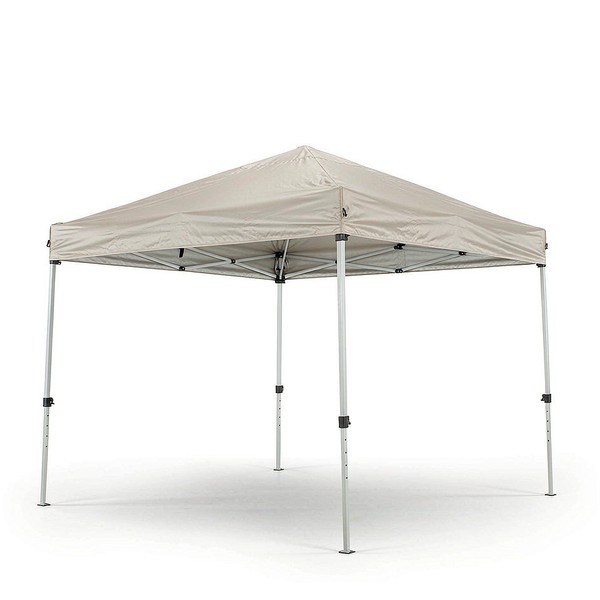
3 x 3 m Pop-Up Canopy Tents

The standard activation unit for tasting stations and market footprints. A 40 mm hexagonal steel frame weighs about 20 kg net and packs to roughly 158 x 24 x 22 cm, near 0.084 CBM per carton. Two people set it up in under two minutes. Leg height adjusts across three notches. It is the size most venues allot.
3 x 4.5 m and 3 x 6 m Pop-Up Canopies

Longer footprints for bar service, queuing lines and crew shelter. The 3 x 4.5 m frame runs about 24 kg and 0.122 CBM; the 3 x 6 m runs about 34 kg and 0.160 CBM. Longer spans catch more wind per kilogram of ballast and need a weight on every leg, not on two
aluminum-frame-canopy-tents

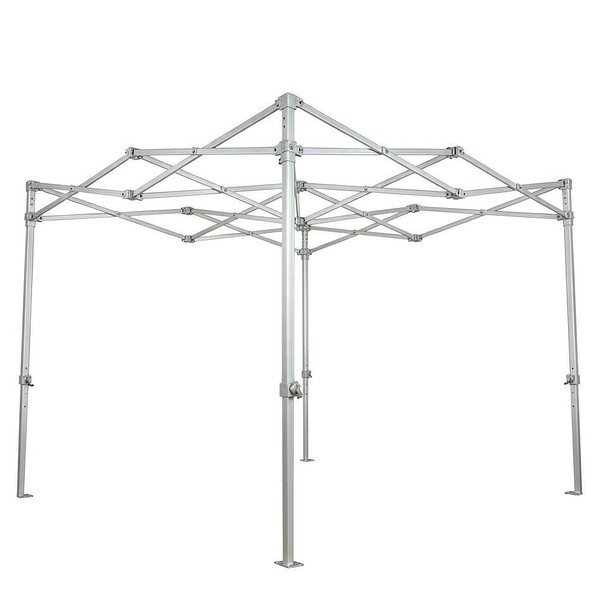
Aluminum-Frame Canopy Tents

Aluminum cuts frame weight by roughly a third against steel, so a crew carries it further from the parking lot, and it will not rust at a coastal site. It costs more and it bends rather than dents under a point load. For a permanent seasonal patio, steel still wins on rigidity. Anodized or powder-coated finish resists salt air.
pole-and-frame-tents-for-larger-footprints

Pole and Frame Tents for Larger Footprints

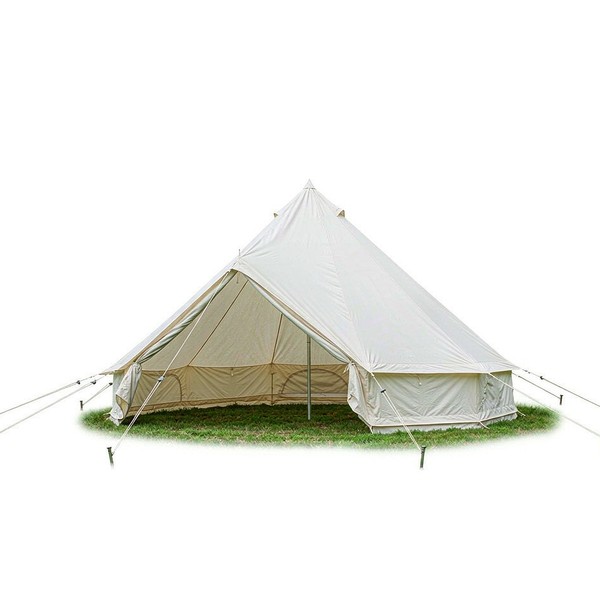
When you need to cover more than about 6 m of span, or the event runs several days in open weather, a pole or frame tent with guy lines and driven stakes is the correct structure. It needs more crew and more setup time. A pop-up canopy is the wrong choice at that scale.
printed-sidewalls-half-walls-and-valances

Printed Sidewalls, Half-Walls and Valances

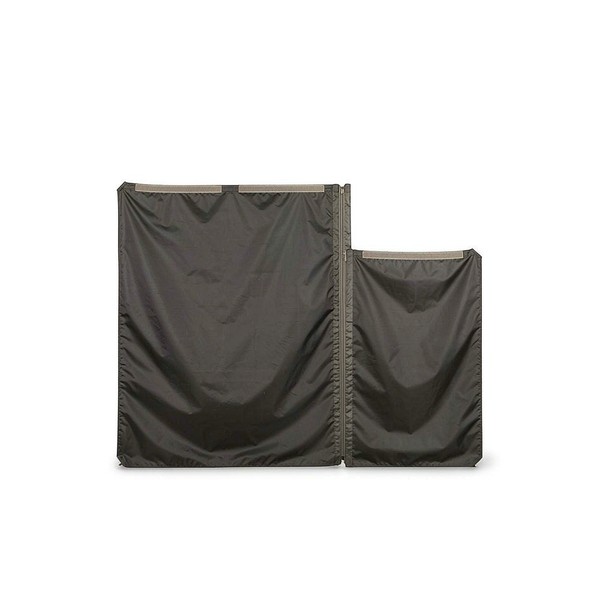
Sidewalls turn shade into a branded room and block low sun and wind-blown rain; half-walls keep the counter open for service. The valance — the vertical border hanging from the canopy edge — is the surface seen from across a field, so it carries the mark. Walls attach by Velcro tabs or a zip. Mix them per event.
replacement-tops-spare-parts-and-anchoring-kits

Replacement Tops, Spare Parts and Anchoring Kits

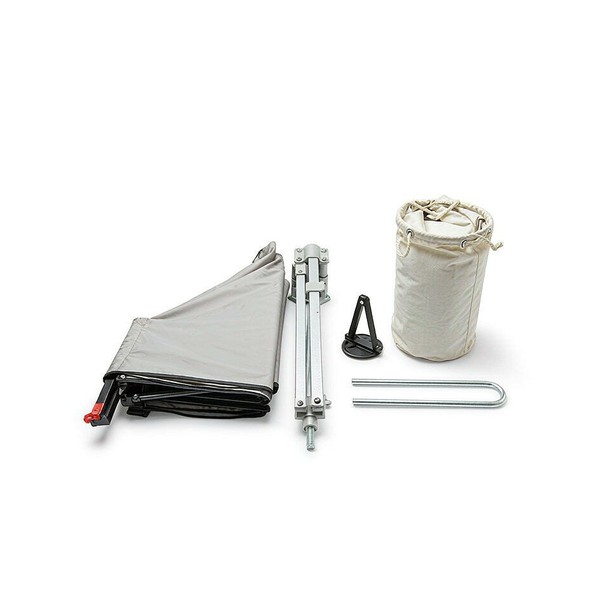
Tops wear out before frames do. Order a printed replacement top with the first run and stock spare leg sections, joint connectors and peak hardware, because one bent leg takes a canopy out of service for the rest of the season. Anchoring is quoted separately from the frame. Keep the frame model number when reordering.
TAG

Branding and Customization

Canopy artwork is read from 30 meters away and from underneath while someone is pouring. We plan the top, the valance and the walls as one layout, and we match the print method to the fabric coating before sampling so the ink does not fight the waterproof finish.

Dye-Sublimation Printing on the Canopy Top

The route for gradients, photography and full-bleed campaign artwork on polyester. Ink goes into the fiber rather than sitting on the coating, so the top still folds and packs without cracking. Fabric is typically 300D polyester around 190 gsm or 600D around 230 to 240 gsm, both PU coated.

Screen Printing on Valances and Sidewalls

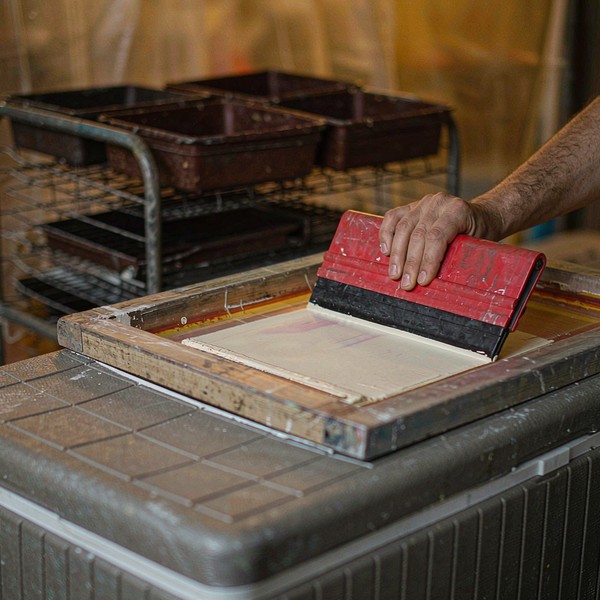
The cost-effective answer for bold logos, repeated marks and text on the valance and walls, where artwork is simple and quantity is high. Thick ink gives sharp edges and strong contrast. Each color adds a screen and a setup, so one or two colors keeps unit cost down.

Full-Color Printed Sidewalls and Backdropscy

Sidewalls are vertical and close to the eye, so resolution matters more here than on the top. A full-color wall doubles as a backdrop for photography at the activation. Add a door panel or a roll-up opening or staff will lift the wall edge to get through it.

Pantone-Matched Fabric and Frame Finish

Canopy fabric and frame powder coat can both be matched to brand references, so a row of tents reads as one program rather than a mixed hire fleet. Dye-lot variation between runs is real: order all fabric for a season in one production run, and ask for a lab dip.

Branded Carry Bags, Weight Bags and Flags

The wheeled carry bag sits in every load-in photograph and the weight bags sit on every leg in every shot, so both are worth printing. Flag brackets mount onto the frame legs and raise brand height above the canopy line. Bag fabric takes screen print, not sublimation.

Decide the Footprint and the Anchoring Before the Artwork

A canopy fails at the legs, not the seams. What footprint does the venue allot — 3 x 3 m, 3 x 4.5 m or 3 x 6 m — and how many staff stand under it? What is the ground? Grass takes spiral stakes plus a weight per leg; paving and decks take weights only, at roughly 18 kg or 40 lb per leg. How windy is the site? A weighted pop-up is rated for sustained wind near 15 to 20 mph, heavy-duty frames to about 35 mph, and above that the honest answer is to take it down. Does the venue require flame-retardant fabric? Many public events ask for CPAI-84, a flame-resistance test specification for camping tentage fabric, so ask which certificate your organizer accepts. And who carries it? A 3 x 3 m steel frame is about 20 kg.

How to Specify a Canopy Order That Quotes Cleanly

Buyers who get fast quotes send six things every time: footprint and frame material, fabric denier and whether flame-retardant treatment is required, artwork with the valance and wall layout marked, quantity per design, anchoring method, and destination port. What moves unit price most is frame gauge and material, fabric weight, print coverage across top and walls, and whether the fabric carries a flame-retardant finish. Freight is forgiving on canopies: a 3 x 3 m steel unit packs near 0.084 CBM, so about 795 fit a 40-foot high-cube container, which means the frame usually costs more than the shipping. Splitting one run across five artwork versions costs more per unit than doubling one version. Plan backward from the event date — seven days for a sample, twenty-five to thirty-five days for bulk, then ocean freight.

Frequently Asked Questions About Custom Canopy Tents


Most canopy programs start from 50 to 100 units per size. Full-color sublimation, flame-retardant fabric and custom Pantone dyeing can raise the minimum. Stock-frame units with printed tops only are available below standard MOQ.


Typical projects fall between USD 90 and 450 per unit. Frame material and gauge, fabric denier, print coverage, flame-retardant treatment and anchoring all move the number. We show you which line of the spec drives it.


Yes. Sampling takes approximately seven days. Set the sample up with your own crew, time it, anchor it the way your site allows, and pack it away wet once to see how it handles before you approve bulk.


A standard weighted pop-up handles sustained wind near 15 to 20 mph; heavy-duty commercial frames reach about 35 mph. Use roughly 18 kg of weight per leg on hard ground and add spiral stakes on grass. Take it down above that.


Many US venues and public events ask for CPAI-84, a flame-resistance test specification for camping tentage fabric; NFPA 701 and DIN B1 are also requested. Some European venues ask for EN 13501-1, which is a construction-product classification that a folding canopy is not normally classified under. Ask your organizer first, and documentation is available on request.


A physical sample takes about seven days and bulk production twenty-five to thirty-five days. We ship from China to Europe, the Americas, the UK, Australia and Japan by sea, air or rail, with consolidation for mixed POSM orders.

Scroll to Top