
Custom Metal Signs for Breweries, Taprooms and Bar Groups
Metal outlives the campaign. BeerPromoPro is a China-based manufacturer and wholesale supplier of custom metal signs in tinplate, aluminum and stainless steel for breweries, distributors and bar groups. Order in bulk and supply one durable sign program across every outlet.
OUR PRODUCT
Choose the Right Custom Metal Sign for Your Program
Metal signs are chosen by metal, gauge and finish, in that order. A printed tin sign and an etched stainless sign look nothing alike after two winters.

Tinplate & Litho-Printed Tin Signs
Tinplate is steel with a thin tin coating, typically supplied at 0.23 to 0.35 mm for sign work. It takes full-color litho printing beautifully and is the lowest unit cost at volume. It is the wrong substrate for a coastal patio, because a scratched edge rusts from the inside out. Rolled edges and pre-drilled holes are standard.

Aluminum Signs — Brushed, Anodized, Powder-Coated
Aluminum at 0.5 to 1.0 mm is the default for outdoor use: it does not rust, it is roughly a third the weight of steel, and it anodizes, brushes or powder-coats. Anodizing hardens the surface; powder coat adds color and can chip at impact points. Brushed grain hides fingerprints better than a mirror finish at hand height.

Stainless Steel Signs — Etched & Engraved
Stainless at 0.6 to 1.0 mm suits washdown areas, brewhouse walls and front-of-house back-bar positions. Grade 304 handles most outdoor locations; grade 316 is the specification for coastal and salt-air sites. It costs more per square meter and reads industrial, not nostalgic. Grade 316 is the only stainless we recommend within sight of salt water.
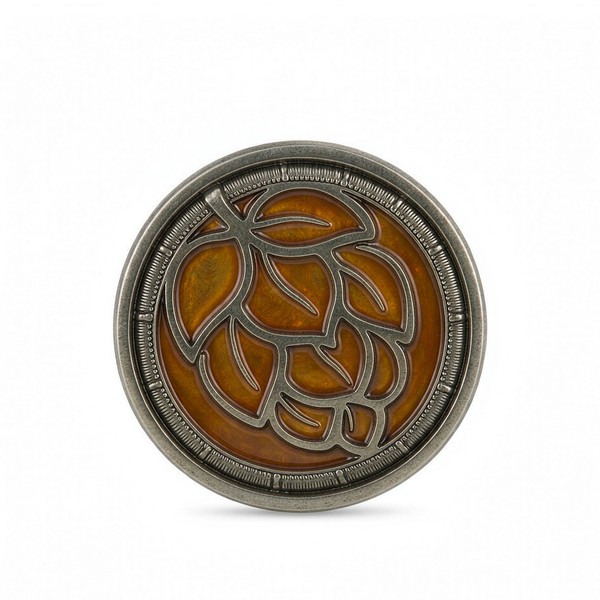
Embossed & Etched-and-Filled Signs
Embossing raises the mark in relief with a matched die set; chemical etching recesses it and the recess is filled with enamel color. Etched-and-filled holds fine detail and small text that embossing loses, and it survives abrasion better than any surface print. Etch depth is a fraction of a millimeter, so the fill sits flush and wipes clean.
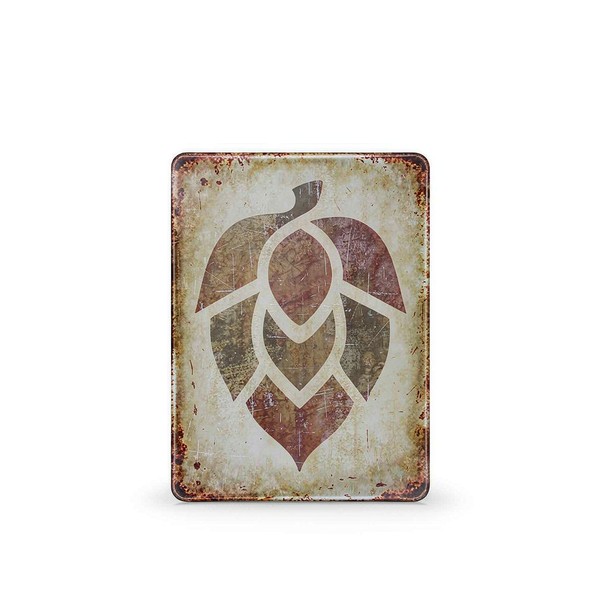
Distressed Vintage & Retro Signs
Artificially aged tin and aluminum with scuffs, rust patina print and faded edges, made for taprooms that want a sign to look like it has been on the wall since the brewery opened. Distressing is a printed or applied effect sealed under clear coat; real rust keeps spreading under the film. Approve distress level on a physical print.

Outdoor & Exterior Metal Signs
Built for beer gardens, patios and storefronts: heavier gauge, rolled edges, pre-drilled or punched fixing holes and stainless or brass fixings instead of zinc-plated screws that streak. Drainage matters — a flat sign with a bottom edge that traps water fails first at that edge. Ask for a drainage gap at the bottom fold. Exterior powder coat is a different specification from interior.
TAG
Outdoor & Exterior Metal Signs
Litho Printing on Tin & Aluminum
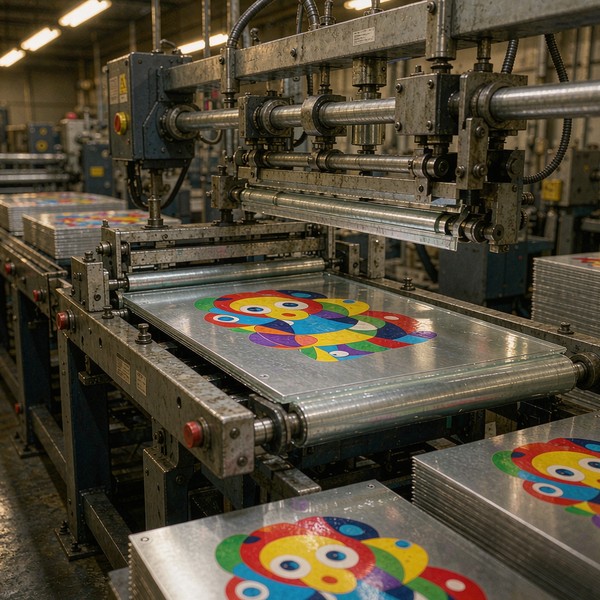
Offset litho prints full-color artwork directly on the metal before a protective varnish or lacquer. It is the lowest unit cost at volume and holds fine detail, but the plate setup means short runs pay a fixed charge spread over too few units.
Embossing in Relief
A matched male and female die raises the logo or border out of the sheet, typically on 0.3 to 0.5 mm tinplate. Relief reads strongly at a distance and under bar lighting. Bold shapes emboss well; fine lines and small text lose definition.
Chemical Etching & Enamel Color Fill
Acid etching recesses the artwork into 0.5 mm aluminum or stainless and the recess is filled with enamel and baked. It is abrasion resistant and the right answer for washdown areas where printed surfaces fail. Each color is a separate fill pass, so gradients are not an etched job.
Screen Printing & UV Printing
Screen print lays opaque spot colors that read strongly on brushed metal; UV printing handles gradients and photographic artwork a screen cannot. Both sit on the surface, so both need a clear over-coat outdoors or they fade in sun. Adhesion is tested on your actual finish.
Distressing, Patina & Protective Coatings
Distressed finishes are printed or chemically applied, then sealed with clear lacquer, anodizing or powder coat. A coating slows corrosion; it does not stop it once the film is scratched through. Unexpected rust is a defect — deliberate rust should be specified as such.
Check the Wall and the Weather Before the Finish
Metal signs fail at the edges and at the fixings, not in the middle of the artwork. Tinplate indoors will last for years; on a coastal patio it starts rusting at the first scratched edge or drilled hole within a season, so use aluminum or 316 stainless there. Gauge follows size: 0.5 mm is fine up to about 300 mm; a 600 mm sign at 0.4 mm oil-cans on the wall. Screw fixing needs at least 0.5 mm to hold without tearing; rolled edges remove the cut edge that starts corrosion. Stainless survives caustic brewery washdown; printed tin does not, and printed faces go dull under wiping. And does it trap water? A sign that cannot drain at the bottom edge fails there first.
How to Specify a Metal Sign Order That Quotes Cleanly
Send the material preference, finished size and gauge if you have one, quantity per design, artwork or a reference image, indoor or outdoor, fixing method and destination port. Unit price is driven by metal grade, sheet gauge, size, print or etch method, color count, coatings and quantity — and by tooling, because an embossing die set is a one-off charge that makes sense at 500 pieces and does not at 50. Freight is driven by weight: steel signs are heavy, so a container of tinplate signs can hit weight limits before it fills the cube, and nesting flat with edge protection keeps cartons from scuffing. Plan backward from the install date: about seven days for a physical sample, twenty-five to thirty-five days for bulk, then ocean freight and delivery.
Frequently Asked Questions About Custom Metal Signs
Printed tin signs usually start from 300 to 500 pieces per design; etched stainless from 100 to 200. Embossing dies and custom shapes raise the minimum. Etched jobs carry a lower minimum than printed runs, because there are no plates. Stock blanks with decoration only can go below standard MOQ.
Typical projects fall between USD 2.50 and 35 per sign. Metal grade, gauge, size, print or etch method, coatings and quantity all move the number. We tell you which element drives the cost before you commit, and gauge is usually the cheapest upgrade on the list.
Yes. Sampling takes approximately seven days. Hold the sample at arm’s length under your own bar lighting and flex it slightly — thin gauge shows its limits immediately once it is off the bench. Scratch a cut edge with a key if you want the honest answer on rust.
Tinplate rusts once the tin coating or the lacquer is scratched through, and coastal air accelerates it. Aluminum does not rust but pits in salt air. For coastal and wet sites specify 316 stainless or anodized aluminum, and stainless fixings. A clear lacquer slows all of it and stops none of it once scratched through.
For indoor signs up to about 300 mm, 0.5 mm aluminum or 0.3 mm tinplate is enough. Larger panels and any screw-fixed outdoor sign should be 0.6 mm or thicker, or the sheet flexes on the wall and tears at the holes. Send us the panel size and fixing method and we will set the gauge.
A sample takes about seven days and bulk production twenty-five to thirty-five days. We ship from China to Europe, Latin America, the UK, Australia and Japan by sea or air, with compliance documentation available on request. Steel signs hit container weight limits before they fill the cube, so cartons are planned by weight.
