Custom Beer Tap Handles with Logo for Draft Brands
Your tap handle is the first thing a guest reads at the bar. BeerPromoPro is a China-based manufacturer and wholesale supplier of custom beer tap handles built for brewery taprooms, beverage distributors, bar groups, beer festivals and branded merchandise programs. Order in bulk and supply every outlet on your route from a single production run.
OUR PRODUCT
Choose the Right Custom Beer Tap Handle for Your Program
A tap handle is a mechanical part before it is a brand asset. Compare thread spec, height, weight, body width against your faucet spacing, and how the finish survives thousands of pours.

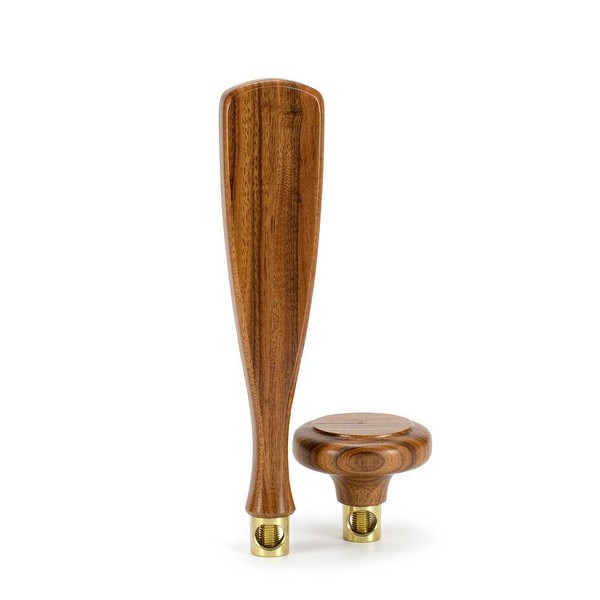
Paddle & Puck Tap Handles
The two workhorse shapes for a draft wall. A paddle gives a tall printable face that reads across a room; a puck keeps a low profile under a shelf or cabinet. Bodies are cut in resin or hardwood, 4 to 14 in tall, with a brass 3/8"-16 UNC insert set 3/4 to 1 in deep into the base.
Resin & Figural Tap Handles
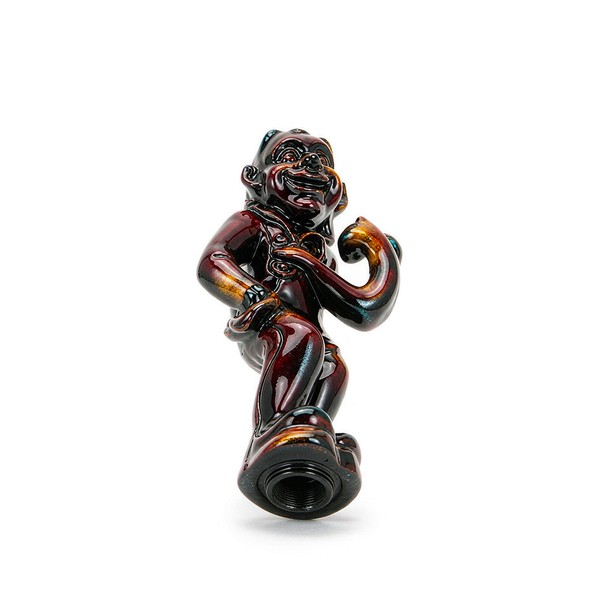
Cast resin takes three-dimensional shapes, embedded objects and sculpted brand characters that no flat process can produce. Weight matters here: keep a finished handle under roughly 1 lb, or the faucet lever can sag and self-pour. Hollow-cast shells and lightweight cores hold weight down on tall designs.
Wooden Tap Handles
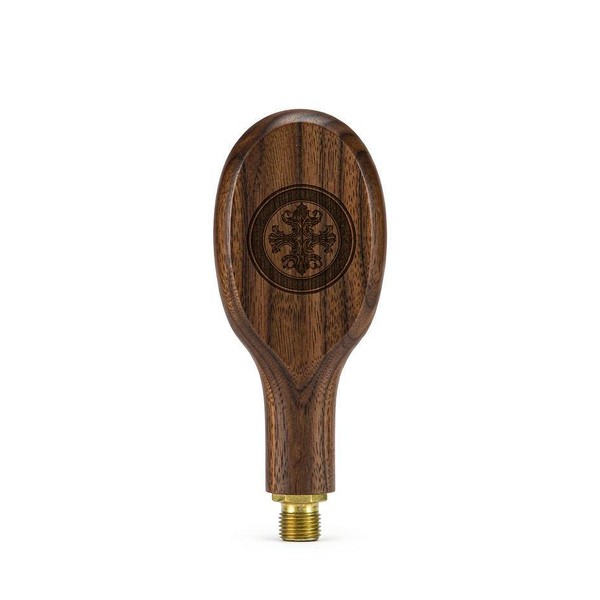
Hardwood bodies — oak, beech, walnut, bamboo — suit craft taprooms that want the warm, hand-made read. Laser engraving is permanent and cannot wear off with handling. Wood needs a sealed finish near a wet drip tray, and it is the wrong choice for an unsealed body that sits over constant spillage.
Metal & Zinc Alloy Tap Handles
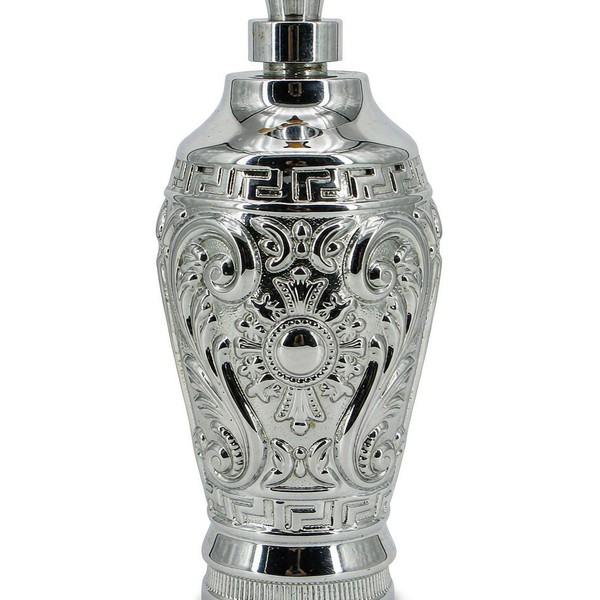
Die-cast zinc alloy with chrome, black nickel or antique brass plating gives weight, crisp molded relief and a jewelry-like edge. Metal is durable in high-volume service and cold to the touch. A solid metal body can exceed the safe weight ceiling, so tall designs are cast hollow or built on a resin core.
Ceramic, Acrylic & Light-Up Handles
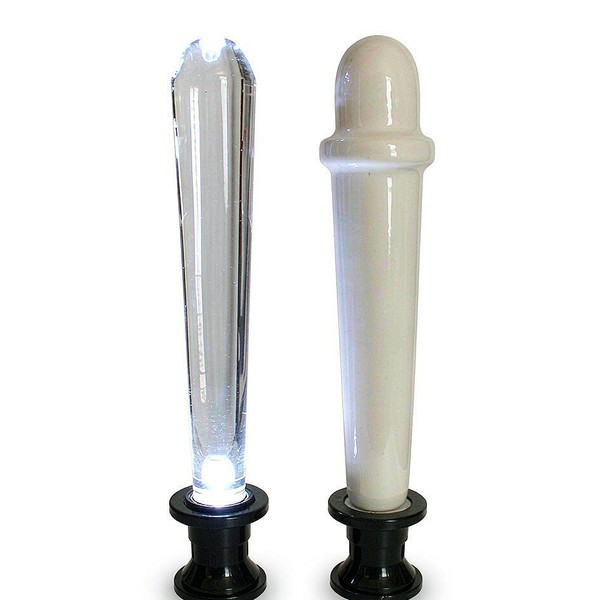
Glazed ceramic and cast acrylic give depth, translucency and color that resin cannot match, and acrylic bodies can carry an LED base for a backlit tap wall. Ceramic chips if a handle is knocked against the tower, so it is the wrong choice for a service bar where glasses are passed over the taps.
Chalkboard & Interchangeable Face Handles
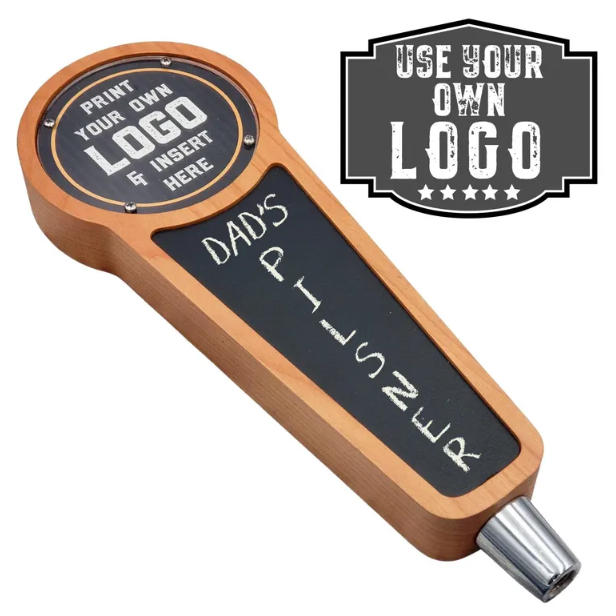
A writable or slotted face lets staff change the beer name at every keg change without new hardware. Best for rotating guest taps and seasonal programs, worse for a fixed brand identity: the mark you paid for disappears the moment someone wipes the face.

TAG
Branding and Customization
The right logo method depends on the handle material, the size of the printable face, how far the mark has to read, and how much the handle is handled. We review the handle and artwork together before sampling so the mark lands where you intended.
Laser Engraving
Engraving burns the mark into wood, bamboo or anodized aluminum — permanent, tactile and impossible to rub off with service. Contrast depends on the substrate: pale woods give strong definition, dark walnut reads subtly. Single-tone only, no brand color, and thin strokes close up on open grain.
Screen Printing & Pad Printing
The practical route for bold brewery marks and repeat promotional orders. Screen printing suits flat paddle faces; pad printing reaches curved puck faces and recessed panels. Ink system, color count, print position and cure are matched to the handle material and to bar cleaning chemicals.
Full-Color UV Printing & Decal Wraps
Use when the artwork needs gradients, illustration, photography or wrap-around coverage on a cylindrical or shaped body. The print is cured and can sit beneath a clear protective coat. Fine detail survives only above about 2 mm of type height at arm's-length viewing.
Die-Cast Relief & Molded-In Logos
Raised or recessed marks cast directly into zinc, resin or molded plastic. Bold shapes and thick letterforms hold crisp edges; hairline type and gradients flatten out. The right method when the handle itself should feel branded, and when one mold will serve several years of reorders.
Chalkboard & Interchangeable Face Plates
A writable chalkboard face or a slotted insert card under a clear window, changed at each keg change. Insert cards print in full color and cost a fraction of a new handle. Set the insert size and the card stock early — a mismatched slot means reprinting the whole card run.
Decide the Faucet Before the Artwork
Most tap handle failures are mechanical, not visual. What thread does your faucet carry? North American commercial faucets and virtually every US kegerator use a 3/8″-16 UNC stud, but European and some UK flow-control faucets use metric M10x1.5 or M12x1.75 — check one stud before tooling, because an adapter is cheap and a wrong thread is not. How much room does the handle have? Standard towers put faucets on roughly 3 in centers, so a body wider than about 2.75 in will collide with its neighbors, and anything under a shelf needs its height measured to the underside. How heavy is it? A finished handle above roughly 1 lb puts enough torque on the lever to droop it and self-pour a pint onto your floor; go hollow-core or shorten the lever arm. How tall — 4 in reads only at arm’s length, 10 to 14 in reads across a taproom. And who cleans it: a handle wiped daily with bar sanitizer keeps a printed face; a soak or a dishwasher does not.
Accurate Quote and a Realistic Delivery Date
Buyers who get accurate quotes fast send the same five things every time: thread spec and a photo of the stud, finished height and body width or a clearance measurement, quantity per design, artwork file or at least a reference image, and destination port. What moves your unit price most is material, whether the shape needs a new mold or a new resin tooling set, logo method, number of colors, insert hardware, packing method, and quantity per design — splitting one order into eight beer-specific artwork versions costs more than doubling the volume of each. Plan the campaign backward from the tap wall date: roughly seven days for a physical sample and twenty-five to thirty-five days for bulk, before ocean freight or trucking to your warehouse. Handles ship with the insert fitted and the jam nut loose unless you tell us otherwise.
Frequently Asked Questions About Custom Beer Tap Handles
Most programs start from 300 pieces per design for resin and wooden handles and 500 pieces for die-cast zinc, where mold cost has to be amortized. Interchangeable insert cards and chalkboard faces are printed separately and can be reordered in smaller runs.
Typical projects fall between USD 6 and 28 per handle. Material, height, weight control, logo method, color count, new mold or tooling, insert hardware and packing all move the number. Tooling for a custom shape is quoted separately from unit price.
Yes. Sampling takes approximately seven days. Screw the sample onto your own faucet, pour a dozen pints with it, check that the collar locks the artwork facing forward, and wipe it with your bar sanitizer before approving the run.
Engraving is permanent — it is cut into the material. Printed, wrapped and plated marks are matched to your cleaning routine and tested before release. Dishwashers, soaking and solvent-based degreasers will shorten the life of any printed face.
Confirm this first. Nearly all North American commercial faucets and US kegerators take a 3/8″-16 UNC thread; some European and UK flow-control faucets take metric threads. Send a photo of the stud or one existing handle and we match the insert, or quote an adapter.
A physical sample takes about seven days and bulk production twenty-five to thirty-five days. We ship from China to Europe, the Americas, the UK, Australia and Japan by sea, air or rail, with consolidation for mixed POSM orders.