Custom Bottle Openers for Breweries, Bars and Beer Campaigns

The one piece of bar kit that leaves the venue in a customer’s pocket. BeerPromoPro supplies custom bottle openers for brewery taprooms, bar and restaurant groups, distributors and beer festivals — stainless bar blades, die-cast 3D shapes, wall-mounted cap catchers and keychain openers, built around the closure your bottles actually use and finished to hold through a full season of service.

OUR PRODUCT

Custom Openers for Your Program

The right format follows where the opener lives: in an apron pocket, bolted to a wall, parked on a fridge, or carried on a keyring. Each carries a different minimum, tooling cost and service life.

Stainless Steel Bar Blades

Stainless Steel Bar Blades (Speed Openers)

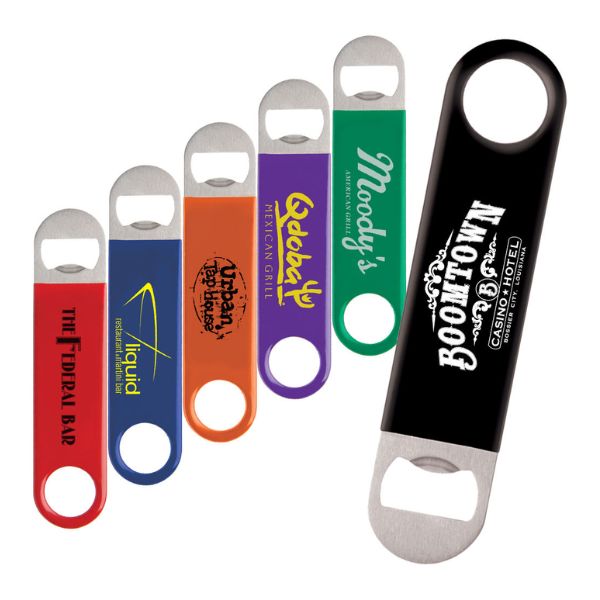
The bartender's standard — a flat stamped blade that lives in the apron pocket and takes a cap off in one motion. The commercial benchmark is roughly 180 × 40 mm at 1.8 mm thick; below 1.5 mm it flexes and the lip loses its bite, while 2 mm and up is heavy-duty grade.
Handheld Flat and Pocket Openers

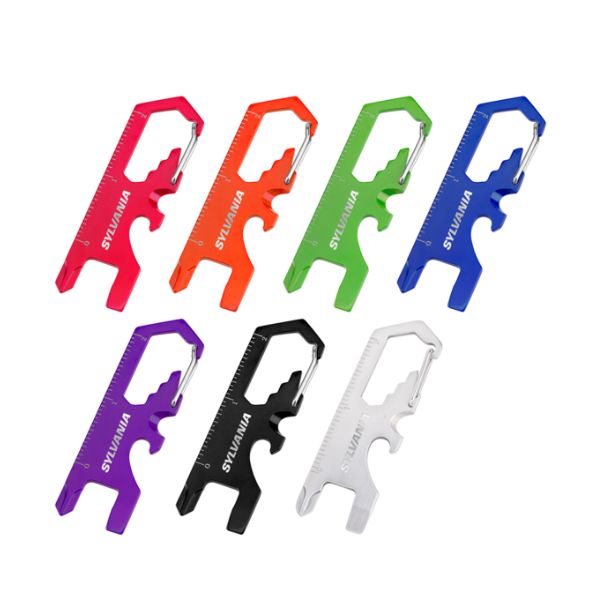
The giveaway format. Stamped steel or iron with a hang hole and one printable face, at the lowest unit cost in the range. Light to ship at festival quantities, and the shape most brewery taprooms sell over the counter.
3D Zinc Alloy Openers

Die-Cast 3D Zinc Alloy Openers

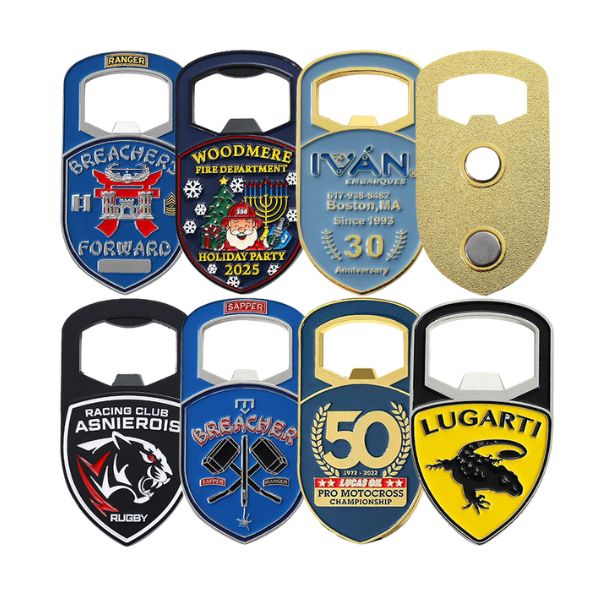
For when the opener has to be the brand rather than just carry it: a mascot, a bottle silhouette or a crest cast in relief and filled with enamel colour. Zinc holds detail stamping cannot. Price two things in — a new shape needs its own paid tool, and the alloy is brittle on a hard floor.
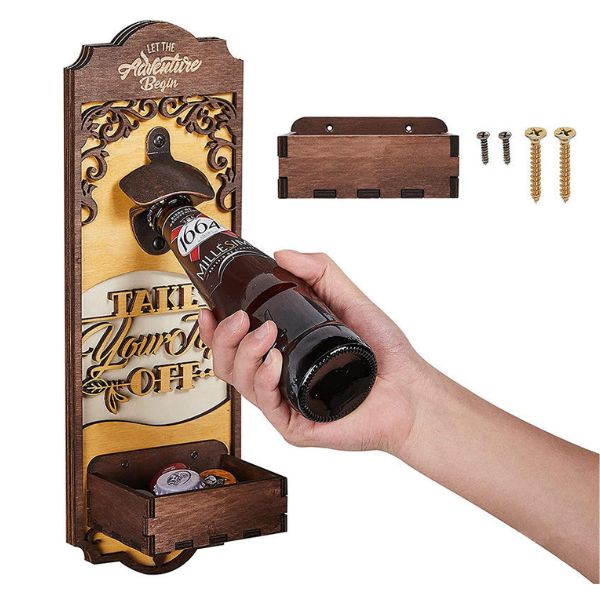
Wall-Mounted Openers with Cap Catcher

Bolted to a wall, a post or the side of a cooler, with a box that takes the caps instead of leaving them on the floor. The closest scene fit on this page: it stays where your customers drink. Confirm the fixing surface first, and decide who empties the box — nobody does by week two.

Magnetic Openers and Cap Catchers

Magnetic Openers and Cap Catchers

Neodymium magnets let the opener park on a fridge, a cooler door or a steel bar front and catch the cap as it comes off. Ask what grade the magnet is and how it is retained: stainless itself is not magnetic, and a magnet working loose is the most common failure here.
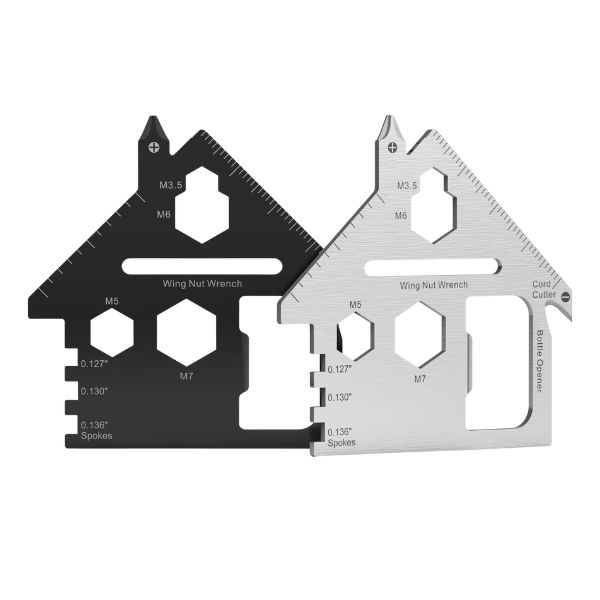
Multi-Tool Openers

Wood, Leather and Multi-Tool Openers

The retail and gifting end — hardwood or leather-wrapped handles, or a folding tool pairing an opener with a corkscrew. The highest unit cost, and the only formats with a real care instruction: wood and leather never meet a dishwasher or a sanitising sink.
TAG

Put Your Logo Where It Survives

An opener gets handled, dropped, pocketed and washed. How the mark is applied decides whether it survives the season, not just the first week.

Laser Engraving

Cut into the metal, with no ink and no layer to lose. Single tone, no plate charge, and the only method we recommend for a bar blade that sits in a pocket against keys and coins.

Die-Struck Relief with Soft or Hard Enamel

Struck into the tool, then filled with Pantone colour. Hard enamel polishes flat with the metal and holds up better; soft enamel sits in the recess and chips on a hard knock. Both need a struck tool, so both carry tooling cost.

Pad, Screen and UV Printing

Flat artwork in multiple spot colours at the lowest cost per unit, with UV adding photo-grade detail for complex labels. Right for flat and card bodies that never rub a pocket — and the first to look tired on one that does.

Epoxy Dome and Full-Colour Print

Full-colour artwork under a clear resin dome gives the strongest colour and depth here. The trade-off: resin scratches, and it yellows under UV over a season or two outdoors.

Finish, Plating and Packaging

Natural stainless, sprayed black, white or red, Pantone-matched coating at quantity, plus antique brass, nickel, copper, chrome, brushed and matte powder coat — and the backing card, sleeve or gift box. One thing to settle early: on parts that sit against skin all season, plating is a compliance decision, not only a colour decision.

Check Whether Your Market Still Needs a Tool


An opener only earns its place if the bottle needs one. Crown caps are a 26 mm standard in two versions: pry-off, which needs a tool, and twist-off, which does not. Europe, most of Latin America and the large majority of craft brewers run pry-off — Brewers Association estimates put it at 80 to 85 percent of craft — while North American mass-market lagers moved to twist-off. A pry-off market wants a tool that opens cleanly thousands of times, so the money goes into gauge, lip geometry and steel; a twist-off market wants an object worth keeping, so it goes into finish, weight and packaging. Tell us which closure your bottles use.

Openers manufacturer

Specify the Two Places an Opener Fails


Every complaint about a custom opener traces to one of two places. The first is the lip, the edge that hooks under the cap: thin stock flexes, soft metal rounds off after a few hundred bottles and slips — the moment staff reach for something else. Steel at 1.8 mm or heavier, or a hardened lip on a cast body, prevents it. The second is the mark: printing wears fastest where an opener rubs a pocket, resin yellows under UV, and only engraving and struck relief are permanent. Settle both before the tool is cut.

FAQ About Custom Bottle Openers


If your bottles close with a 26 mm crown cap, yes — pry-off or twist-off, that is the standard the lip is cut to. On a twist-off market the opener still works but competes on looks, so put the budget into finish rather than gauge.


Laser engraving and die-struck relief, because the mark is cut into the metal instead of sitting on top. Pad, screen and UV printing are the cheapest and wear first on anything carried in a pocket. A dome looks best on day one and yellows under UV within a season or two.


Stainless for service and wet bars: 304 resists the moisture, citrus and sanitiser behind a bar, while martensitic grades such as 420 are harder but rust in exactly that environment. Zinc for shape — it casts detail stamping cannot hold, at the cost of being brittle if dropped and needing a tool per design.


For metal parts that sit against skin, keychain and pocket openers especially, REACH Annex XVII limits nickel release to 0.5 µg/cm²/week, tested to EN 1811 (EN 12472 where coated). Lead in accessible parts is capped at 500 mg/kg, cadmium at 100 mg/kg.


From 500 pcs for a stamped blade or flat shape, 500 to 1,000 for a die-cast shape, plus USD 50 to 100 for a new die-cast tool billed separately. Guide prices per opener: USD 0.16 to 0.80 stamped stainless, 0.35 to 1.50 die-cast zinc with enamel, 2 to 6 wood, leather and multi-tool. Sampling about 7 days, bulk 25 to 35 days, HS code 8205.51. Terms 30 percent deposit, balance against bill of lading copy.

Scroll to Top