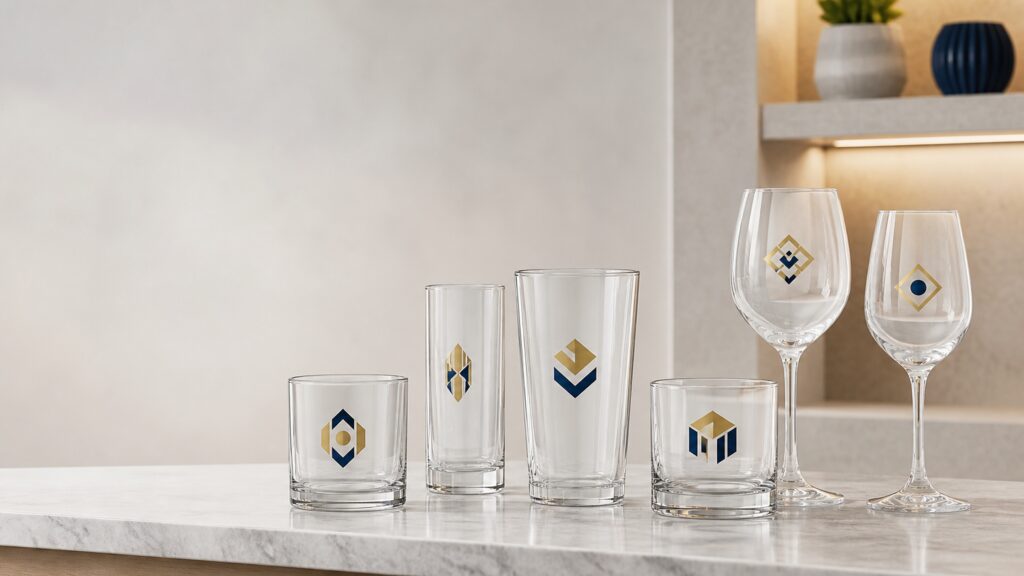
Custom drink glasses with logo turn a practical serving item into a repeat brand touchpoint. A brewery can reinforce its taproom identity with printed pint glasses; a hotel can standardize its bar presentation; and a retailer can create a gift-ready branded glassware line.
For wholesale buyers, the decision is bigger than choosing a nice-looking glass. You need to match the vessel to the beverage and sales channel, select a decoration method that suits the artwork, confirm sample quality, and protect a fragile product through export packing. This guide walks through those choices before you place a bulk order.
What are custom drink glasses with logo?
They are glass drinkware customized with a business name, symbol, campaign artwork, measurement mark, or other approved design. The logo may be screen printed, laser engraved, frosted, etched, or applied through another supplier-supported decoration process. Typical buyers include beverage brands, restaurants, hotels, event organizers, distributors, promotional-product companies, and private-label sellers.
The best choice depends on how the glass will be used. A single-color permanent-looking mark may be ideal for a bar program, while a multi-color artwork may better suit a limited-edition retail promotion. Decide the intended use before comparing quotes.
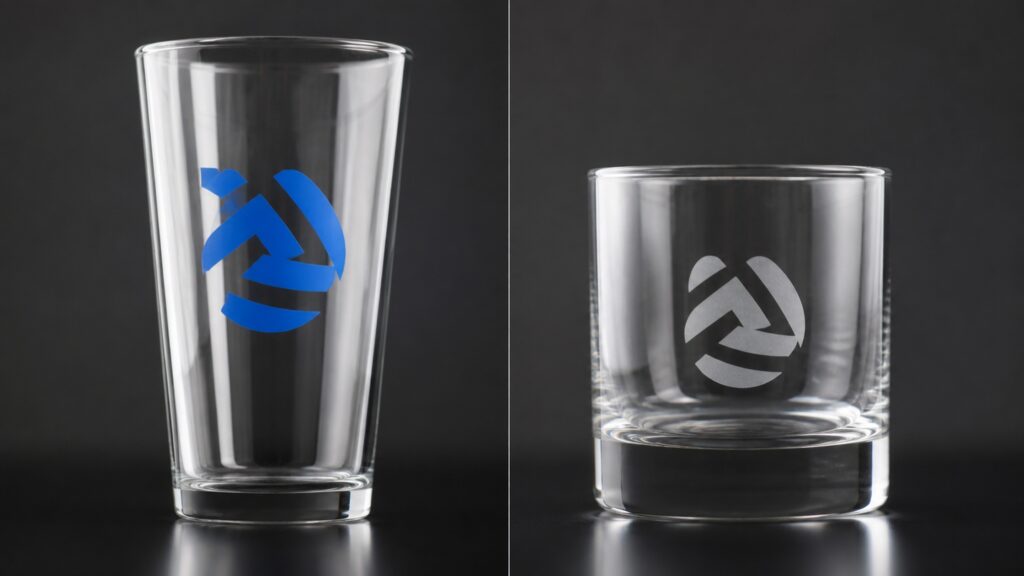
Main types of logo drink glasses
Pint and beer glasses
Pint, pub, pilsner, and beer-can-shaped glasses are natural choices for breweries, pubs, sporting events, and casual retail bundles. Their broad printable area gives a logo good visibility. A larger vessel can improve the on-shelf or on-bar impression, but also increases glass weight and carton volume.
Highball and tumbler glasses
Highball glasses work for water, soft drinks, cocktails, and mixed beverages. Low tumblers and rocks glasses fit spirits, cocktails, and premium gift sets. These versatile formats can suit hospitality accounts or a lifestyle retail range, but check that the selected shape has a stable base and a comfortable rim.
Wine, champagne, and stemmed glasses
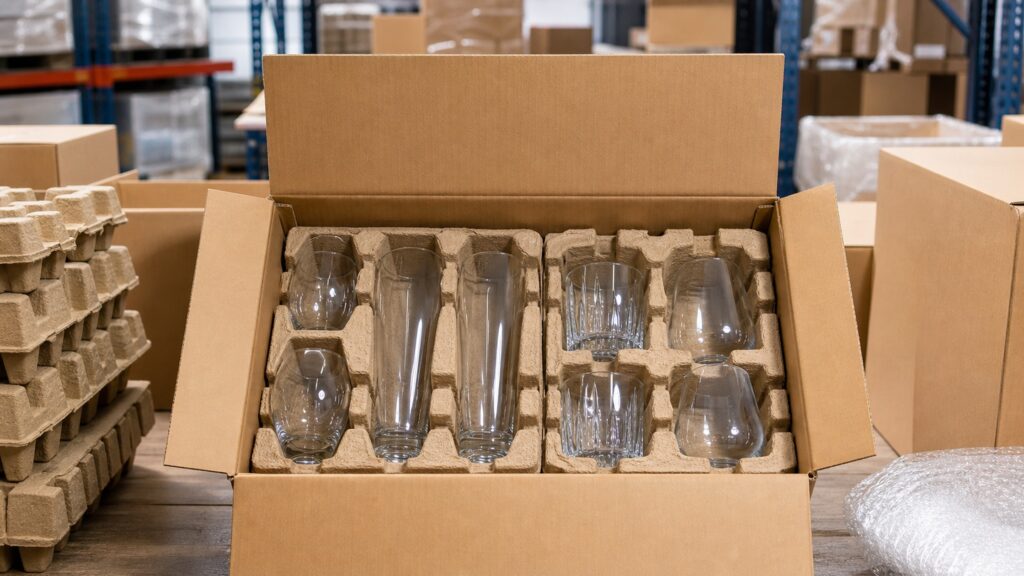
Stemware can elevate a winery, restaurant, corporate-gift, or premium-event program. It also needs more careful handling in packing and inspection because stems are a common breakage point. Ask the supplier to show the packing layout, inner protection, and carton test approach for the exact SKU.
Shot, tasting, and specialty glasses
Shot glasses, tasting glasses, espresso glasses, mason-jar-style glasses, and cocktail-specific shapes work well for sampling, souvenirs, and brand activations. Their smaller print area means that a simple logo often reproduces more clearly than artwork with small text or fine lines.
Choose the right logo decoration method
Screen printing
Screen printing is commonly used for bold, color-specific logos on glassware. It can suit branded merchandise, events, and hospitality programs where visual color recognition matters. Confirm the number of colors, artwork limitations, print location, print size, and whether the decoration is intended to withstand the washing conditions of your channel.
Laser engraving
Laser engraving creates a frosted-looking mark by altering the surface. It is a strong option for a minimal, single-color visual and may be a good fit for giftware, spirits brands, or upscale venues. Fine details still need to be reviewed on a physical sample, especially on curved glass.
Etched or frosted effects
Etched and frosted looks can support a refined presentation. They are best evaluated with a production-representative sample because the result can vary with glass shape, artwork weight, and finish. Ask whether the effect is permanent, how it is produced, and which zones of the glass can be decorated safely.
Decal and full-artwork options
Some suppliers offer decal-based or other multi-color decoration options for more detailed artwork. These may open more design possibilities, but can add process steps, cost, and approval points. Supply vector artwork and request a digital proof before sampling.
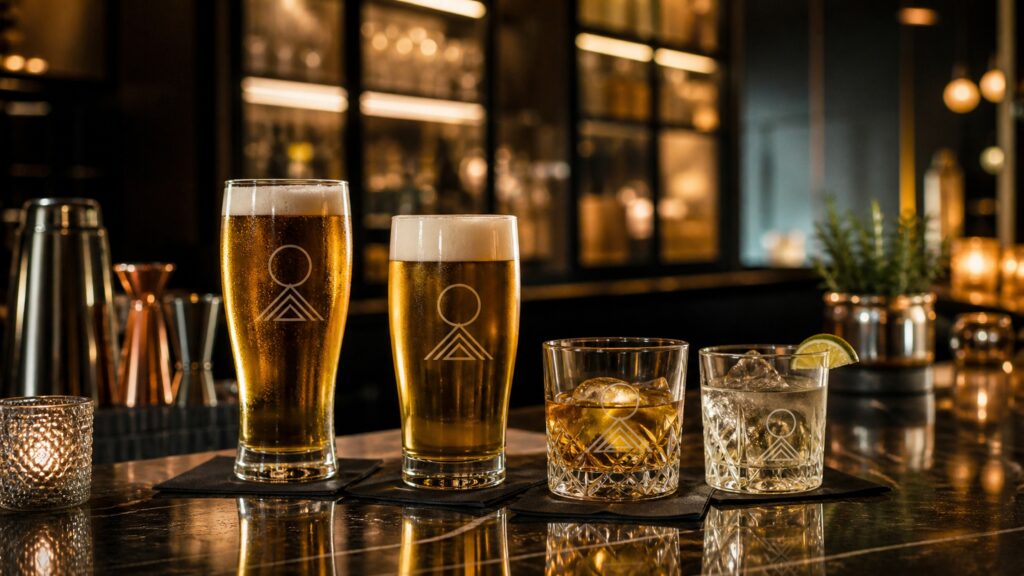
Materials and specifications to compare
Many everyday drink glasses use soda-lime glass. Some programs may call for borosilicate glass, crystal-style glass, or another material based on the required appearance, thermal use, and price position. Do not assume a material label answers every quality question; compare the finished sample.
Build an RFQ around measurable details:
- Glass style, capacity, height, rim diameter, base diameter, and target weight
- Material and color (clear, amber, colored, or frosted)
- Decoration process, location, dimensions, and number of colors
- Whether the glass is intended for hot drinks, cold drinks, or both
- Washing expectations and requested test evidence
- Individual protection, inner-box quantity, master-carton quantity, and carton dimensions
The exact weight and wall thickness influence the perceived value, breakage resistance, freight cost, and whether the item is suitable for a premium or value-oriented channel. A buyer should compare these together rather than choosing only by unit price.
Where branded glassware sells well
Custom logo drink glasses can support several B2B sales paths:
- Hospitality: bars, restaurants, hotels, clubs, and venues can use branded glasses as part of consistent service presentation.
- Beverage brands: breweries, distilleries, wineries, coffee roasters, and non-alcoholic beverage brands can use them for tastings, merchandise, or distributor promotions.
- Events and corporate gifts: a compact set can be a durable alternative to disposable event giveaways.
- Retail and ecommerce: curated glassware sets can be positioned as gifts or home-bar merchandise; packaging quality becomes especially important for parcel delivery.
Channel fit changes the specification. A bar may prioritize repeatable supply and washing durability, while an ecommerce seller may prioritize gift-ready packaging and lower damage rates in last-mile shipping.
How to evaluate quality before bulk production
Never approve custom glassware from a catalog photo alone. Request a pre-production sample or a production-representative decorated sample and check the following.
- Glass quality: Look for cracks, chips, sharp rim edges, visible bubbles, excessive seams, distortion, and an uneven base.
- Logo accuracy: Compare logo color, line weight, placement, height, scale, and orientation against the approved artwork and proof.
- Finish and handling: Hold the glass, inspect the rim and foot, and assess whether the decoration feels consistent and clean.
- Wash and use testing: Agree on a suitable test method for your sales channel. Confirm what is tested, by whom, and what result is acceptable rather than relying on a broad “dishwasher safe” statement.
- Packing test: Review individual protection, divider or molded-pulp fit, carton strength, drop-test requirements where relevant, and final carton markings.
For a mixed-SKU collection, inspect each style. A print that looks excellent on a straight pint glass may need different placement or size on a tapered wine glass.
Food-contact and market compliance questions
Glassware is a food-contact product, and the decoration, coatings, colorants, and manufacturing process may all matter. In the United States, FDA food-contact rules address substances that may contact food; FDA explains that the status depends on the individual substances and their intended conditions of use. In the EU, food-contact materials placed on the market are subject to the general safety and inertness principles in Regulation (EC) No 1935/2004.
Ask your supplier for documentation that is relevant to your destination market and your exact construction, including the glass, logo ink or coating, and intended use. Do not treat a general test report as automatically applicable to every decorated SKU, production run, or country. When requirements are important to your launch, have an appropriate compliance professional or laboratory confirm the scope before shipment.
How to source custom drink glasses with logo from China
Start with a clear RFQ. Send vector artwork (AI, EPS, PDF, or SVG where possible), preferred glass shapes, quantity by SKU, destination country, target delivery date, and packaging requirement. Ask each supplier to quote using the same specification so you can compare like for like.
Then follow a practical sourcing sequence:
- Shortlist the shapes and decoration methods that fit the project.
- Review a digital artwork proof for size and placement.
- Approve a physical sample where the finish, color, or durability matters.
- Confirm MOQ, production lead time, packing, testing, inspection standard, and shipping terms in writing.
- Arrange pre-shipment inspection focused on the agreed critical points: glass defects, logo placement, quantity, packing, and carton condition.
- Use carton dimensions and gross weight to plan consolidation and freight—not just the product’s unit price.
Marketplace listings show that customization options and MOQ can vary dramatically by SKU, decoration process, and supplier. Treat advertised prices or minimums as a starting point for inquiry, not as a benchmark for every glass type.
FAQ
What logo file should I send for custom drink glasses?
Vector files such as AI, EPS, PDF, or SVG are usually the safest starting point because they allow the supplier to scale artwork cleanly. Also send brand color references and specify the required print location and dimensions.
Can I put a full-color logo on a glass?
Often yes, but availability depends on the decoration process, artwork, glass shape, and order quantity. Ask for a proof and a physical sample before confirming a detailed or color-critical design.
What is a typical MOQ for custom glassware?
There is no single standard MOQ. It can change with the glass model, stock availability, print colors, decoration method, packaging, and whether a new mold is needed. Request MOQ by SKU and ask whether mixed designs or mixed styles are possible.
How can I reduce breakage in shipping?
Use a packing specification matched to the delivery channel: individual protection, secure inner dividers or molded inserts, suitable master cartons, and documented carton testing where relevant. Confirm the exact packing with photos or a sample pack before production.
Final thought
The right custom drink glass makes your logo part of the serving experience—but the successful wholesale order is built on a clear specification, an approved decorated sample, relevant compliance checks, and packaging that protects the product all the way to its destination. If you need help comparing glassware suppliers, developing private-label packaging, arranging inspection, or consolidating shipments from China, a sourcing partner can coordinate the process around your approved specification.