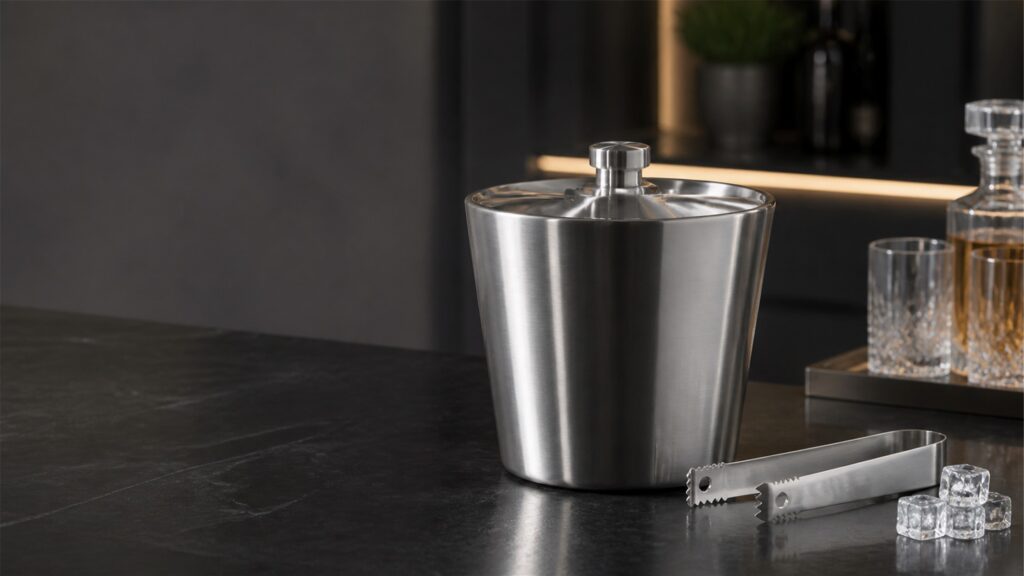
An insulated ice bucket with lid may look like a simple bar accessory, but it can serve very different purposes: cocktail service, hotel room amenities, outdoor entertaining, retail gift sets, or branded beverage promotions.
For importers, wholesalers, hospitality buyers, and private-label sellers, the best model is not simply the one that looks premium. It should match your target customer’s service time, bottle format, price point, cleaning expectations, packaging requirements, and shipping plan.
This guide explains how to choose the right insulated ice bucket with lid before requesting samples or placing a wholesale order.
What Is an Insulated Ice Bucket with Lid?
An insulated ice bucket with lid is designed to hold serving ice or chill bottles while reducing heat transfer from the surrounding environment. Premium models commonly use a stainless-steel inner and outer wall. The space between the walls may be an air gap, foam insulation, or a vacuum, depending on the construction.
The lid is not only decorative. A well-fitting lid helps reduce warm-air exposure, keeps dust away from the ice, and creates a more premium product experience.
For commercial use, ice tongs or a scoop are also important. Ice is handled as food in many markets, so buyers should prioritize clean, food-safe surfaces and proper serving accessories.
Main Types of Insulated Ice Buckets with Lids
Compact Bar Ice Buckets
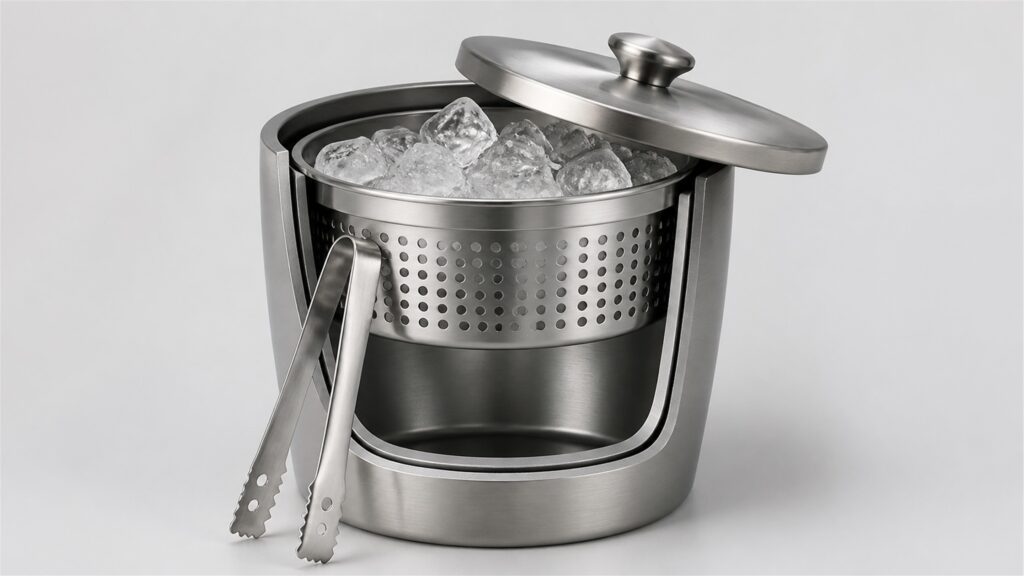
Compact ice buckets are usually designed for tabletop cocktail service, home bars, room service, and gift sets. They are commonly sold with a lid, ice tongs, and a removable strainer.
This format is suitable for buyers who want a complete retail-ready set rather than a large bottle chiller. It works especially well for barware collections, corporate gifts, and ecommerce listings.
When sourcing compact models, check whether the tongs have a dedicated storage position. If the accessory is loose or poorly packed, it can increase missing-part complaints after delivery.
Wine and Champagne Ice Buckets
Wine and champagne buckets are usually taller or wider than standard bar ice buckets. They are designed to hold a bottle surrounded by ice and water.
A lidded version can offer a more premium option for hotels, outdoor patios, yacht service, or gift channels. However, buyers should request the internal diameter and usable depth instead of relying only on the advertised capacity.
A bucket may have a large litre capacity but still be too narrow for some champagne or sparkling-wine bottles. Testing with representative bottles is essential before approving the final design.
Large Party Buckets and Beverage Tubs
Large insulated buckets are intended for multiple cans, beer bottles, soft drinks, or self-service beverage stations. They may be made from stainless steel, plastic, acrylic, or galvanized metal.
These materials serve different purposes. Acrylic beverage tubs provide clear product visibility, while double-wall stainless-steel buckets are more suitable when buyers want a dry exterior, stronger insulation, and a premium appearance.
For larger models, consider the filled carrying weight. Strong handles, smooth handle pivots, and a stable base become much more important once the bucket is full of ice and drinks.
Key Features to Compare
Single Wall, Double Wall, or Vacuum Insulated?
Single-wall metal buckets can look attractive, but they transfer cold to the exterior more easily. This can create condensation on tables, bar counters, or packaging surfaces.
Double-wall construction adds a thermal barrier between the inside and outside walls. It is commonly used for premium home bar products, hospitality use, and gift sets.
Vacuum-insulated construction is generally a higher-spec option. It may be suitable for outdoor events, warm environments, or situations where ice needs to last longer. However, it also increases production cost and requires more consistent manufacturing quality.
Do not rely only on a supplier’s generic claim that ice “lasts all day.” Ask for the actual test conditions, including:
- Ambient temperature
- Amount and type of ice used
- Whether the lid was closed
- Frequency of opening
- Test duration
- The method used to measure remaining ice or meltwater
This makes it easier to compare supplier samples fairly.
Lid Design and Seal
A good lid should fit securely without sharp edges, excessive wobble, or difficult-to-clean gaps.
Depending on the product design, the lid may be stainless steel, bamboo, wood, plastic, or silicone-sealed. Each material creates a different product position.
For example, a brushed stainless-steel lid may suit a hotel or bar collection, while a wooden lid can work well for a home gift set. If the lid or gasket may touch ice or meltwater, request the material details and relevant food-contact documentation.
Strainer, Drip Tray, Tongs, and Scoop
A removable strainer or drain tray keeps ice above meltwater. This can improve usability for cocktail service and help keep the ice easier to access.
However, every extra accessory increases the need for quality inspection. Check the following:
- Does the strainer fit securely?
- Are the drainage holes smooth and evenly finished?
- Is it easy to remove and clean?
- Are the tongs comfortable to grip?
- Are all accessories protected during packing?
- Does the retail box clearly show what is included?
If you sell the product as a complete set, use a component checklist during final inspection.
Material and Surface Finish
Stainless steel is a common choice for premium ice buckets because it is durable, easy to clean, and suitable for hospitality or retail use.
Suppliers may describe stainless steel using different terms, such as 18/8 stainless steel, 304 stainless steel, food-grade stainless steel, or stainless-steel grade. Record the exact material specification in your purchase order instead of accepting broad descriptions.
For food-contact products, surfaces should be smooth, corrosion resistant, durable, non-toxic, and easy to clean.
Surface finish also affects the customer experience:
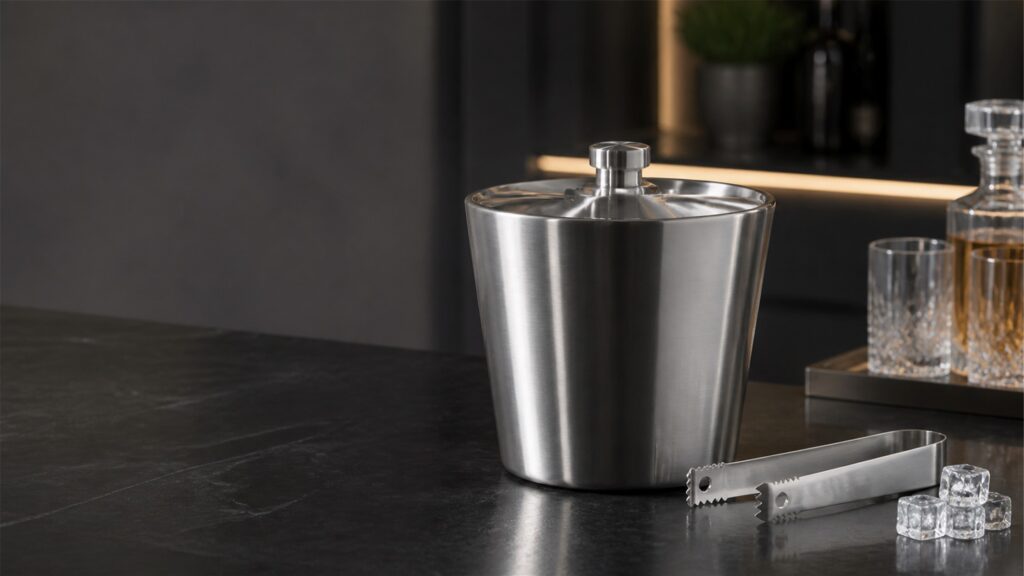
- Brushed stainless steel: Hides fingerprints and minor handling marks more easily.
- Mirror finish: Creates a more formal and luxury appearance but can show scratches and fingerprints.
- Powder coating: Supports color collections and private-label branding but requires scratch, adhesion, and color-consistency checks.
- Matte finish: Can suit modern gift, homeware, and lifestyle channels.
Which Sales Channels Fit This Product?
An insulated ice bucket with lid can fit several sales channels, but the ideal configuration changes by customer type.
Bars, Restaurants, Hotels, and Catering
Prioritize easy cleaning, sturdy handles, reliable accessories, and a professional finish. Compact bar ice buckets and bottle chillers are often suitable for this market.
Ecommerce and Specialty Retail
For online sales, create a clear product story. Useful selling points may include double-wall construction, a dry exterior, fitted lid, removable strainer, ice tongs, and gift-ready packaging.
At the same time, control carton size and dimensional weight. A bulky gift box can make an otherwise affordable product expensive to ship.
Corporate Gifts and Beverage Promotions
For promotional products, branding space, custom color, logo visibility, and presentation packaging may be more important than the highest insulation specification.
A branded ice bucket can work well for liquor promotions, brewery gifts, hospitality campaigns, and event merchandise.
Outdoor and Event Channels
For outdoor use, prioritize a secure lid, practical carrying handles, stable construction, and enough capacity for the intended number of drinks.
A bucket that looks elegant but becomes difficult to carry when filled is likely to create poor customer feedback.
How to Choose a Good Wholesale Model
Before contacting suppliers, prepare a one-page product specification sheet. It should include:
- Intended use
- Target capacity
- Internal dimensions
- Body material
- Lid material
- Wall construction
- Surface finish
- Accessory list
- Logo method
- Packaging requirements
- Destination market
- Estimated order quantity
This allows suppliers to quote against the same brief and makes comparison easier.
When reviewing samples, focus on the details that affect landed cost, quality, and return risk.
1. Check Usable Capacity
Test the actual product use case. For example, use the wine bottle, champagne bottle, beer bottles, cans, or ice volume your customers are likely to use.
Do not choose a model based only on the listed litre capacity.
2. Test Condensation and Ice Retention
Run a consistent sample test. Use the same amount of ice, the same room temperature, and the same opening schedule for each supplier sample.
Compare not only ice retention, but also exterior condensation. A bucket that creates water rings on a table may not be suitable for a premium hospitality or homeware market.
3. Check Comfort and Safety
Inspect the bucket rim, handle movement, lid removal, tong grip, and base stability.
Look for sharp edges, loose handles, rough welding, unstable bases, or accessories that are difficult to use.
4. Confirm Cleanability
Check seams, welded areas, drainage corners, silicone gasket grooves, and any narrow spaces where water could remain after washing.
A product that is difficult to clean may create complaints in foodservice and hospitality applications.
5. Inspect Set Completeness
If your product includes a lid, strainer, tongs, scoop, or gift box, inspect every component.
Verify carton quantity, accessory quantity, protective packaging, and retail-box contents before shipment.
6. Test Finish Durability
Check for scratches, coating adhesion, fingerprint visibility, color variation, and logo quality.
For powder-coated products, test the finish around edges, handles, and frequently touched areas.
Private Label and Custom Packaging Options
Common customization options for insulated ice buckets with lids include:
- Laser-etched logos
- Screen-printed logos
- Custom powder-coated colors
- Custom lid materials
- Branded hang tags
- Gift boxes
- Barcode labels
- Custom master cartons
- Promotional inserts
Choose a customization method that matches your market position.
For example, laser engraving may be suitable for a stainless-steel hospitality product, while a printed logo may be more visible for a seasonal beverage promotion.
Customization MOQ, sample timing, tooling fees, and production lead time can vary by supplier and product configuration. Confirm each item in writing before placing the order.
Before bulk production, approve a golden sample with the final logo, lid, accessories, packaging, and labeling.
FAQ
Is a double-wall ice bucket the same as a vacuum-insulated ice bucket?
No. Both have inner and outer walls, but the space between them may contain air, insulation material, or a vacuum. Ask the supplier to specify the exact construction and test conditions.
Do I need both a lid and a strainer?
They serve different functions. A lid helps reduce warm-air exposure and keeps the ice protected. A strainer or drip tray keeps ice above meltwater. Including both can create a stronger value proposition for cocktail-service sets.
What capacity should I source?
Choose capacity based on your intended use: tabletop cocktail service, one-bottle chilling, or multi-bottle event service. Request internal dimensions and test with representative bottles before approving the model.
What documents should I request from suppliers?
Requirements depend on your destination market and the materials used. Request component-level material information and relevant food-contact declarations or test reports, then confirm market requirements with your importer, testing provider, or compliance adviser.
Final Thought
The best insulated ice bucket with lid is not a generic product decision. It is a configuration decision.
Start with the service setting, then choose the right capacity, insulation level, lid, accessory set, material, finish, packaging, and inspection plan.
With a clear sourcing brief and properly tested samples, an insulated ice bucket with lid can become a dependable hospitality item, retail barware product, corporate gift, or branded beverage promotion.