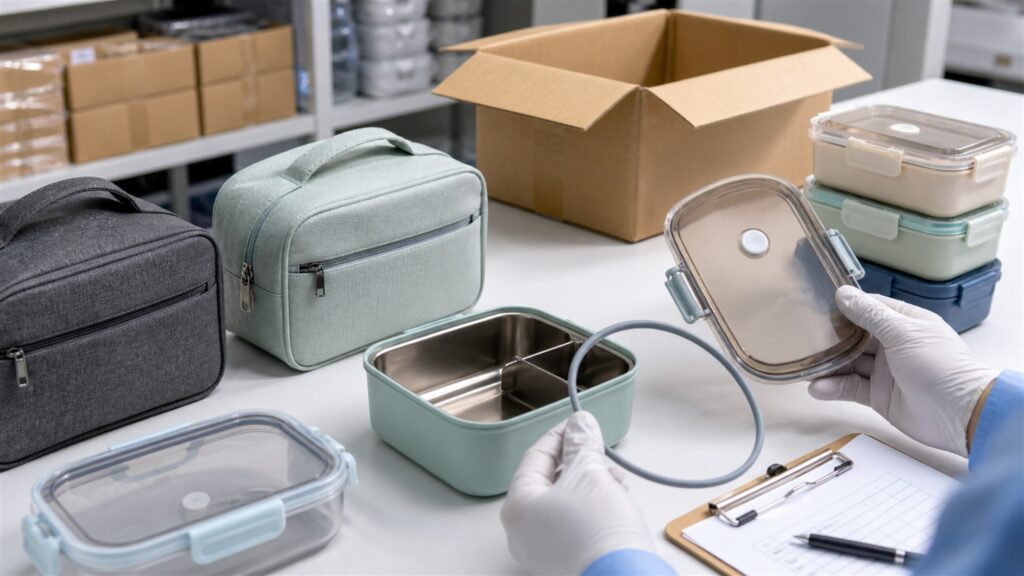
A personalized lunch box is a food container, lunch bag, or meal-packaging box customized with a name, logo, color, artwork, or branded packaging. For consumers, personalization makes lunch easier to identify and more enjoyable to carry. For a business buyer, it is a product, packaging, or promotional asset that must meet a much longer list of requirements: the right use case, material, food-contact suitability, print method, packing plan, and landed-cost target.
This guide helps importers, retailers, ecommerce sellers, school-supply buyers, and foodservice brands decide what kind of personalized lunch box to buy and how to prepare a clearer sourcing brief. It covers reusable lunch boxes as well as disposable branded lunch packaging, because the same search term is often used for both.
What is a personalized lunch box?
In wholesale buying, “personalized” can mean several different levels of customization:
- Name personalization: an individual name, often used for school, camp, gifting, or team orders.
- Logo branding: a logo on a stocked product or a logo-and-color combination for promotional merchandise and private-label retail.
- Full artwork: custom patterns, character art, wraps, or all-over print for a distinct retail collection.
- Packaging personalization: a printed paper lunch container, sleeve, label, or carton for restaurants, catering, and meal-delivery brands.
These are not interchangeable. Adding one-color artwork to an existing mold normally has a different cost, lead-time, and minimum-order profile from creating a new compartment layout or asking for variable names one by one. Decide which level you need before requesting quotations.
Main types of personalized lunch boxes
1. Reusable hard lunch boxes
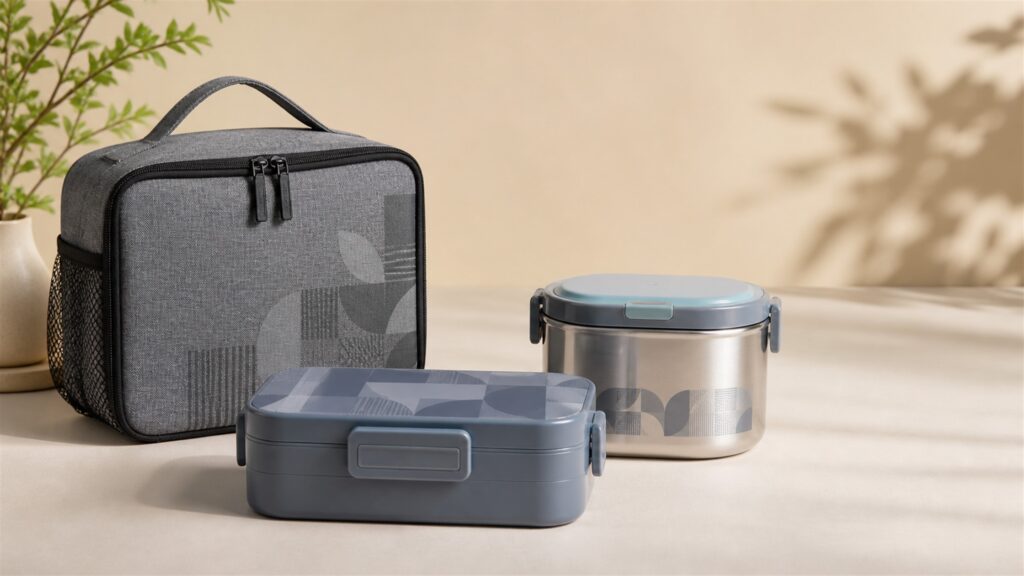
This category includes plastic, stainless-steel, bamboo-composite, and bento-style containers. Common configurations have one open compartment, removable dividers, stacked tiers, a utensil compartment, or a separate sauce cup. They fit school supplies, outdoor lifestyle assortments, corporate gifts, and private-label homeware lines.
The commercial trade-off is usually between feature value and after-sales risk. More compartments can make meal planning easier, but add parts to inspect and pack. A seal and locking clips may support a leak-resistant positioning only after the assembled product has been tested for the stated use condition. Do not assume every hard lunch box is microwave-safe or dishwasher-safe; that depends on the exact body, lid, seal, decoration, and instructions.
2. Insulated lunch bags and soft lunch boxes
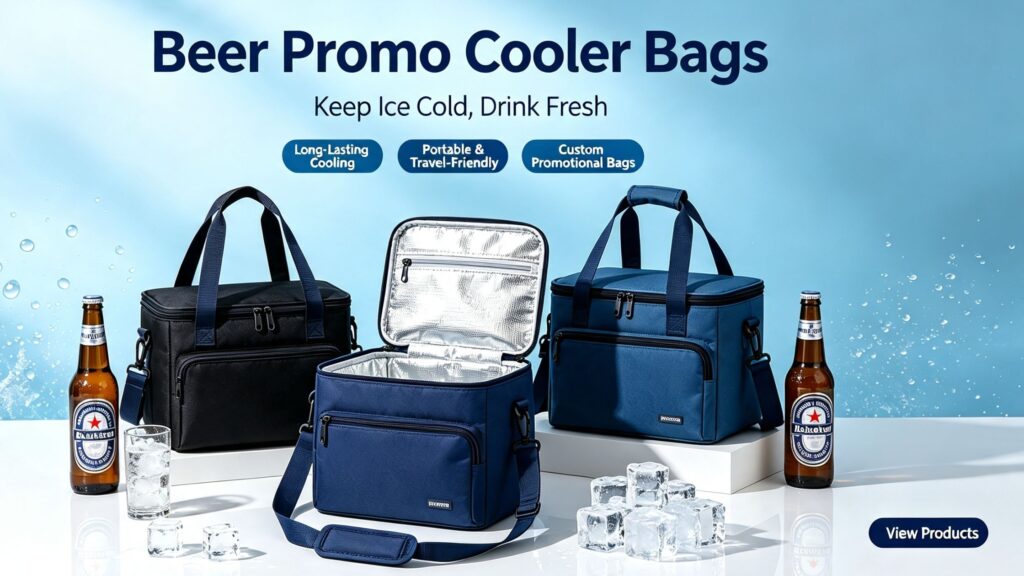
Soft-sided lunch bags commonly use polyester, nylon, canvas-like fabrics, or non-woven materials with foam and a foil or PEVA-style lining. A brand can add a woven label, embroidery, screen print, heat transfer, zipper puller, or hangtag.
They work well in back-to-school, employee wellness, sports, and promotional programs. Buyers should specify the insulation construction, lining, handle reinforcement, zipper type, pocket layout, and intended load. A large bag may raise perceived value, but it also changes carton volume and freight cost. Test the handle seams and zipper through repeated use rather than approving only a clean product photo.
3. Disposable or takeaway lunch packaging
Restaurants, caterers, and meal-prep operators may use “personalized lunch box” to mean a branded paperboard, kraft, bagasse, or corrugated food container. Common formats include fold-top boxes, gable boxes, compartment trays, sandwich boxes, and meal sleeves.
Here, product protection matters as much as visual branding. The board grade, coating or barrier, closure, venting, grease resistance, stackability, and food temperature need to be matched to the actual menu and delivery journey. A box that looks premium when empty can buckle, stain, or lose its closure with a hot, oily meal. Ask for a filled-product trial, not just a flat print proof.
Materials and features to compare
Choose materials from the intended use backward.
| Material or construction | Best fit | Buyer checks |
|---|---|---|
| PP or similar plastic container | Value-oriented reusable lunch boxes | Lid fit, odor, warp resistance, decoration adhesion, food-contact documentation |
| Stainless-steel container | Durable, higher-positioned reusable range | Grade and finish, sharp edges, lid/seal compatibility, dent protection |
| Fabric insulated bag | School, gifting, promotional, and lifestyle lines | Lining, insulation build, stitching, zipper, load test, color transfer |
| Paperboard or kraft container | Takeaway, catering, and branded meal packaging | Filled-meal strength, closure, grease/moisture performance, print rub resistance |
| Corrugated or heavier board | Larger meals or products needing more rigidity | Flute orientation, compression strength, die-cut accuracy, carton efficiency |
Material names alone do not prove a product is appropriate for every food or use. In the United States, food-contact substances are regulated according to their intended use; the FDA describes them broadly as substances that contact food, including packaging components, colorants, adhesives, and processing surfaces. Ask the supplier for documentation that is relevant to the exact material, food type, temperature, and destination market, then have your regulatory adviser confirm the final obligation. FDA food-contact overview
Which personalization method fits your project?
Use the simplest process that produces the brand effect you need.
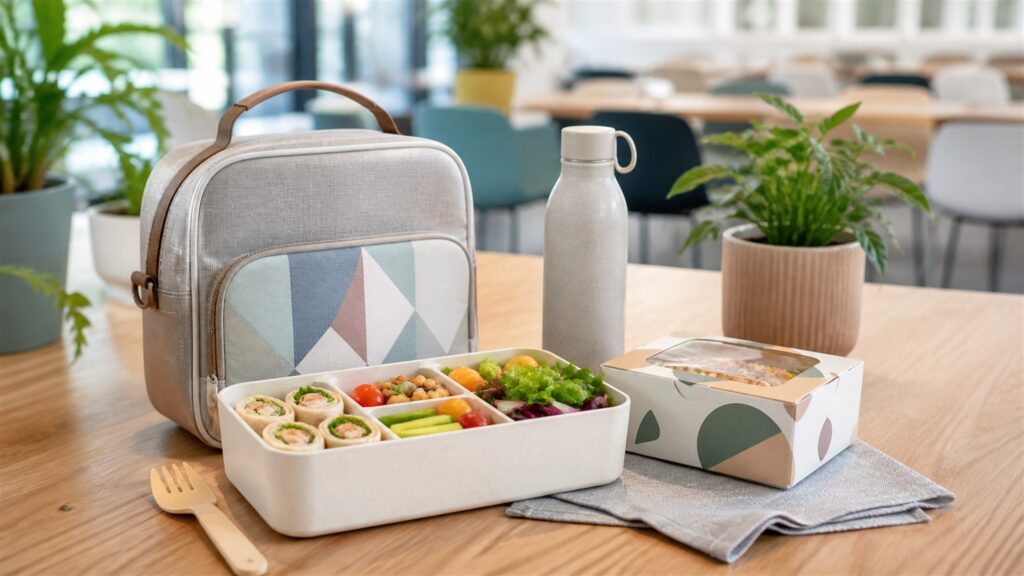
- Screen printing or pad printing can suit simple logos on compatible hard surfaces. Confirm color, position, abrasion resistance, and whether a curved surface affects artwork registration.
- Heat transfer, sublimation, or woven labels are common options for soft lunch bags. Supply the correct artwork and check how the decoration behaves after cleaning or flexing.
- In-mold color, molded details, or new tooling may help a private-label line look more distinct, but generally require a clearer forecast, development time, and mold ownership agreement.
- CMYK or Pantone printing on paper packaging supports foodservice branding. Confirm the print side, finish, fold lines, and whether inks, coatings, and adhesives are suitable for the specified food-contact design.
- Variable-data personalization is useful for names, but requires an accurate spreadsheet, a proofing rule, and a packing method that prevents mix-ups.
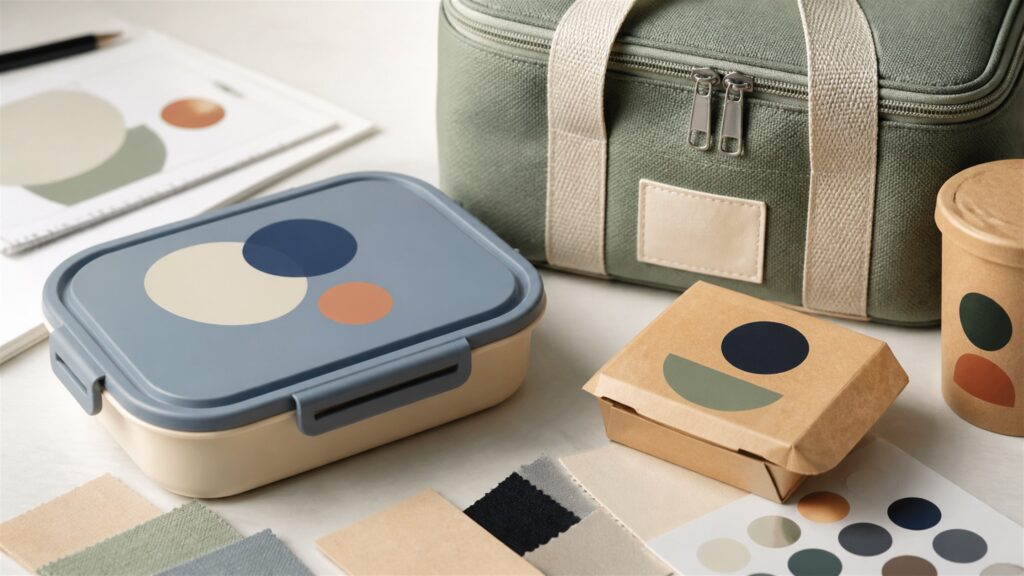
For every option, send vector artwork where possible, state the required brand colors, and request a pre-production proof. A digital mockup checks layout; it does not replace a physical sample when fit, print durability, food contact, or shipping performance matters.
Where personalized lunch boxes sell best
The right assortment depends on channel, not just design.
Retail and ecommerce. A reusable bento box or insulated bag can be sold as a functional lifestyle product. Bundles with a cutlery set, ice pack, or name label can improve the gift proposition, but each extra part creates a missing-item risk. Plan barcodes, retail packaging, and replacement-part policy early.
Schools, camps, and clubs. Individual names and easy identification are valuable. Prioritize simple opening, cleanable surfaces, age-appropriate features, and a packing system that keeps every personalized unit matched to the correct recipient.
Corporate and event gifting. A logo lunch box works best when it is genuinely useful after the event. Start with the recipient profile, logo visibility, and expected budget position, then choose a stocked model with a decoration method that matches the quantity and deadline.
Restaurants, catering, and meal prep. Branded disposable containers extend the service experience into delivery and takeaway. Test a real menu across holding time, delivery stacking, condensation, and any reheating instructions before committing to printed volume.
How to evaluate a personalized lunch box supplier
Request a quotation with enough detail for suppliers to quote the same product—not just “custom lunch box, best price.” A useful request includes:
- Product type, target user, target market, and quantity range.
- Dimensions, capacity or meal format, material preference, and required features.
- Artwork files, logo size and location, colors, and any individual-name data.
- Packaging: polybag, color box, hangtag, master-carton requirements, barcode, and carton-mark needs.
- Required use conditions: cold food, hot food, microwave use, dishwasher use, leak resistance, or delivery stacking.
- Documentation and test-report requirements relevant to the specific SKU and destination market.
- Sample, pre-production, inspection, shipment term, and delivery-date expectations.
Compare quotations on the same basis: model, decoration, packing, tooling, sample charge, testing, and delivery term. A low unit price can exclude individual packaging, upgraded material, or the freight-critical carton specification.
Quality checks before bulk production
Approve the product in stages.
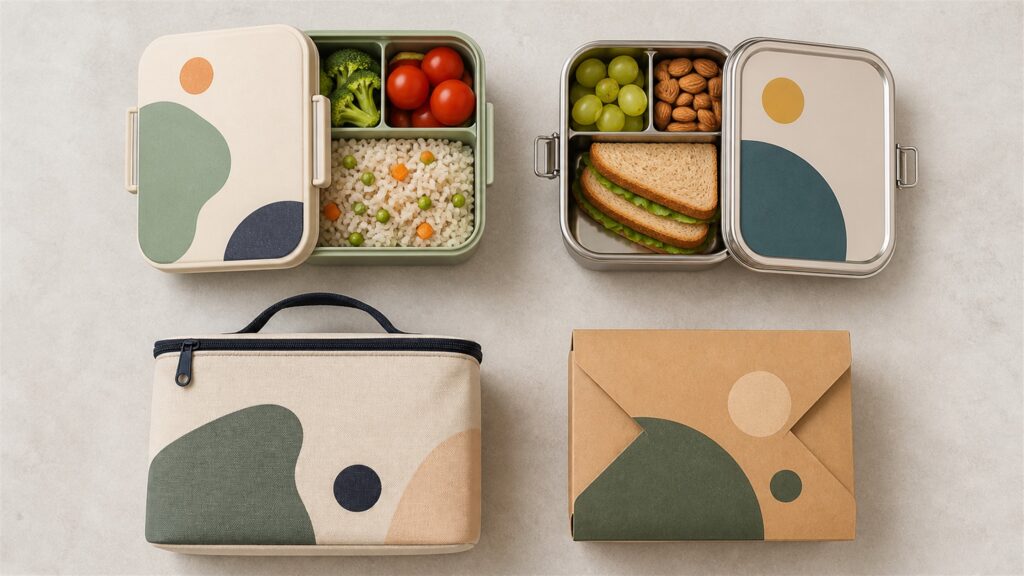
First, inspect the development or reference sample for dimensions, hand feel, smell, edge finishing, artwork, and color. For hard containers, check the lid, hinges, clips, divider fit, and silicone-seal placement. For bags, load the handle, operate the zipper repeatedly, inspect lining joins, and look for loose threads or uneven print. For paper lunch boxes, assemble several samples, fill them with representative food or weight, then stack and transport them as your customer would.
Next, approve a pre-production sample that uses final material, decoration, and packaging. During bulk inspection, use an agreed acceptance standard and pay close attention to the defects that matter for the selected design: wrong personalized name, color deviation, logo placement, missing accessories, damaged corners, weak closures, print scuffing, and carton marks.
Sourcing personalized lunch boxes from China
China sourcing can give you access to stocked models, decoration processes, packaging suppliers, and custom development in one supply chain. The project is easier to control when you separate three decisions:
- Choose the base product that meets functional and quality needs.
- Choose the branding method that fits the artwork, volume, and schedule.
- Choose the packing and inspection plan that protects the product and supports your sales channel.
If you need help, a sourcing partner can coordinate supplier comparison, sample follow-up, artwork confirmation, pre-shipment inspection, consolidation, and shipping. The buyer should still retain approval of the final specification, sample, labeling, and compliance documents.
FAQ
What is the difference between a personalized lunch box and a custom lunch box?
“Personalized” often refers to a name or individually tailored design, while “custom” can include a logo, color, structure, packaging, or fully new product. In practice, suppliers may use the terms differently, so describe the actual customization you need.
Can I put a logo on any lunch box?
Not automatically. The available decoration method depends on the base material, surface shape, artwork colors, order quantity, and durability requirement. Ask for a decorated sample or proof before placing a bulk order.
What documents should I request for a food-contact lunch box?
Request documentation and test reports applicable to the exact SKU, material, intended food contact, use temperature, and destination market. Do not rely on a generic “food grade” statement or a report for another model.
What should I test before ordering personalized takeaway boxes?
Test the final-sized container with representative food: heat, oil, moisture, weight, closure, stacking, and the expected holding or delivery time. Also check the final artwork for scuffing and fold alignment.
Final thought
The best personalized lunch box is not simply the one with the most decoration. It is the one whose material, structure, brand treatment, packaging, and documentation fit its real sales channel. Start with a precise brief, approve physical samples, and inspect the details that create customer complaints before the bulk shipment leaves the factory.
For a custom or private-label program, prepare your product brief and artwork first, then request like-for-like supplier comparisons, samples, quality inspection, and shipment planning.