Bulk can coolers are insulated sleeves or holders designed to fit beverage cans, bottles, or cups. You may also see them called koozies, stubby holders, can insulators, or beer coolies. For a buyer, they are more than a small giveaway: the right model can carry a logo, suit a specific drink format, and match a taproom, event, retail, or corporate-gift budget.
If you are sourcing can coolers bulk, do not start with a unit-price comparison alone. First choose the container fit, material, construction, decoration method, packing, and destination-market requirements. This guide helps you turn a broad product request into a clear RFQ.
What are bulk can coolers?
Most bulk can coolers create a layer between a chilled beverage container and the user’s hand. The sleeve can reduce direct hand contact and condensation on the outside of the container. In promotional programs, the outside panel also becomes a compact, reusable branding surface.
They are commonly sold to breweries, beverage brands, promotional-product distributors, festival organizers, restaurants, retailers, and online sellers. A low-cost collapsible sleeve may suit a large event; a substantial neoprene or stainless holder may better fit merchandise or a gift set.
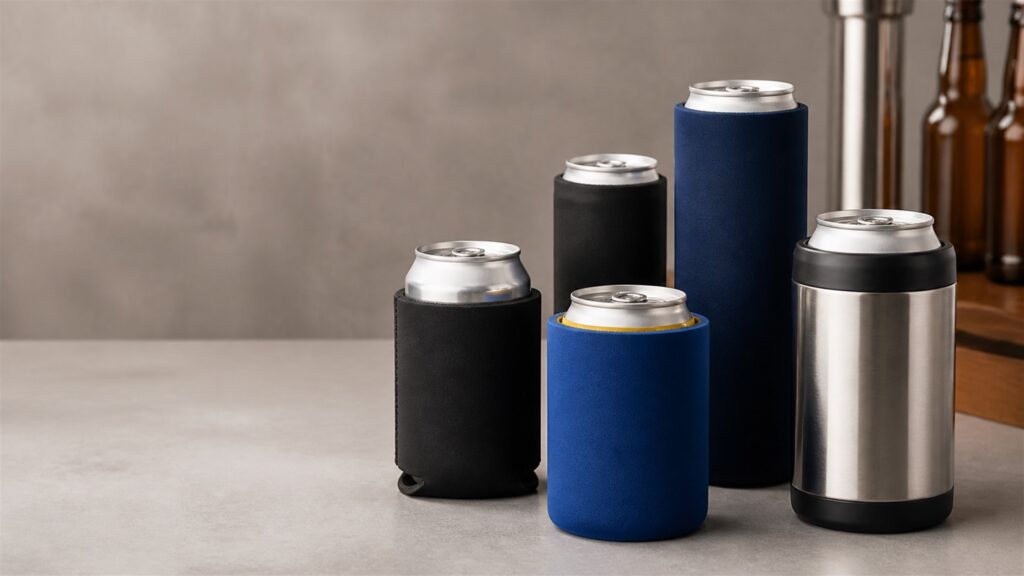
Choose the right can cooler type first
“Can cooler” is not one standard size. Specify the real beverage container before sampling, especially when your program includes slim seltzers, energy drinks, tall cans, or glass bottles.
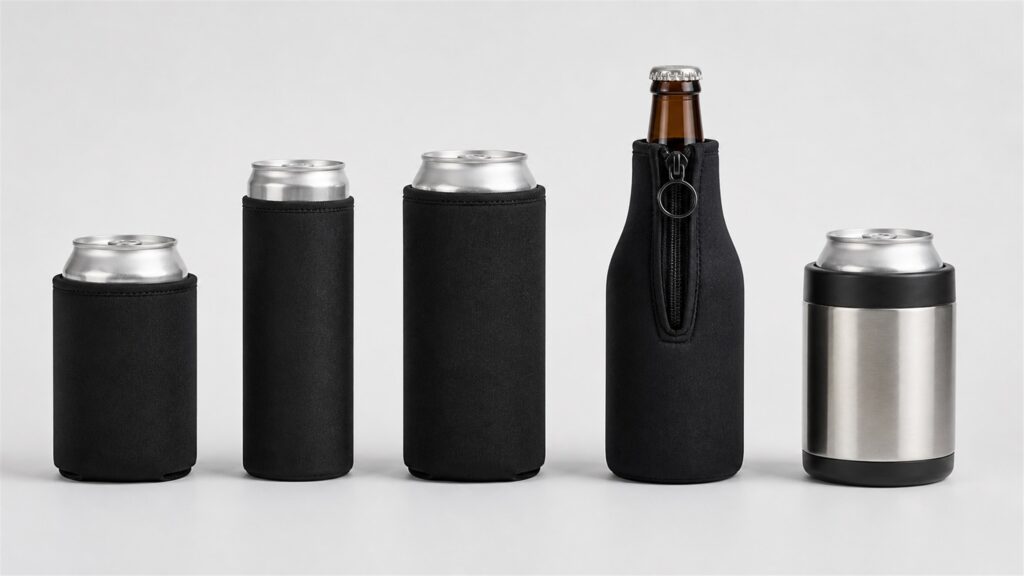
Standard collapsible can coolers
These sleeves are commonly ordered for regular beverage cans. Foam and neoprene versions fold flat when empty, helping with storage and shipment. They are a practical starting point for brewery promotions, sports events, and branded giveaways.
Ask the supplier for the approved fit sample rather than relying on a generic “12 oz” label. Can diameter, height, base shape, and the cooler’s seam allowance all affect fit.
Slim can coolers
Slim coolers are designed around narrower, taller cans, often used for seltzers and energy drinks. A standard sleeve may look loose on this format, so request the can dimensions or send the actual can to the supplier when the order is important.
Tallboy can coolers
Tallboy styles suit taller cans and can provide a larger printable panel. That extra surface can help a detailed design, but it also increases material use, packed volume, and the chance of a poor fit if the target can is not specified precisely.
Bottle coolers and zippered sleeves
Bottle coolers wrap around long-neck bottles. Some use a zipper, which can make fitting easier across a defined bottle range. Inspect zipper movement, pull attachment, stitching, and whether the base keeps the bottle upright on a table.
Stainless steel can holders
Stainless holders are a different price and logistics proposition from collapsible sleeves. They can make sense for premium merchandise, employee recognition, or gift-box programs. Their weight, retail packaging, finish consistency, lid/holder compatibility, and engraving result should all be sample-approved.
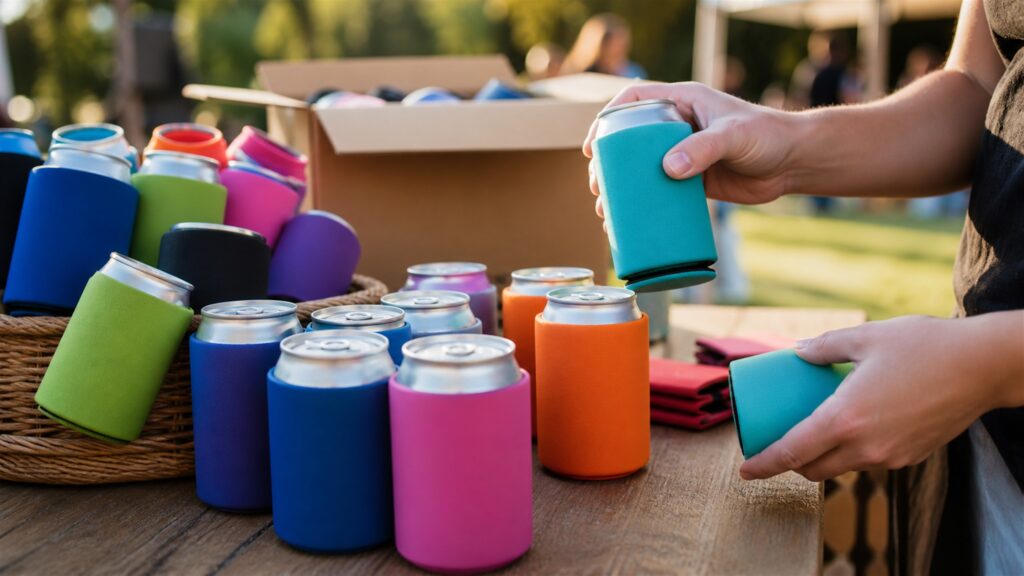
Foam vs. neoprene vs. stainless steel
The best material depends on the product’s job, not just on a buyer’s preference.
| Material | Best fit | Commercial considerations |
|---|---|---|
| Foam | Large giveaways and value-focused promotions | Usually compact and economical; check density, print coverage, join quality, and whether the product meets your perceived-value target. |
| Neoprene or neoprene-style fabric | Brewery merch, premium events, colorful private-label designs | Often gives a softer, reusable feel and supports multiple decoration approaches; confirm actual composition, thickness, lamination, odor, and seam quality. |
| Stainless steel | Retail gifts and premium loyalty programs | Adds durable, gift-oriented appeal, but also weight, packing complexity, and a higher landed-cost exposure. |
Avoid describing every rubber-like sleeve as “neoprene” unless the supplier confirms the material. Ask for the material specification in writing and retain the approved sample with your purchase records.
Pick a decoration method that suits the artwork
Your art is part of the product specification. A simple one- or two-color logo and a photographic full-wrap design may require different production methods, preparation, and quality checks.
- Screen printing can suit bold spot-color logos and simple graphics. Check ink coverage, registration, cure/adhesion, and color consistency across the production run.
- Heat transfer can handle more detailed artwork on compatible constructions. Confirm edge finish, transfer durability, and the color result on the final material color.
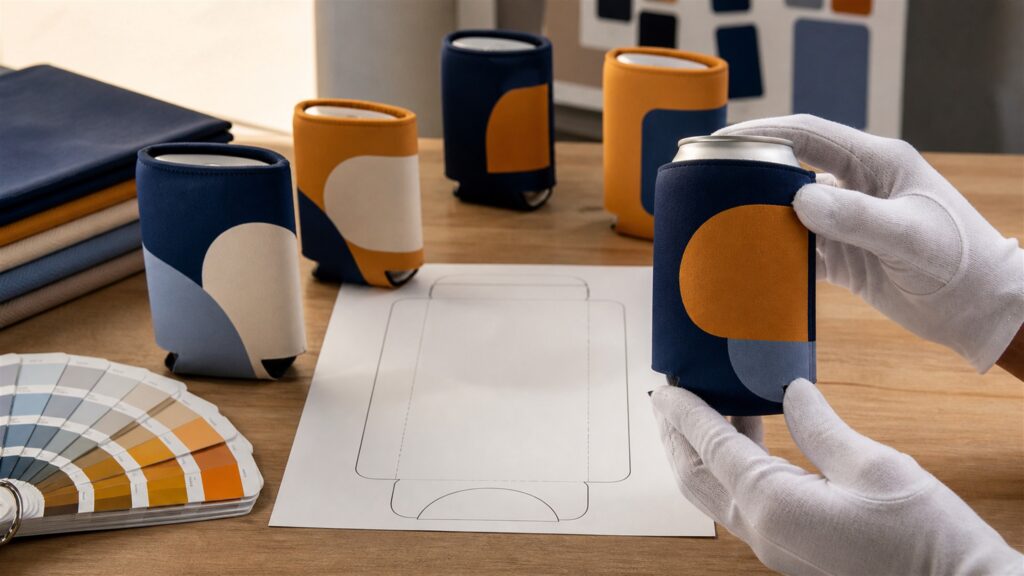
- Sublimation is often considered for all-over or full-color designs on compatible substrates. Review a physical proof because color, seams, and unprinted areas can affect the final look.
- Laser engraving is a common consideration for coated stainless holders. Check contrast and position on the actual finish rather than approving only a digital mockup.
Request the dieline or artwork template early. Keep important logo details away from seams, zippers, folds, and curved edges. For a repeat order, record the approved Pantone/reference color, print position, and sample photos.
Match the product to your sales channel
Breweries, taprooms, and beverage brands
For a taproom or brand program, choose a fit that matches the cans or bottles actually served. A reusable neoprene sleeve can feel more like merchandise, while a simpler foam sleeve can be added to a launch bundle or festival promotion. Consider pairing the article with a custom beer POSM wholesale buying guide when building a wider branded display program.
Festivals, weddings, and mass events
Event buyers normally need easy distribution, readable graphics, and predictable counts. Flat-packed collapsible sleeves may make fulfillment easier than rigid holders. Confirm individual versus bulk packing, event delivery date, and spare quantity before production starts.
Promotional distributors and corporate buyers
The important questions are brand accuracy and order administration: artwork proof, mixed colors, packing labels, and client-specific delivery. If you plan to sell several beverage accessories together, related products such as plastic beer buckets and custom drink glasses with logos can support a more complete program.
Ecommerce and retail sellers
Retailers need a clear format claim, a strong product page, and packaging that reaches the customer in good condition. Select one hero fit per SKU instead of promising that one sleeve suits every can. For giftable items, check barcode needs, inserts, polybag warnings where applicable, retail box condition, and return-ready presentation.
How to source can coolers in bulk from China
A complete RFQ gives a factory less room to guess and gives you a better basis for comparing quotes. Include:
- Product type and target container. State standard, slim, tallboy, bottle, or stainless holder, plus the actual can/bottle dimensions.
- Material and construction. Request the proposed composition, thickness, base, edge binding, seam or adhesive method, and color.
- Artwork and decoration. Supply editable vector art where possible, required colors, print locations, and whether you need full-wrap coverage.
- Order structure. State quantity by color/design, whether mixed-SKU ordering is needed, and desired sample and mass-production dates.
- Packaging. Specify loose bulk pack, individual bag, retail box, insert card, carton label, and pallet needs.
- Quality standard. Define the critical defects to check: wrong fit, visible print defect, color mismatch, open seam, weak adhesive, zipper fault, odor, stain, and missing item.
- Shipping terms. Ask for carton dimensions/weight and compare product cost with inspection, freight, duty/tax, and destination handling—not only the ex-factory price.
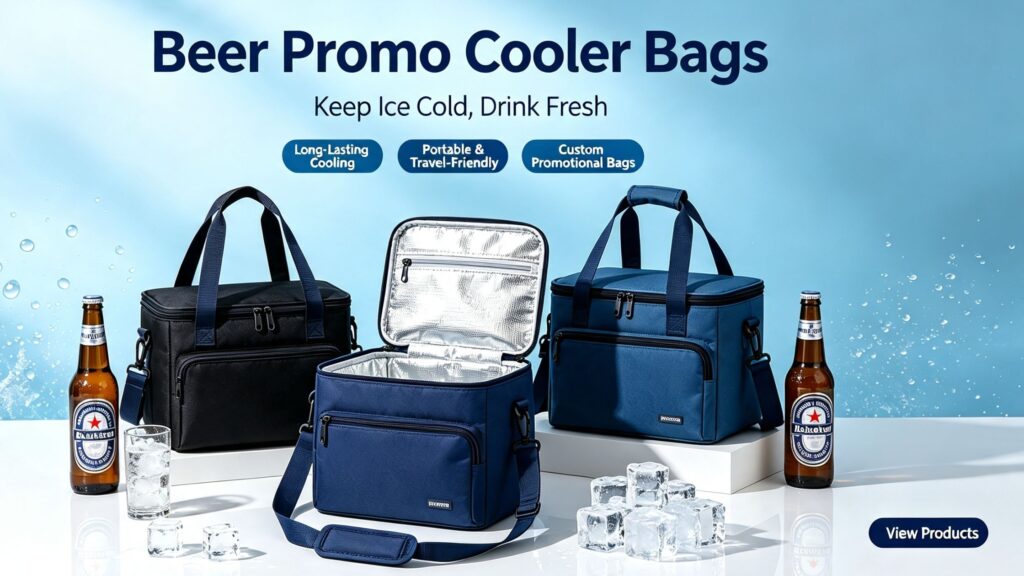
For a broader insulated-product assortment, link to this types of cooler bags guide.
Sample and inspection checklist
Approve a physical pre-production sample when fit, color, or retail presentation matters. Test it on the exact container, then retain the approved sample as the reference for inspection.
During production inspection, check:
- Fit and stability on the specified can or bottle
- Artwork placement, legibility, color, and registration
- Material thickness/hand feel against the approved sample
- Seams, binding, adhesive joins, and zipper operation where applicable
- Surface stains, glue marks, wrinkles, odor, and loose threads
- Count per inner pack and carton; carton marks and transit protection
For a large launch or multi-factory order, independent inspection and shipment consolidation can reduce coordination risk. Those services are most useful when they are tied to a clear approved sample and defect standard.
Compliance: ask the right question for the market
There is no single universal certificate that applies to every adult can cooler. Requirements can depend on the destination market, material composition, ink, components, product claim, intended user, and retail channel.
In the United States, a promotional item that is designed or marketed primarily for children aged 12 or under can trigger children’s-product obligations. The U.S. Consumer Product Safety Commission notes that the decoration itself can change how a promotional product is classified. Importers and manufacturers should confirm applicable testing, certification, and tracking-label requirements with a qualified adviser or lab before mass production. See the CPSC’s promotional-products guidance and CPSIA overview.
For every destination, request material, ink, and component declarations or test reports that are relevant to your exact SKU. A generic marketplace claim is not a substitute for current, product-specific documentation.
FAQ about bulk can coolers
What size can cooler should I buy in bulk?
Buy for the actual beverage container—not only the advertised ounce count. Choose a standard, slim, tallboy, bottle, or stainless format after checking the container diameter and height with a physical sample.
Are neoprene can coolers better than foam ones?
Neither is automatically better. Foam can suit volume-driven giveaways; neoprene can suit a more reusable or premium brand position. Decide based on fit, desired feel, artwork, packing, landed cost, and the quality level your channel expects.
Can I print a full-color design on a can cooler?
Often, yes, on a construction and decoration method that support it. Provide the artwork early, get the supplier’s template, and approve a physical color/position proof before production.
What MOQ should I expect for bulk can coolers?
MOQ varies by material, construction, decoration, color split, packaging, and supplier. Ask for the MOQ for your exact specification, plus the cost impact of multiple designs or colors. Do not assume an online listing’s MOQ applies to your project.
What should I ask a can-cooler supplier for before ordering?
Ask for a complete specification, sample, artwork proof, packaging/carton data, production schedule, and destination-relevant material/compliance documentation. Then compare quotes on landed cost and approved quality—not only the headline unit price.
Final thought
The strongest bulk can-cooler order is built around a real beverage format and a sample-approved specification. If you are sourcing from China, a sourcing partner can help you compare factories, coordinate custom development, verify production against the approved sample, consolidate compatible promotional products, and arrange shipment. Send your target container, artwork, quantity, market, and delivery date to begin a focused supplier search.