Personalized beer growlers can be a refill vessel, a taproom souvenir, an event giveaway, or a premium gift. That flexibility is exactly why the keyword attracts two different audiences: someone looking for one engraved growler and a business looking for a branded run. For a wholesale buyer, the decision is bigger than adding a logo. You need to match the vessel, decoration, packing, and fulfillment plan to the sales channel.
This guide helps breweries, restaurant groups, promotional-product buyers, gift brands, and ecommerce sellers specify personalized beer growlers before requesting quotations or samples.
What Are Personalized Beer Growlers?
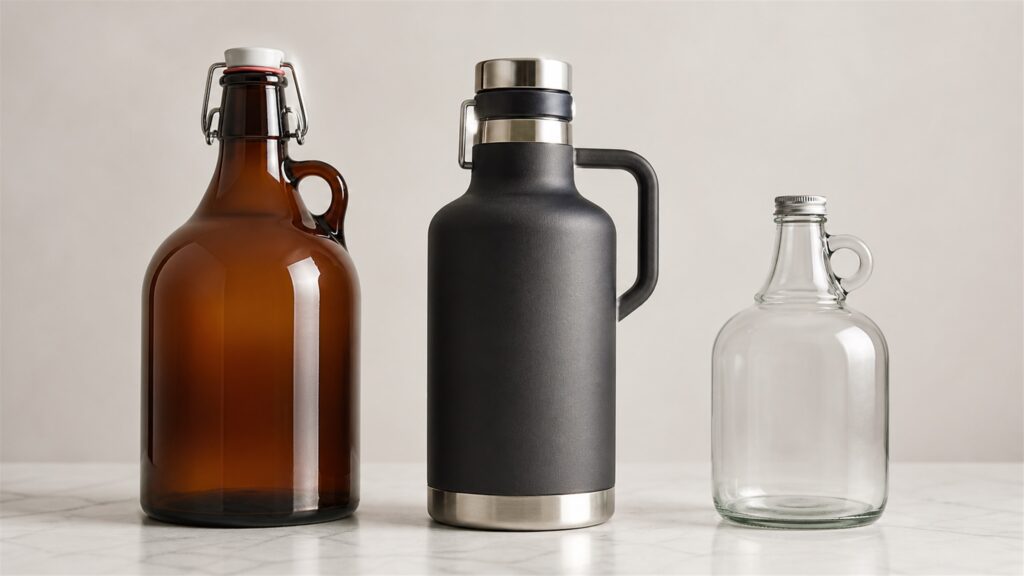
A beer growler is a reusable, refillable container used to take draft beer and other beverages away from a taproom or retail location. Personalized beer growlers carry an individual name, date, message, logo, or custom artwork. The term can include traditional 64 oz glass bottles, smaller howlers, insulated stainless-steel growlers, and, in some programs, plastic or ceramic vessels.
The “personalized” part can mean two very different production models. Individual engraving is suitable for gifts, staff recognition, weddings, or direct-to-consumer orders. Repeatable logo decoration is normally more suitable for brewery merchandise, launch events, restaurant programs, and wholesale distribution. Define which model you need before choosing the supplier or decoration method.
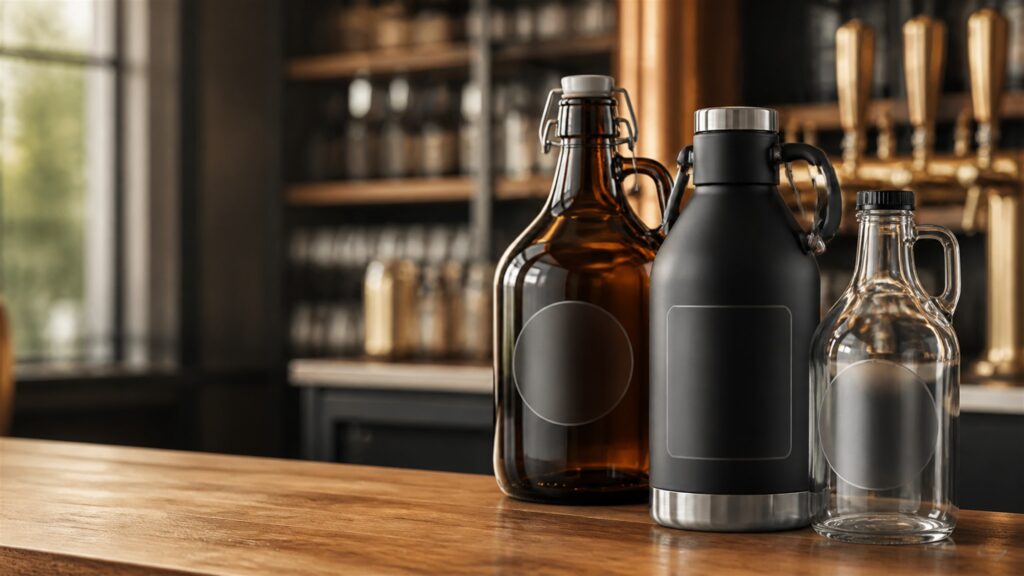
Main Types of Personalized Beer Growlers
Amber or clear glass growlers
Glass is the familiar choice for brewery and taproom programs. A 64 oz format is widely used, while 32 oz howlers and other smaller bottles can make a lower-ticket or event-friendly option. Amber glass is often selected where buyers want to reduce light exposure to the beverage; clear glass makes the product and fill level more visible.
Glass supports engraving, screen printing, labels, and certain full-color decoration routes. Its trade-off is breakage. A low unit cost can disappear quickly if the individual pack, carton divider, and parcel-shipping performance have not been specified.
Insulated stainless-steel growlers
Stainless-steel growlers fit outdoor use, corporate gifts, premium brewery merchandise, and contemporary ecommerce brands. Many use a vacuum-insulated body and a screw cap, swing-top, or dispensing-style lid. The selected closure matters as much as the body: it affects leak risk, cleaning, replacement parts, and the final retail story.
Powder-coated bodies can create high-contrast laser marks, while other finishes may suit printed graphics. Ask for a real sample using your final color and artwork. A generic engraving example cannot show the contrast, sharpness, or placement of your exact SKU.
Small howlers and event-size formats
Smaller growlers—often called howlers or yowlers in market listings—can suit tasting-room add-ons, gift bundles, controlled-portion programs, and events. They are lighter than full-size growlers and can be easier to pack in sets. However, a smaller body also gives you less print area, so detailed artwork and long personalized names need a proof at actual size.
Plastic and specialty materials
Plastic growlers may be relevant for outdoor events and settings where glass breakage is a concern. Ceramic or stoneware can support a heritage, club, or collector position. Each material changes perceived value, packed weight, decoration options, and compliance evidence. Do not choose a specialty material only for its appearance; make sure its care instructions and operating conditions suit the intended beverage program.
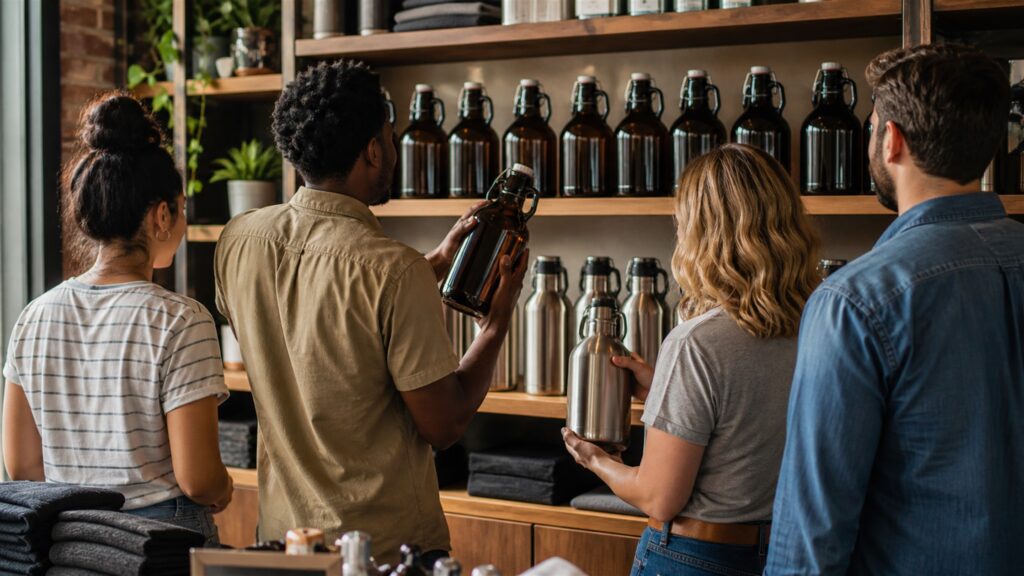
Choose the Right Growler for Your Sales Channel
| Channel or use case | Often worth considering | Main commercial check |
|---|---|---|
| Brewery or taproom refill program | Amber glass or stainless steel | Closure compatibility, refill workflow, logo visibility |
| Corporate gift or employee award | Insulated stainless steel | Individual names, presentation box, proofing workflow |
| Festival or venue merchandise | Standard glass, small formats, or plastic | Delivery date, breakage policy, fast-service handling |
| Ecommerce personalized gift | Stainless steel or protected glass | Variable-data accuracy, parcel-test result, returns handling |
| Premium club or collector release | Stoneware or special-lid growler | Detail quality, spare-part availability, higher packed weight |
The right product should fit the full commercial system. A thick insulated body may support a premium price but add shipping weight. A glass growler lets customers see the beverage but needs better protection. A multi-part dispensing lid may add perceived value but creates more inspection points. Convert every feature into a cost, service, or after-sales question.
Personalization Methods: Match the Artwork to the Order
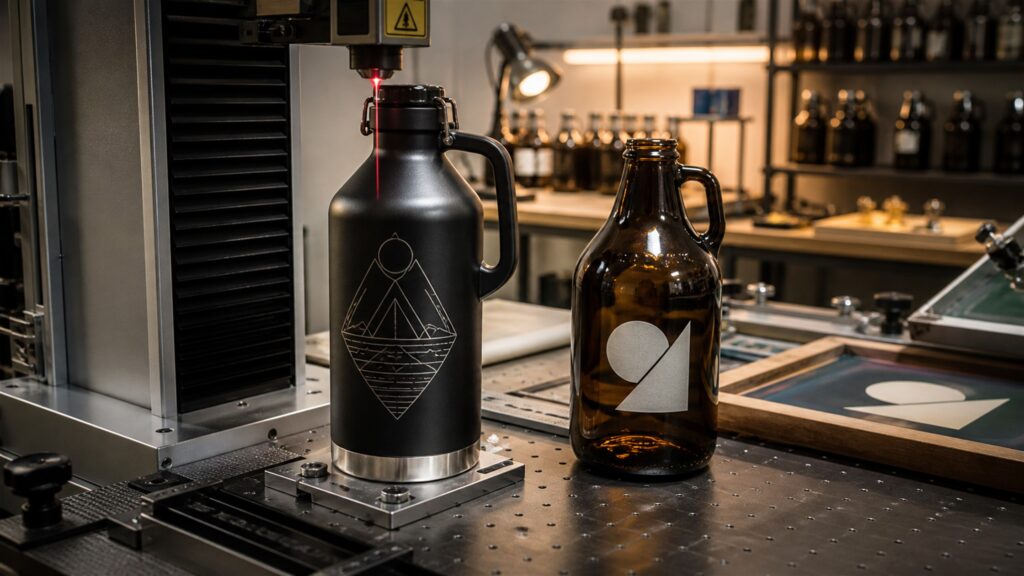
Laser engraving
Laser engraving is commonly chosen for simple logos, names, dates, and monochrome-looking artwork. It can work especially well on coated stainless steel and can give glass a permanent-looking mark. Ask the supplier for minimum line width, recommended font size, maximum artwork area, and close-up photos of fine details.
For variable names, lock the design template before production. Supply a final spelling list, establish who approves the proof, and ask how each name will be matched to its carton or order number. A technically perfect growler with the wrong name is still a costly failure.
Screen printing and pad printing
Screen printing can be practical for repeat logos and limited spot-color artwork on bulk runs. Market suppliers often promote one- to four-color screen printing on glass growlers, but the workable color count, registration, and cure resistance are SKU-specific. Confirm the printable area around handles and shoulders, the color reference, and the abrasion test or handling standard you expect.
This route is generally better for one shared design than for individually different names. It can make a taproom refill vessel recognizable at a glance, provided you approve the artwork position and print durability on a physical sample.
Full-color decoration, labels, and wraps
Full-color options can support event art, gift brands, illustrated brewery designs, and seasonal releases. They can also increase approval complexity. Check artwork seams, color consistency, scratch resistance, care instructions, and whether the decoration crosses a curved area or handle.
Labels and removable name tags may be useful for short campaigns or identifying the beer style after filling. They should not replace a durable branding method when the growler is meant to be reused many times.
How to Approve a Personalized Beer Growler Sample
Approve the final configuration, not a close substitute. Your sample checklist should include:
- Capacity, dimensions, body material, and closure match the approved specification.
- The cap, gasket, swing-top, or lid seals and operates correctly.
- The vessel sits level, with smooth rim and base edges.
- The logo or personalized name is correct, sharp, positioned consistently, and readable at normal viewing distance.
- The coating, print, engraving, or glass decoration matches the signed-off proof.
- Individual packing protects the exact material and closure used in production.
- Care instructions, warnings, and destination-market documentation correspond to the finished SKU.
Keep an approved golden sample, artwork proof, packing specification, and defect photographs. This gives the factory and inspector a shared standard for production rather than an imprecise instruction such as “good quality.”
Packaging and Logistics: Protect the Product and the Margin
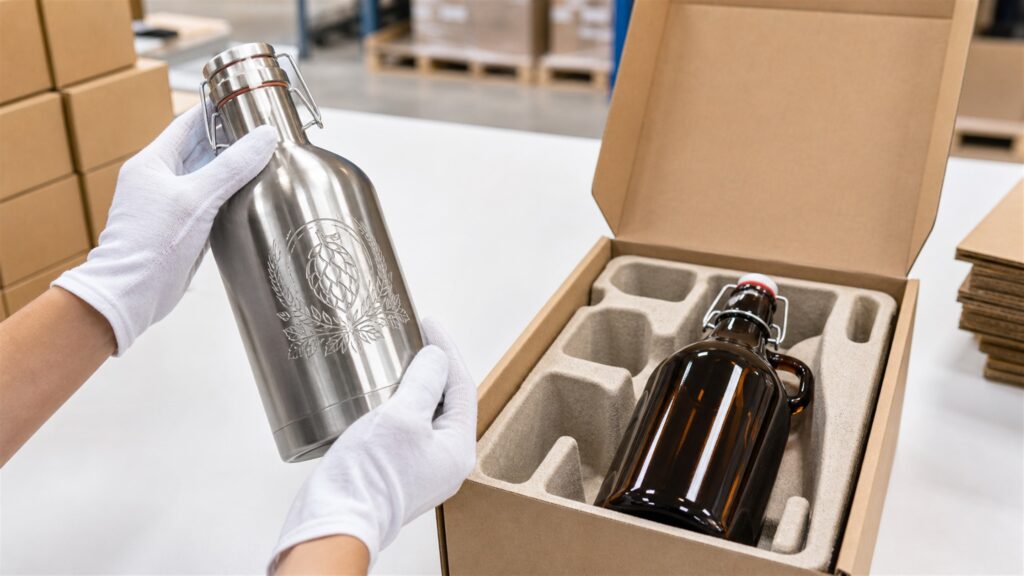
Personalized growlers should be developed with their packaging. Bulk cartons may work for a venue that will wash and fill bottles on site. A direct-to-consumer gift normally needs an individual box, fitted inner support, and stronger master-carton protection. Stainless steel reduces breakage exposure but still needs finish protection to prevent rub marks or scratched decoration.
Before placing a bulk order, request packed unit weight, quantity per master carton, carton dimensions, inner-pack photos, and a sample of the retail box if it is part of the experience. For parcel fulfillment, arrange a packing test, pilot shipment, or route-appropriate drop test. A personalization program also needs a clear reconciliation process so the right engraved units are packed to the right orders.
Compliance and Labelling: Confirm the Finished SKU
Beer growlers are food-contact articles. In the United States, the FDA describes food-contact substances as components of materials used to manufacture, pack, transport, or hold food, and includes packaging components and cookware in that scope. The EU framework requires food-contact materials placed on its market to meet its safety and inertness principles.
In practice, ask for evidence relevant to the final vessel and its intended conditions of use—not a generic “food grade” statement. This can include the body material, interior coating if any, gasket, lid components, decoration, inks, colorants, and any claims made about cleaning or temperature. Your importer, testing partner, or destination-market compliance adviser should confirm the rules and documents needed for the exact SKU and market before shipment.
If a brewery fills growlers in advance of sale, product-labelling requirements can differ from those for a growler filled at the point of purchase. In the United States, the TTB notes this distinction in its beer labelling materials. Treat beverage labelling as a separate operational check from sourcing the empty container.
How to Source Personalized Beer Growlers from China
Start with a brief that lets suppliers quote the same thing. Include:
- Material, capacity, body shape, closure style, and finish.
- Artwork files, color references, decoration positions, and whether personalization varies by unit.
- Target quantity, reorder expectation, destination country, and required in-hand date.
- Individual-pack, retail-pack, and master-carton requirements.
- Sample plan, inspection checkpoints, and requested compliance documents.
Then compare quotes on a like-for-like basis. Marketplace listings reveal useful terminology—such as 32 oz and 64 oz options, powder coating, laser engraving, custom boxes, and logo decoration—but their stated MOQs, lead times, and prices are supplier- and configuration-specific. Check whether the selected model is stock or custom, whether a new mold or printing screen is needed, and what changes after proof approval.
A sourcing partner can help compare suppliers, collect samples, coordinate inspection, consolidate finished merchandise, and arrange shipping. The essential input remains a clear product specification: it is the best protection against mismatched quotes and unexpected revisions.
Frequently Asked Questions
What is the best material for personalized beer growlers?
It depends on the channel. Amber glass suits many refill and taproom programs; stainless steel suits premium gifts and outdoor use; smaller glass formats can work for events and bundles. Choose after considering decoration, packing, target price, and operational use.
Can I add both a logo and individual names?
Often, yes. Use a decoration method and data workflow designed for variable names. Approve a proof with your actual logo and a long representative name before production.
What capacity should I choose?
Full-size 64 oz growlers are common in brewery programs, while 32 oz options can fit smaller-format or gift programs. Choose the capacity required by your selling format and confirm local filling rules, compatibility, and packaging dimensions.
What artwork files do suppliers need?
Ask for the supplier’s artwork template. Vector files are usually preferred for logos and simple marks; full-color designs may need high-resolution artwork. Confirm the usable decoration area, color references, and minimum-detail rules before submitting final files.
Final Thought
The strongest personalized beer growler program is designed as a whole: vessel, artwork, closure, pack, and sales channel should reinforce each other. Define the use case first, approve the real decorated sample, and verify packing and compliance evidence for the destination market before bulk production. If you are sourcing from China, a clear specification, supplier comparison, and production inspection will make the custom order much easier to control.