What Is the Promotional Products Business? 4 Ways to Run One, and What Each Really Costs
The promotional products business is the business of putting a brand mark on real goods and selling those goods to other companies. It is not the business of selling things on sale. If you came here looking for discount pricing, this page is not about that.
Here is the part that trips up almost everyone who starts: the buyer is not the user. A company pays for the item. Somebody else walks away with it. That one split shapes every price, every lead time, and every legal duty in this industry.
Most guides will tell you to open a distributorship, join an association, and mark everything up 40%. That advice is not wrong. It is just thin. This guide gives you the four ways the job is really done, the cost lines nobody prices, and the rule that quietly decides which cheap items sell.
How Big Is the Promotional Products Business?
Big, slow-growing, and tighter on profit than the headline suggests.
PPAI’s 2025 U.S. Distributor Sales Volume Estimate puts U.S. distributor sales at **$27.1 billion**, up 1.3% on the year. It is the first time the number has passed $27 billion. But 1.3% is below the 2025 inflation rate, so the industry actually sold slightly less in real terms.
PPAI’s own market economist, Alok Bhat, said it plainly: “Many distributors sold more but made less.” That single line is the most useful thing published about this business in 2026.
| Year | U.S. distributor sales |
| 2016 | $21.3 billion |
| 2019 | $24.2 billion |
| 2020 | $19.6 billion |
| 2021 | $22.1 billion |
| 2022 | $25.5 billion |
| 2023 | $26.1 billion |
| 2024 | $26.8 billion |
| 2025 | $27.1 billion |
Two more numbers matter if you plan to enter:
- Size split. Distributors above $2.5 million in yearly sales took 54% of the volume. Small ones took 46%. Small firms have not lost ground.
- Where growth is. Retail-brand goods hit about $6 billion. Large distributors grew that line by 15.9% against an industry total of 1.3%. Buyers are trading up, not down.
Online was $7.1 billion, or 26.3% of all sales. Sustainable goods were $3.8 billion, or 14%.
One caution on market size. PPAI measures U.S. distributors only. ASI’s Counselor report measures North America and puts 2025 at $27.7 billion, up 4.2%. Both are right. They use a different map and a different sample. Quote both, or quote neither.
What Are the 4 Ways to Run a Promotional Products Business?
“Promotional products business” is one name for four different jobs. Pick the wrong one and you will buy the wrong equipment, chase the wrong clients, and carry risk you did not price.
| Layer | What they own | Where the money comes from | Main risk |
| Factory / supplier | Moulds, materials, production lines | Unit cost and volume | Slow stock, tooling cost, idle capacity |
| Decorator | Printing and embroidery machines | Setup fees and per-piece run cost | Machine downtime, rework on bad blanks |
| Distributor | The client relationship | Markup on landed cost | Everything below them fails upward |
| Sourcing agent | Factory vetting, QC, consolidation | Service fee or margin share | They absorb blame, not liability |
Read that table again from the bottom up. The distributor owns the client and carries the least hard asset. The agent owns no stock at all. The person who owns the least is usually the one the client sues first.
Most people who “start a promotional products business” mean layer three. That is fine. Just know that in layer three you do not make anything, you do not print anything, and you are still the name on the invoice.
If you are not sure which layer you want, look at who already does each one. Our rundowns of promotional product companies, U.S. promotional product companies and promotional products wholesale distributors show the mix in the real market.
How Much Does It Cost to Start a Promotional Products Business?
Costs run from a laptop to a factory floor. Here is the shape of it, as a rough guide, not a promise.
| Route | What you actually buy | Relative cost |
| Distributor, no equipment | Business registration, association access, samples, a simple site | $ |
| Distributor plus a small web store | Above, plus ordering tools and decent photography | $$ |
| Decorator, one process | One screen press or one embroidery head, space, power | $$$ |
| Decorator, several processes | Multiple machines, staff, finishing and packing space | $$$$ |
| Full in-house operation | Production, warehouse, fulfilment, systems | $$$$$ |
Notice what is missing from every row: inventory. A distributor does not need to buy stock. The supplier decorates and ships per order. That is why this business has a famously low door. It is also why the door is crowded.
The low door is the trap. If starting costs almost nothing, then everyone starts, and the only thing left to compete on is price. PPAI’s data says price competition is one of the five things squeezing margin right now.
If you want the full walk-through of picking a partner, read our guide on how to choose a promotional products supplier.
Where Does the Money Actually Go? 8 Cost Lines in Every Order
This is the section most startup guides skip, and it is the one that decides whether you make money.
A quote for 1,000 printed mugs is not one number. It is eight numbers stacked up. Miss three of them and your 40% markup becomes a loss.
| Cost line | Why it bites |
| 1. The blank | The plain item before any logo goes on it |
| 2. Setup and screen charges | A fixed fee per colour, per position. It does not fall when your order is small |
| 3. Sampling and proofs | Paid up front, usually not refunded, and needed before bulk starts |
| 4. Artwork changes | Every redo after approval is a new setup |
| 5. Freight and handling | Quoted per shipment, not per piece |
| 6. Duty, taxes and broker fees | Landed cost, and it moves with policy |
| 7. Payment costs | Wire fees, card fees, currency spread on a deposit |
| 8. Rework, rejects and leftovers | Almost never in the quote, almost always in the year |
Lines 2 and 8 are where new operators die. Setup cost is why 100 pieces can cost nearly twice as much per piece as 1,000. And line 8 is the one nobody budgets: the box of misprints you cannot ship and cannot return.
Line 7 is small and constant. A deposit by T/T, a balance before loading, and a wire fee on each end. It never looks big on one order. Over a year of small orders it is a real number, and it is the one line clients never ask about.
So when you compare two quotes, do not ask “what is the unit price?” Ask “what is fixed, and what is per piece?” The answer tells you how your price will behave when the client halves the quantity.
Freight is the other line worth planning early. Shipping one big carton beats shipping ten small ones, so it pays to consolidate goods from Yiwu into a single load.
Why Do Pens Still Rule? The $4 Rule in the Tax Code
Here is a fact about this industry that you will not find in any startup guide.
Under 26 U.S.C. §274(b)(1), a business can deduct only **$25 per person per year** for business gifts. That is a hard cap. Give a client a $100 gift set and you can still only deduct $25 of it.
But there is an exception. Section 274(b)(1)(A) says the cap does not apply to:
an item having a cost to the taxpayer not in excess of $4.00 on which the name of the taxpayer is clearly and permanently imprinted and which is one of a number of identical items distributed generally by the taxpayer
IRS Publication 463 spells out what that means in practice, and its own examples are pens, desk sets, and plastic bags and cases.
So the cheapest and largest slice of this industry sits where it sits because of a tax clause. A pen is not popular because it is useful. It is popular because it falls under four dollars, carries a permanent mark, and ships by the thousand. That combination lets the buyer deduct all of it.
The items that usually land under the line are the desk-and-pocket set: pens and pen gift sets, notebooks and notepads, keychains, mouse pads and wall calendars. None of them is exciting. All of them are deductible in full.
Three things follow from this, and all three are sellable:
- **Cross $4 and the rules change.** Above the line, your product is a gift, and the buyer’s deduction stops at $25 per head. That is why “premium gifts” and “cheap giveaways” need completely different sales talk.
- The $4 number is written into the statute. It does not move with inflation. Congress has to change it. So the set of items that qualify quietly shrinks every year, while the same nominal cap stays put.
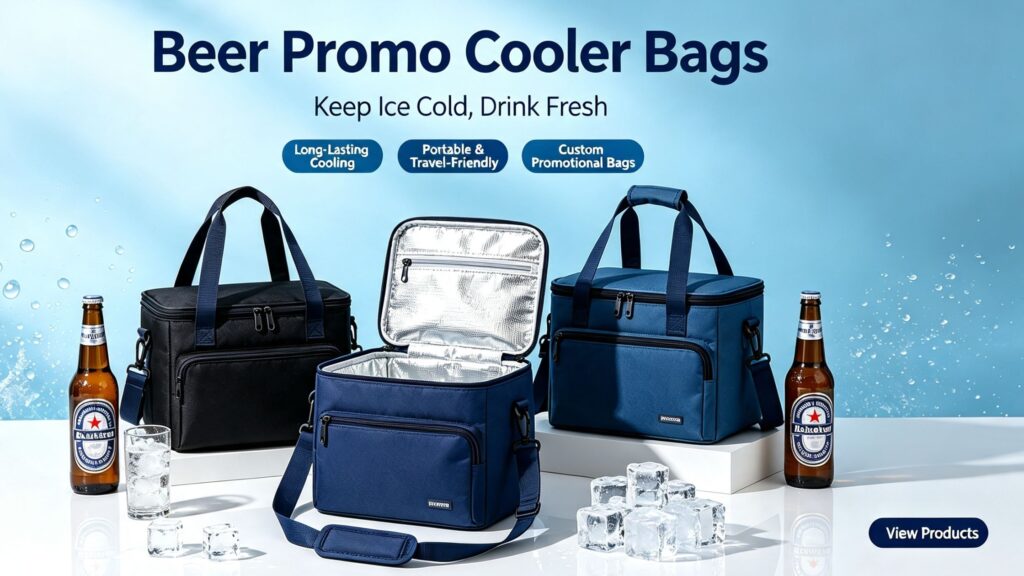
- Display items get their own break. Section 274(b)(1)(B) excludes signs, display racks, and other promotional material meant for use on the buyer’s premises. If you sell coasters, cooler bags or outdoor event gear into a channel, that clause is a real argument you can hand a buyer.
Are You the Distributor, or Are You the Manufacturer?
Legally, you may be both. This is the single most expensive surprise in the business.
The Consumer Product Safety Act defines the word “manufacturer” at 15 U.S.C. 2052(a)(11) as any person who manufactures or imports a consumer product. Importing counts. Under 15 U.S.C. 2063(a)(1), the certificate has to come from the manufacturer, the importer, or the private labeler.
So if you buy blank goods in China, put your own mark on them, and import them, you are the manufacturer in CPSC’s eyes. Writing “distributor” on your quote does not change that.
What follows from being the manufacturer:
- Non-children’s goods need a General Certificate of Conformity, based on a test or a reasonable testing plan.
- Children’s goods need a Children’s Product Certificate, and that must rest on third-party lab testing.
- Children’s goods also need a tracking label. CPSC’s own guide for promo buyers, Publication 601, says the mark must be permanent and include a website with a tracking code and the manufacturer’s name.
- Under 15 U.S.C. 2063(g)(3), the certificate travels with the shipment, and a copy has to go to every distributor and retailer down the chain.
Pub. 601 also asks buyers the question most people forget: “Have you asked your promotional products salesperson to provide you with products that have been tested and certified to comply with federal safety standards?”
If your promotional products business sells to schools, hospitals, or anyone handing items to children, this is not a footnote. Our page on the children’s product certificate covers what the paperwork looks like, toy certification covers the wider set, and our list of testing labs for CE, ASTM and EN 71 is where the third-party test actually happens.
One boundary worth stating clearly: Pub. 601 is about products aimed at children 12 and under. A stainless bottle for office staff is not a children’s product. Do not pay for a CPC you do not need.
What Changed in 2026: the Free Small Parcel Is Gone
If your plan involves small orders, samples, or shipping straight to each recipient, read this part twice.
CBP now says the de minimis suspension applies to **merchandise valued at $800 or less arriving via all modes, including the international postal network**, for all countries. The $800 free-entry window that made little promo shipments cheap is closed. Low-value goods now need a real entry: informal entry is generally allowed up to $2,500, and formal entry above that.
The legal chain behind it runs through four steps: Executive Order 14324 suspended the exemption from August 2025, the Supreme Court ruled in Learning Resources v. Trump in February 2026 that IEEPA does not authorize tariffs, Executive Order 14388 kept the de minimis suspension going, and the One Big Beautiful Bill Act terminates the exemption outright on July 1, 2027.
Now the part that matters most to this industry. CBP’s rules on what counts as a real gift say this:
It does not include articles acquired by purchase… nor does it include articles said to be “given” in conjunction with a purchase, barter, promissory exchange, or similar transaction, such as a so-called bonus article.
Read that slowly. A promotional item given away with a purchase is not a gift in customs terms. It is merchandise. It gets entered, classified, and taxed like anything else you bought.
So the “free gift with order” model does not get a free pass at the border. Budget the entry cost into every drop-ship order, or move to bulk shipments into one warehouse. Our shipping from China to the US page and freight forwarder guide cover both routes.
How Do Tariffs Hit a Promotional Products Order?
In layers, and the layers change. That is the honest answer.
On July 24, 2026, USTR added a new Section 301 duty of 12.5% on products of China, among roughly 60 economies, under a forced-labour investigation. Economies that committed to a forced-labour import ban got 10%. Certain goods are exempt, including informational materials, donations, and goods already carrying Section 232 duties.
Two honest cautions:
- USTR’s notice describes the 12.5% as a rate “net of a product’s MFN duty,” and sources disagree on exactly how that stacks. Do not build a price list on your own reading. Confirm the current rate for your HTS code with a licensed broker.
- Tariff lines expire, get extended, and get struck down. The IEEPA duties of 2025 are gone after the Supreme Court ruling, and refunds are moving — but the refund right belongs to the importer of record, not to whoever actually paid. If a supplier or a shell company is the IOR on your entries, the money is not yours to claim.
Practical rule for a promotional products business: write a quote expiry date and a duty basis into every quote. A price that silently assumes one tariff world is a price you will eat. More on the mechanics in import tax and how to import from China step by step.
Which Printing Method Sets Your MOQ?
MOQ is not a number the supplier invents. It is a number the process sets, because every process has a different fixed cost.
| Method | What drives the price | Friendly to small runs? |
| Screen printing | Setup per colour, per position | No — setup dominates small orders |
| Embroidery | Stitch count | Moderate — complexity matters more than volume |
| Heat transfer | Per piece, full colour | Yes |
| UV printing | Per piece, no plates | Yes |
| Laser engraving | Machine time, no plates | Yes — best for small batches |
| Woven label | Loom setup, then run | No |
| New mould (full OEM) | Tooling, sampling, trial runs | No — a different scale entirely |
This is the answer to “why does 100 pieces cost double per piece?” The setup is the same whether you print 100 or 1,000. At 1,000 it is spread thin. At 100 it is not.
It also tells you what to ask. “Do you charge a setup fee?” gets you a better answer than “how much each?” And it tells you which process to offer a client with a small budget and a fixed date: laser or UV, not screen.
Our pages on custom pens, pen logo printing techniques and importing custom pens show how this plays out on the cheapest item in the catalogue.
Different goods favour different processes. Mugs take screen or UV. Caps and hats take embroidery. Bags and drawstring bags take heat transfer. Glass cups take laser. Matching the method to the item is half the cost saving.
Typical minimums for stock shapes with a simple print run in the low hundreds, and bespoke tooling in the thousands. Treat that as a rough guide, not a promise. The same quantity curve shows up in our Yiwu price and MOQ breakdown and in diecast car MOQ and wholesale pricing.
What Kind of Supplier Does Each Layer Need?
The layer you chose decides the supplier you need. Most people shop backwards: they find a supplier first, then try to work out what kind of business they are running.
- Distributor needs breadth and a supplier who will drop-ship under your name. Look at our list of promotional product companies and U.S. promotional product companies.
- Decorator needs a blank supplier who ships consistent goods, because a reprint on your machine is your cost.
- Importer needs a factory that can produce the paperwork, not just the product. Start with China promotional products manufacturers.
- Brand or Amazon seller needs both, plus QC before loading. See custom products for Amazon and Shopify sellers.
- Anyone sourcing from China needs to know whether the name on the quote is a plant or a desk. China factory and Chinese manufacturer explain the difference, and promotional merchandise maps the language you will hear.
Whatever the layer, the same three questions sort a factory from a trading company:
- Can they name the process they run in-house, and the one they buy in?
- Will they put material, print method and carton size in writing on the quote?
- Will they send a sample from the actual production line, not a showroom piece?
If you want a partner to run those checks for you, that is the job of a China sourcing agent. Our sourcing agent guide explains what the fee buys, and reliable Yiwu sourcing agents covers the market side. Ask about Yiwu market if you want to understand the benches before you fly.
What Kills a New Promotional Products Business?
Eight ways it goes wrong. All eight are boring, and all eight are common.
- Quoting before knowing the setup cost. You win the order and lose money on it.
- Skipping the sample. The client approves a picture, then rejects the goods.
- No artwork deadline. Late files push production into next month.
- Ignoring the compliance layer. A children’s item without a certificate is a recall, not a discount.
- One supplier. When they run out, you have no second call to make.
- Freight quoted after the price is agreed. It always lands on you.
- No quote expiry. Duty moves, resin moves, and the old number is still in the client’s inbox.
- Selling to everyone. A niche makes samples, outreach and referrals far cheaper.
That last one is worth the most. PPAI’s data shows buyers moving toward better goods, not cheaper ones. Going narrow and slightly upmarket is a far easier first year than going broad and cheap.
FAQ
Is a Promotional Products Business Profitable?
It can be, but the industry margin is thinner than the sales number suggests. PPAI reported record 2025 sales of $27.1 billion while distributors said they “sold more but made less.” Profit survives on the cost lines you priced, not the markup you aimed for.
How Much Money Do I Need to Start?
Less than you think, if you start as a distributor with no equipment: registration, association access, samples and a simple site. Buying printing equipment is a different and much larger business. Treat any figure you see online as a rough guide, not a promise.
Do I Need to Hold Inventory?
No. Most distributors never buy stock. The supplier decorates and ships per order. That is why the door is low, and why there are so many competitors inside it.
What Markup Should I Use?
There is no correct number. What matters is the split between fixed cost and per-piece cost in the quote you are marking up. A markup on landed cost is only real if landed cost includes setup, freight, duty and payment fees.
Can I Run It From Home?
Yes for the sales side. You still need somewhere for samples, and you need a real business registration and a resale or tax number so you can buy from suppliers correctly.
Do Promotional Products Need Safety Certification?
Some do. Products aimed at children 12 and under carry extra duties, including third-party testing, a children’s product certificate and a permanent tracking label. CPSC Publication 601 is written for promo buyers and says so directly. The EN 71, ASTM and CPSIA certificate set shows what a full file looks like.
Who Is Legally the Manufacturer?
Whoever manufactures or imports the goods, under 15 U.S.C. 2052(a)(11). If you import decorated goods under your own mark, that is you, whatever your invoice says.
Are Free Gifts Duty-Free?
No. CBP treats an item “given” alongside a purchase as a so-called bonus article, not a bona fide gift. It gets entered and taxed like any other import. The $800 de minimis window is also suspended, and ends by law on July 1, 2027.
What Is a Normal MOQ?
It follows the process, not the product. Simple printing on stock shapes can start in the low hundreds. New tooling usually starts in the thousands. Ask what is fixed and what is per piece.
What Sells Best Right Now?
Cheap, useful, markable items in volume, and better goods in smaller numbers. PPAI shows retail-brand goods at about $6 billion, growing 15.9% at large distributors while the whole industry grew 1.3%. For the demand side, see trending promotional gifts and unique promotional items.
Where Do the Categories Split?
By use, not by material. Drinkware, bags, office, apparel, tech and outdoor each carry a different MOQ and a different print surface. Our category map of promotional gifts and types of promotional items lay it out.
Should I Buy a Franchise?
It buys you a brand, systems and supplier access, and costs real money up front. The trade is speed against margin and control. Compare it against starting lean and spending the difference on samples and outreach.
Where Should I Source From?
Most of the world’s blanks come out of China, and that is where the variety, tooling and customization depth sit. Start with our custom promotional products overview, or promotional gifts from China and China promotional items if you want the category map first. New to importing? Read start importing from China.
Start With the Layer, Not the Product
Most people open a promotional products business by picking products. That is the last decision, not the first.
Pick the layer. Then price every cost line in the table above. Then check who the law says you are. Do those three and the product choice mostly makes itself.
If you already have a quote in hand and want a second read on it, send over the breakdown. Our team works with importers, distributors and Amazon sellers on custom promotional gifts for brands every day, and we can tell you quickly which lines look thin.
If you are still at the stage of working out what to buy, start with what promotional items are and the promotional items catalogue. Then narrow it: drinkware and outdoor gear are the two deepest ranges, and promotional toy sourcing is the one with the heaviest paperwork. Much of it comes off the benches at Yiwu, and a good China sourcing agent will walk it with you.