A personalized beer stein is more than a drinking vessel with a name or logo. For a brewery, it can become a taproom souvenir. For an event organizer, it is part of the guest experience. For a gift brand or ecommerce seller, it can be a higher-value customizable SKU. The right choice depends on the body material, capacity, decoration method, target channel, and how safely you can deliver it.
For wholesale buyers, the key question is not simply “Which stein looks best?” You need a configuration that suits your artwork, target retail price, order quantity, packaging plan, and destination-market requirements. This guide helps you build that specification before you request quotes or samples.
What Is a Personalized Beer Stein?
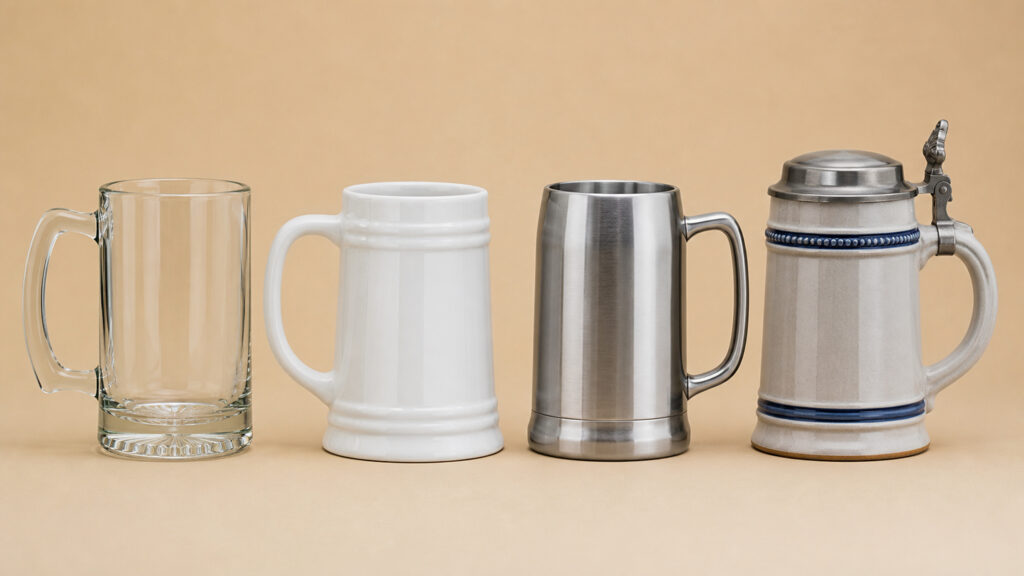
A beer stein is a handled beer mug, often associated with traditional European styles. In current promotional and retail use, the term may cover clear glass mugs, ceramic or stoneware steins, insulated metal mugs, lidded collector pieces, and lightweight plastic event versions. Personalization may mean a single name, a date, a brewery mark, event artwork, a full-wrap design, or individually variable names.
That range matters commercially. A one-off engraved gift and a large branded festival run can use the same search term but require very different decoration, packing, and approval processes.
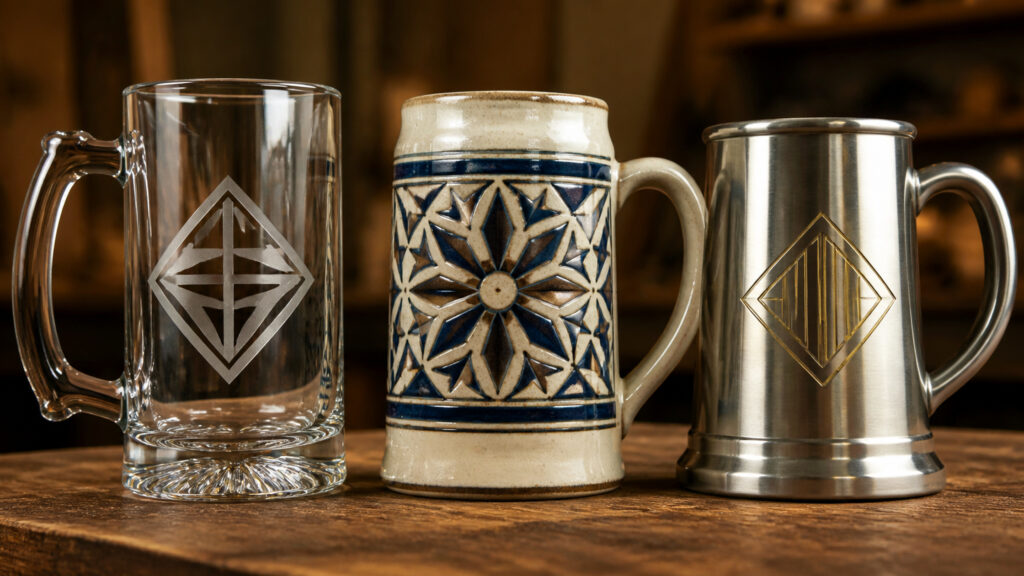
Main Types of Personalized Beer Steins
Glass beer steins
Clear glass puts the beer color on display and works naturally for brewery merchandise, restaurant service, and promotional programs. Common decoration options include screen printing, decals, frosting, sandblasting, and laser or etched marks, depending on the product and supplier.
For a branded run, check the usable print area and whether the artwork wraps across the handle side. A frosted engraved look can fit a restrained premium identity; color printing can suit a bolder taproom or event design. Because glass is breakable, its appeal must be balanced against inner protection, carton drop performance, and the cost of damage in parcel fulfillment.
Ceramic and stoneware beer steins
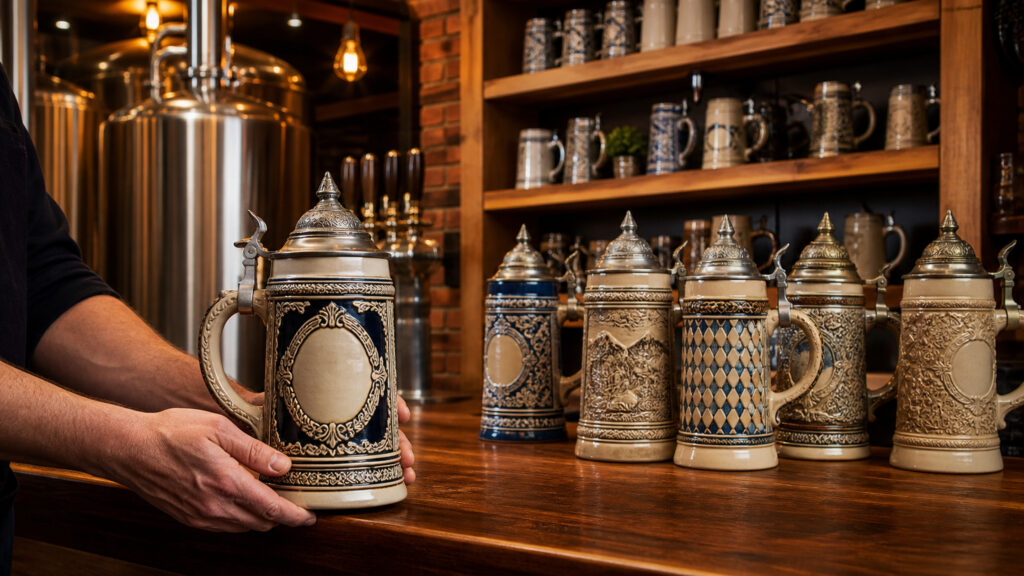
Ceramic or stoneware gives you the traditional stein look and a large visual canvas. White coated ceramic blanks are often used for photo or full-color personalization, while decorated stoneware can fit heritage, Oktoberfest, club, and collector programs.
Ask how the decoration is applied and cured, and request a sample with your real artwork. A large wrap design can raise perceived gift value, but it also makes color consistency, artwork seams, and edge placement more important during approval. Inspect the rim, handle joint, base, glaze coverage, and decoration alignment—not just the front view of the mock-up.
Stainless-steel insulated steins
Stainless-steel personalized beer steins are suitable when you want a more contemporary, outdoor, corporate-gift, or travel-oriented position. Laser marking can create a durable-looking contrast on coated finishes, while other decoration routes may depend on the specific surface.
This option can support a premium price position, but buyers should verify the lid configuration, insulation claims, care instructions, and the exact appearance of the mark on the selected color. Do not approve a generic engraving photo as a substitute for a sample of your final SKU.
Lidded, pewter-accented, and collector steins
Lidded stoneware or metal-accented steins are typically better for commemorative editions, memberships, anniversaries, or gift sets than for a low-cost giveaway. The lid, hinge, relief decoration, and more complex assembly introduce extra fit-and-finish checks. Confirm whether replacement parts are available if your program will be sold over time.
Plastic beer steins
Plastic versions can be relevant for large events, outdoor venues, or budget-sensitive promotions. Their benefits are lower breakage risk and lighter shipping weight; their trade-off is a different perceived value from glass or ceramic. Confirm the resin, intended-use conditions, decoration durability, and any destination-market documentation required for food-contact articles.
Choose the Material by Channel, Not by Appearance Alone
| Your sales channel or use case | Often worth considering | Main buyer check |
|---|---|---|
| Craft brewery or taproom retail | Glass, ceramic, stoneware | Brand presentation, retail-ready packaging, breakage protection |
| Oktoberfest, venue, or large event | Plastic or standard glass/ceramic | Delivery date, stacking, fast service, replacement allowance |
| Corporate gift or employee recognition | Ceramic or insulated stainless steel | Individual names, presentation box, artwork approval |
| Premium club or collector release | Lidded stoneware or metal-accented stein | Tooling/detail quality, lid fit, spare-part policy |
| Ecommerce personalization | Ceramic or insulated stainless steel | SKU photography, personalized-order workflow, parcel-test results |
The best material is the one that meets the actual program. A heavier lidded stein may improve gift value but increase dimensional weight and damage exposure. A printed glass mug may make the liquid visible but needs a stronger fulfillment plan. Turn each attractive feature into a cost, operations, or customer-experience question before you buy.
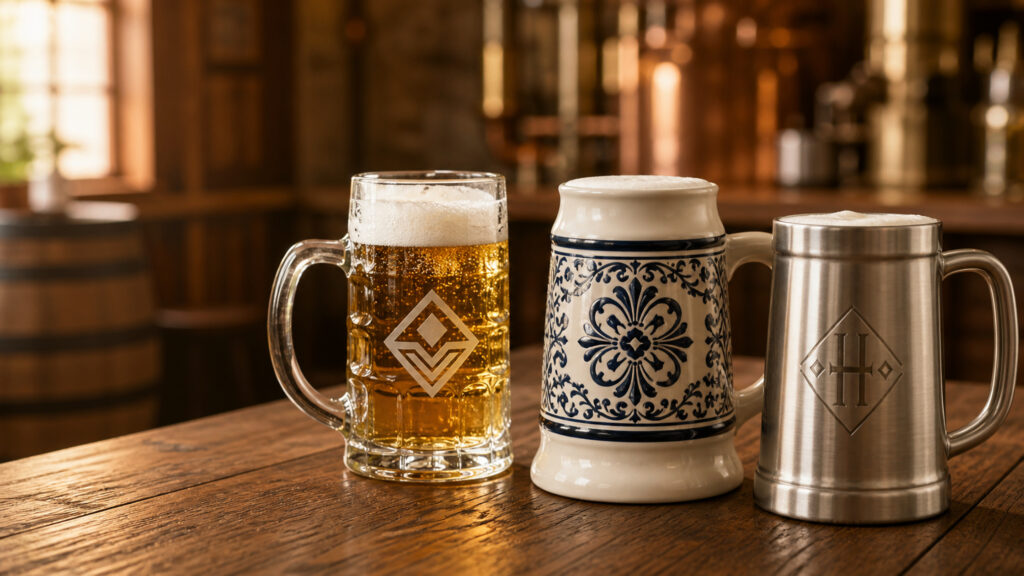
Personalization Methods: Match the Artwork to the Process
Laser engraving or etching
Engraving and etching work well for simple marks, names, dates, and one-color-looking designs. They are especially useful when you need a restrained, permanent-looking finish. Ask for the minimum line thickness, the maximum artwork area, and a close-up image of fine text before release.
Screen printing and pad printing
Printing can be a practical option for logo-led event or promotional runs, especially where spot colors matter. Confirm the color count, registration tolerance, cure method, abrasion resistance, and whether the handle or curved body limits the printable area.
Ceramic decals, sublimation, and full-color artwork
These methods can support illustrated or photographic designs on suitable ceramic products. The important checks are color matching, wrap seam placement, design alignment, dishwasher-care claims, and whether the artwork changes near the curved rim or handle.
Individual names and variable data
For wedding parties, employee awards, memberships, and direct-to-consumer personalization, establish a file-handling workflow before production. Provide a locked template, exact spelling list, font rules, proofing responsibility, and a method to reconcile the name list with cartons. This prevents the most expensive kind of error: a technically good product with the wrong name.
How to Evaluate a Personalized Beer Stein Sample
Approve a physical sample, not only a digital mock-up. Use a simple checklist:
- Capacity and dimensions match the product specification.
- The handle is comfortable, securely joined, and free from sharp edges.
- The vessel sits level and the base is smooth.
- The logo, name, or artwork is correctly positioned and legible at normal viewing distance.
- Colors, coating, glaze, or engraving contrast match the approved standard.
- A lid, if included, opens, closes, and aligns correctly.
- The individual box, insert, and master carton protect the selected body during your expected shipping route.
- Care instructions and any product documentation match the final material and finish.
For repeatable quality control, keep an approved “golden sample,” artwork proof, packing specification, and defect photos. Your inspector or supplier can then compare production pieces against a shared reference instead of a vague instruction such as “high quality.”
Packaging and Logistics: Where Good Stein Programs Often Fail
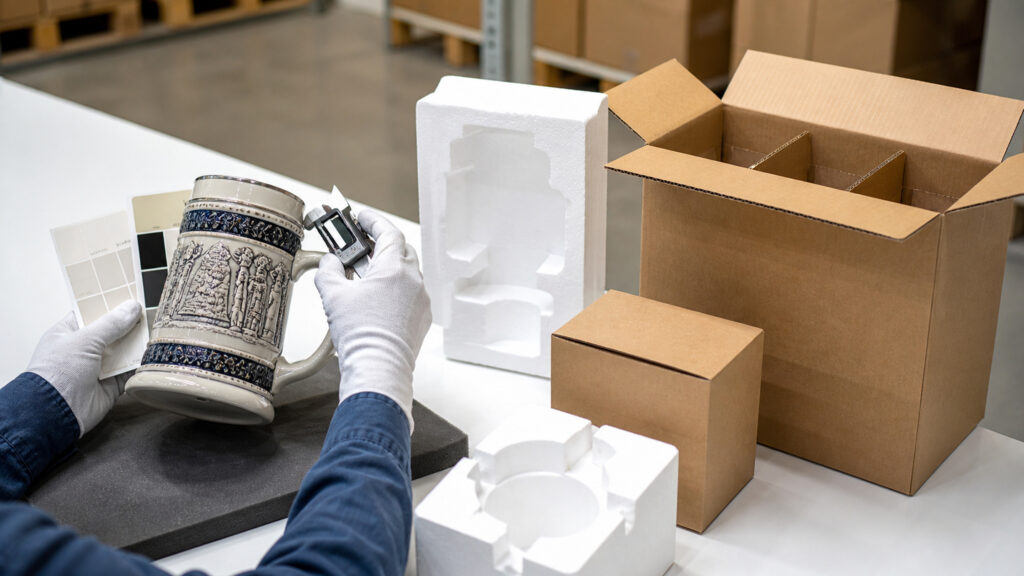
Personalized drinkware is fragile or finish-sensitive, so packaging should be part of product development, not an afterthought. A bulk-packed glass stein may make sense for venue service, while ecommerce and corporate gifts may require an individual box plus molded or fitted protection.
Ask for the packed unit weight, master-carton dimensions, quantity per carton, and photos of the inner dividers. If you plan parcel shipping, consider a route-relevant drop test or pilot shipment. If you are importing multiple merchandise items for a festival or retail launch, consolidation can reduce handling steps, but every repack step should preserve the approved protection.
Compliance and Documentation: Confirm for Your Destination Market
Beer steins are food-contact articles, so do not assume that a generic “food grade” statement is enough. In the United States, the FDA explains that food-contact substances include materials and components that contact food, such as cookware and food-preparation surfaces. For a product intended for beverage use, request material declarations and relevant test documentation for the final material, coating, colorant, decoration, and intended-use conditions.
Requirements vary by market and product configuration. Your importer, compliance advisor, or destination-market testing partner should confirm which rules and evidence apply before shipment. This is especially important for decorated ceramics, coated metals, plastic resins, inks, and products with lids or mixed materials. Keep the final claim narrow: documentation should support the specific SKU, not an unrelated factory sample.
How to Source Personalized Beer Steins from China
Start with a brief that allows suppliers to quote the same product rather than several incompatible interpretations. Include:
- Target material, capacity range, lid requirement, and preferred body shape.
- Artwork files, color references, required print positions, and whether names vary by unit.
- Target quantity, expected reorder plan, delivery country, and in-hand date.
- Individual-pack, retail-pack, and master-carton requirements.
- Sample requirements, production inspection points, and required documentation.
Then compare quotations on a like-for-like basis. MOQ, unit price, lead time, and freight are configuration-specific; never treat a marketplace listing as an industry-wide promise. Ask which parts are in stock, whether new tooling is required, what changes after artwork approval, and what is included in packing. A sourcing partner can help coordinate supplier comparison, sample review, pre-shipment inspection, consolidation, and shipping—but the product specification must remain yours.
Frequently Asked Questions
What is the best material for a personalized beer stein?
There is no single best option. Glass suits visible beer presentation and many brewery programs; ceramic and stoneware suit traditional or full-artwork designs; insulated stainless steel suits premium gifts and outdoor use. Choose from your channel, decoration, packing, and target price position.
Can a personalized beer stein have both a logo and a name?
Often yes, but feasibility depends on the decoration method, available artwork area, and data workflow. Request a pre-production proof that shows the real logo and a representative long name.
What file should I send for custom beer steins?
Ask the supplier for its artwork template. Vector artwork is commonly preferred for logos, while high-resolution files may be needed for full-color graphics. Confirm color references, dimensions, and any minimum line-width rules.
How should beer steins be packed for ecommerce?
Use an approved individual pack and protective inner structure that fits the exact product. Test the final packed unit through the handling conditions you expect rather than relying only on an unpacked product sample.
Final Thought
Personalized beer steins perform best when the material, decoration, and fulfillment plan tell the same story. Define the sales channel first, validate the design on a real sample, and specify protection and documentation before mass production. If you are sourcing from China, prepare a clear brief, compare equivalent quotes, and inspect the final production against your approved sample before shipment.