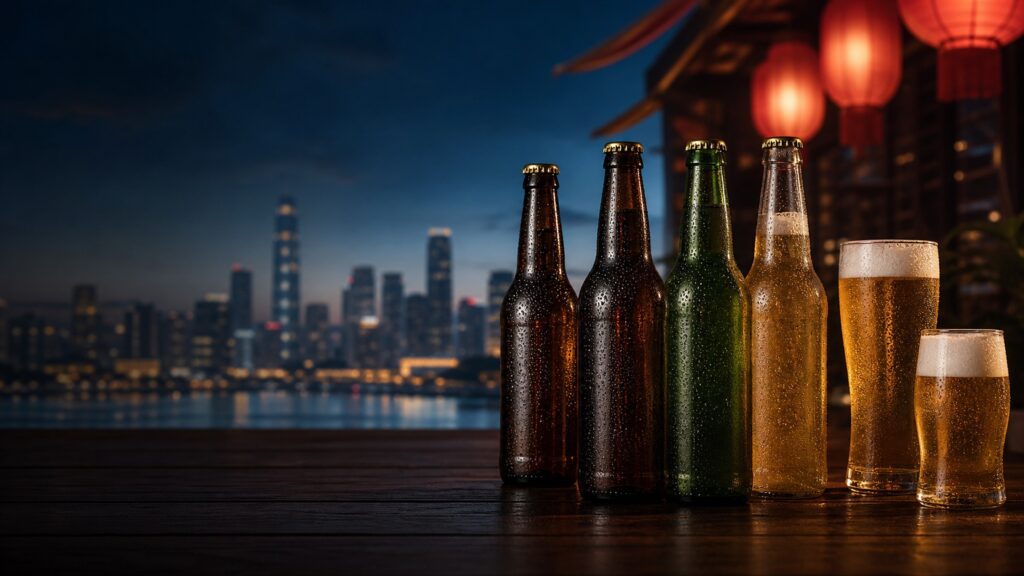
China beer brands are not a single category. They range from nationwide lager names to regional labels with strong local relevance, as well as product families that now include draft-style, wheat, alcohol-free, and premium-positioned options. For a buyer, a “top brands” list is useful only if it becomes a route to better decisions about channel fit, authorised supply, packaging, and repeat orders.
The nine brands below are representative names to know when researching the market. They are not presented as a sales ranking. Brand availability and export rights vary by country and partner, so treat this list as a shortlist for further due diligence rather than a purchasing recommendation.
1. Tsingtao
Tsingtao is one of the most recognisable Chinese beer names in international markets. Its official portfolio extends beyond classic lager to include pure draft, alcohol-free, IPA, stout, wheat beer, and stronger expressions. For buyers, the core opportunity is the combination of recognisability and a wider product ladder. Start with the SKU that matches your primary channel, then ask whether a second format can create a credible trade-up or discovery choice.
2. Snow Beer
Snow is China Resources Beer’s flagship domestic beer brand. The group identifies Snow as the leading beer brand in China by sales volume, while its recent product communication also highlights products such as Snow Draft Beer and Lao Xue. This makes Snow relevant for buyers researching large-scale Chinese beer portfolios. The commercial check is simple: confirm which exact Snow SKU, pack format, and territory route are available to your business before building a launch plan.
3. Harbin Beer
Harbin is one of China’s oldest beer brands and sits in Budweiser APAC’s China portfolio. The brand’s official information references Harbin Icy and a zero-sugar extension, illustrating how an established label can be refreshed through product innovation. For a distributor, Harbin can be worth assessing where a familiar Chinese name and a northern-China story fit the account base. Verify the intended SKU, marketing support, and local distribution arrangements rather than assuming that every domestic product is export-ready.
4. Yanjing
Yanjing is a long-established Chinese brewery group with a broad product catalogue. Its official site lists mainstream products alongside U8, V10, fresh beer, pilsner, and wheat-beer styles. That range makes Yanjing a useful example of why buyers should evaluate the product family, not only the master brand. Decide whether your channel needs a mainstream lager, a premium line, or a style-led product, then request complete product and label documentation for that SKU.
5. Zhujiang (Pearl River)
Zhujiang, also known as Pearl River, is associated with Guangzhou Zhujiang Brewery. The brewery’s brand centre includes Zhujiang Pure Draft, Zhujiang Beer, and the SUPRA craft line. Buyers looking at South China-oriented brand stories or differentiated packaged products may find the portfolio relevant. Ask how the particular item is positioned, whether it is intended for retail or on-trade use, and how its shelf life fits the shipping route.
6. Wusu
Wusu is a China-origin pale lager brand in the Carlsberg portfolio and has strong association with Xinjiang. Its official product page describes it as a pale lager and identifies China as its brand origin. Wusu can offer a more region-specific story than a general national lager, which may help in restaurants, specialist retail, or a curated world-beer selection. Buyers should validate format, import route, and whether the regional narrative is meaningful to their own customers.
7. Laoshan
Laoshan is especially important for buyers evaluating the Tsingtao brand family. Tsingtao Brewery’s 2025 annual report describes a strategy built around Tsingtao as the core brand and Laoshan as a nationwide secondary brand. This makes Laoshan useful as a portfolio case: a secondary label may serve a different price, channel, or consumption occasion than the flagship. Do not assume its role in China will transfer directly to another market; test the proposition with your local customers first.
8. Shancheng
Shancheng is a local brand in Chongqing Brewery’s portfolio. The company’s reporting identifies Chongqing and Shancheng as local brands, with new craft-oriented products introduced in 2025. Shancheng is worth knowing because regional labels can offer a distinct city or province story that a generic import range lacks. Its suitability depends on distribution access, the product’s selling story, and whether the account base is prepared to support a less familiar name.
9. Liquan
Liquan is one of the domestic labels owned by the Yanjing Brewery group, alongside Huiquan and Xuelu. It demonstrates that a Chinese brewery group may manage several names with different regional roots and channel roles. For buyers, the lesson is not to import every sister brand. It is to identify the one brand and SKU that gives a clear point of difference, then check authorisation, supply continuity, packaging, and relevant destination-market requirements.
How to Turn a Brand List into a Buyable Range
Before you approach suppliers or importers, write a one-line job for each proposed SKU. A core lager may create recognition. A premium or style-led SKU may raise basket value. A regional label may add storytelling. If two products have the same job, keep the one with the clearer supply route and stronger economics.
Confirm the brand owner, authorised exporter, and any territory limitations.
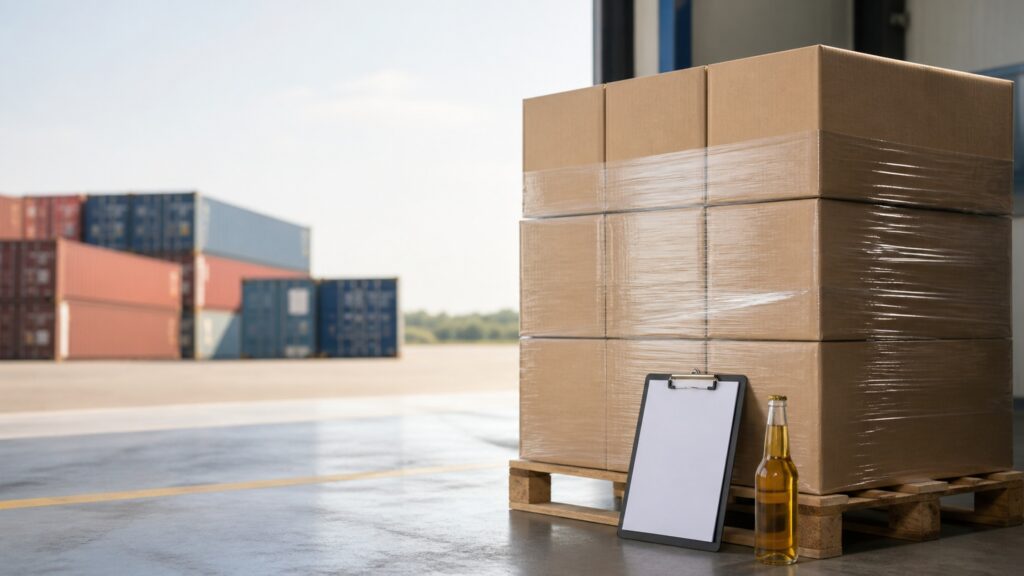
Check the exact SKU, alcohol declaration, ingredient information, pack format, pallet configuration, and remaining shelf life.
Review destination-market alcohol, label, deposit, duty, and language requirements with qualified local advisers.
Approve samples that match the planned production and packaging format.
Inspect coding, carton strength, bottle or can condition, and loading plan before approving a larger shipment.
Build a repeat-order plan before committing to a broad launch assortment.
FAQ
Which is the best Chinese beer brand to import?
There is no single best choice. The right brand depends on your country, customer segment, sales channel, authorised supply route, and the product role you need to fill.
Are these the nine biggest beer brands in China?
No. This article is a representative buyer-oriented list, not a verified volume ranking. It deliberately includes national and regional brands that can matter for different portfolio strategies.
Can a sourcing partner arrange Chinese beer exports?
A sourcing partner may assist with supplier coordination, samples, packaging checks, and logistics preparation. It should not replace brand authorisation, licensed import arrangements, or destination-market compliance review.
Final Thought
The most useful China beer brand is not automatically the most famous one. It is the one with a clear customer, an approved supply path, compliant packaging, and a realistic reorder plan. Use these nine names as a starting point, then reduce your shortlist at SKU level until every product has a specific commercial purpose.