Custom Beach Mats with Your Logo for Beer Brands and Summer Campaigns
A mat spends six hours in front of one customer, and it is the only branded surface people lie on. BeerPromoPro is a China-based manufacturer and wholesale supplier of custom beach mats built for summer beer campaigns, surf and beach festivals, resort programs and distributor gift sets. Order in bulk and supply every market from a single production run.
Lorem ipsum dolor sit amet, consectetur adipiscing elit. Ut elit tellus, luctus nec ullamcorper mattis, pulvinar dapibus leo.kjljlkjlkjljjjjjjjjjjjjjjqqwwweerrtrt
OUR PRODUCT
Choose the Right Custom Beach Mat for Your Program
A mat is judged on three things in the first ten minutes on sand: does it shake clean, does it stay flat in the breeze, and does it keep damp off your back. Compare fabric weight, backing, size and how it packs before you compare artwork.

Woven Polypropylene Beach Mats
The classic straw-weave mat. Polypropylene woven at 80 to 200 gsm shakes sand straight through the weave and dries in minutes. Below about 120 gsm the mat curls at the corners and lifts in an onshore breeze — on a windy coast, that is the wrong specification, no matter how the print looks.
Laminated Mats with Waterproof Backing
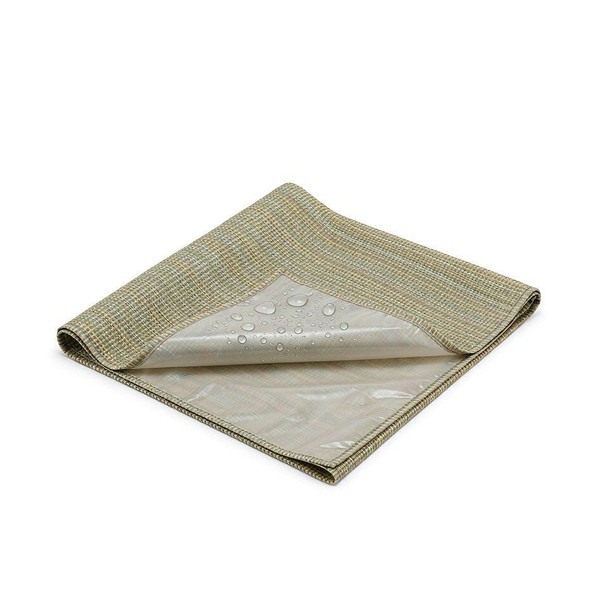
A PE or PVC film laminated to the underside blocks ground damp completely, so the mat works on wet sand and damp grass. The tradeoff is honest: sand sits on top instead of falling through, and the film slows drying. Wipe it down rather than shaking it out. The film itself runs 20 to 40 gsm.
PE Foam-Backed Mats
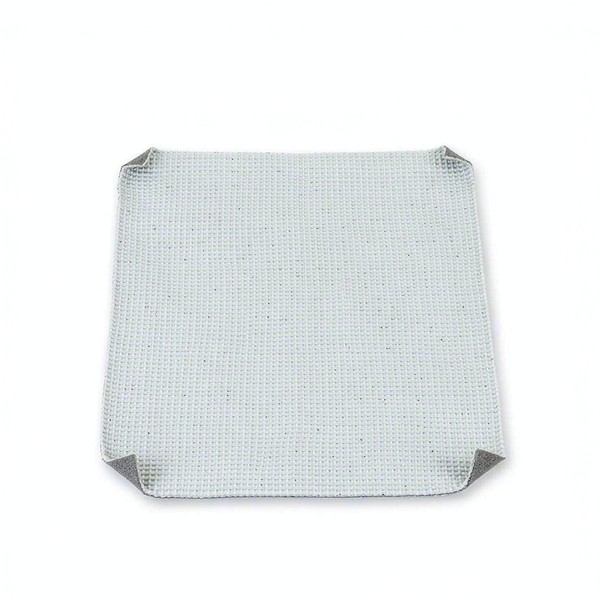
Closed-cell foam adds cushion on pebbles, boardwalks and stadium steps. It also adds bulk — the roll is roughly double the diameter of an unbacked mat, which is the line item that shows up in your freight quote. Foam holds water in its cells, so it needs real drying time. Thickness runs 2 to 5 mm.
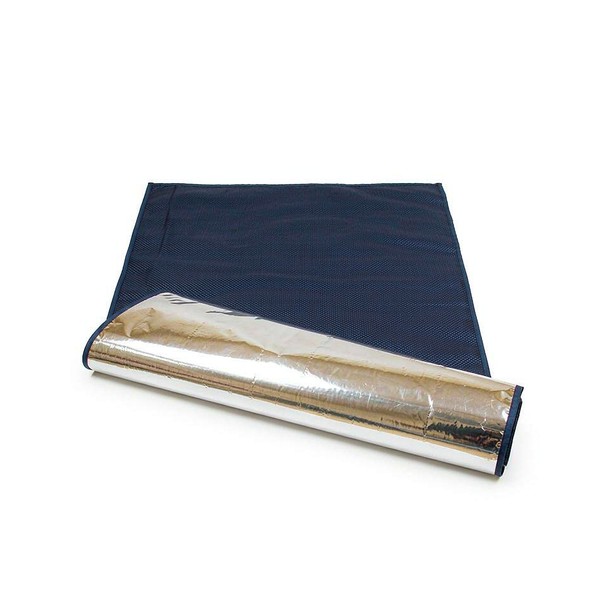
Aluminum Foil and Reflective-Backed Mats
A foil layer reflects heat and seals out damp from cold ground, and it is the lightest waterproof option per square meter. Foil creases permanently the first time it is folded badly and can delaminate from the weave after a season. Roll it, never fold it. Foil is laminated onto the weave at roughly 12 to 20 microns.
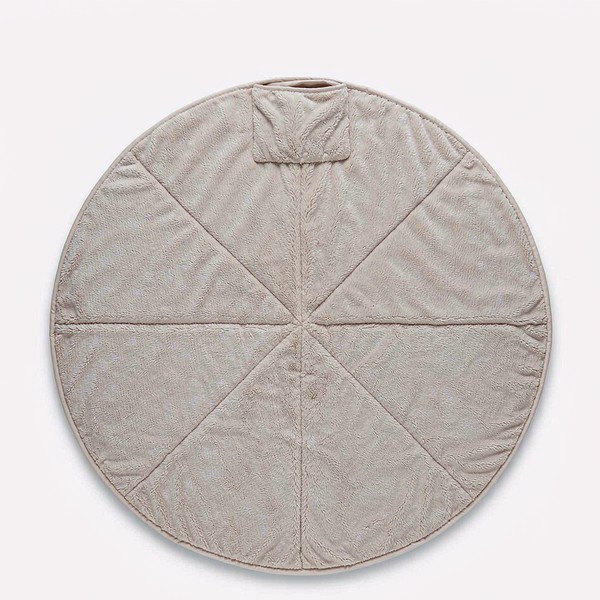
Oversize, Round and Picnic Formats
Standard single size is 70 x 140 cm; 90 x 180 cm fits two people; 90 x 160 cm and 90 x 180 cm suit picnic and festival use. Round mats in 150 and 180 cm diameter read well in aerial photography at events. Larger sizes raise both unit price and carton cube.
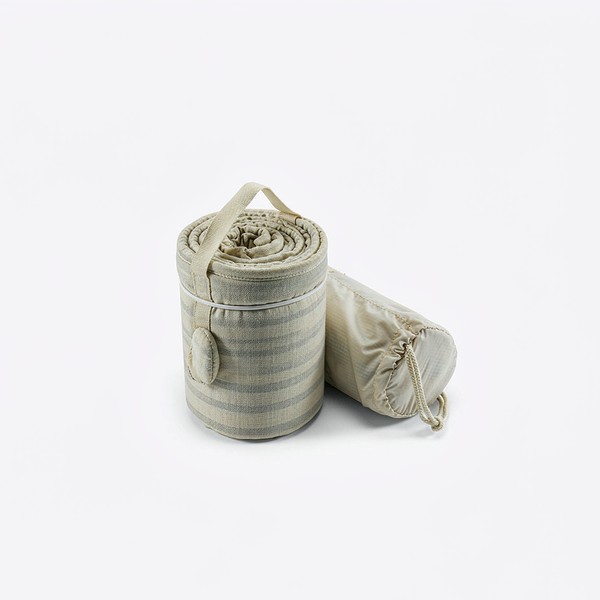
Roll-Up Mats with Strap, Handle and Pouch
The format that gets carried rather than left in the car. A mat rolls to roughly 10 to 12 cm diameter and 70 to 90 cm length, closed with an elastic strap, webbing handle or a drawstring pouch with a shoulder strap. A printed pouch adds a second branding surface. Webbing straps outlast elastic ones.
TAG
Branding and Customization
Woven polypropylene is a rough, open surface, so print method and artwork scale have to be chosen together. We check the weave direction, the coating and the artwork before sampling, because a method that works on a laminated film will not hold on bare weave.
Screen Printing on Woven Polypropylene
The default for bold brewery marks and campaign lines in one to four colors. Ink sits on the weave and bridges the gaps between tapes, so fine strokes below roughly 1.5 mm close up and disappear. Keep lettering bold and give the mark a solid outline.
Full-Color Laminated Print
For gradients, photography and large campaign artwork. The image is printed onto a film that is laminated or heat-bonded to the mat, so color density is far higher than any direct print on weave. It adds a layer that can scuff at the folds — round the corners.
Heat Transfer Printing
A printed transfer is pressed into the weave under heat and pressure, which suits textured and uneven surfaces a flat print bed cannot reach. Polypropylene softens near 160 degrees Celsius, so temperature and dwell time have to be controlled or the mat puckers.
Woven Labels and Bound-Edge Tape
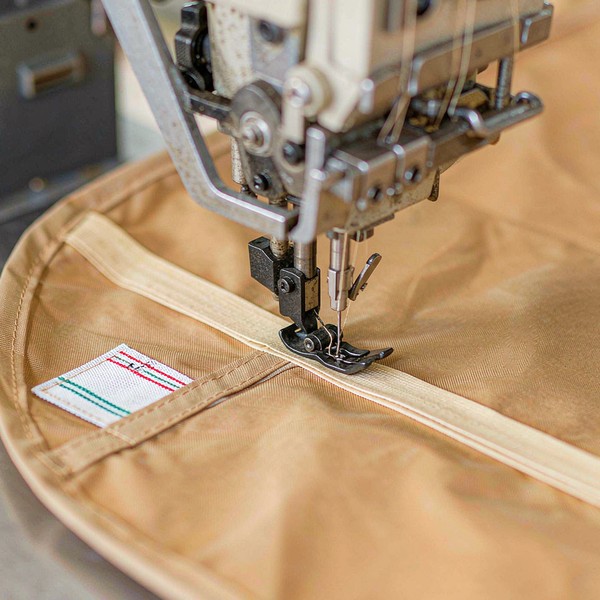
A woven label stitched into the hem, or logo tape binding the perimeter, brands the mat without touching its printing surface at all. Bound edges also stop polypropylene weave from unraveling — an unbound cut edge frays within a few uses. This is the longest-lasting option.
Custom Packing and Retail Presentation
Printed polybag, header card, belly band or a full carry pouch turns a giveaway into a retail-looking gift. Packing is quoted per unit and adds carton volume. For gift-with-purchase sets, send the carton size your retailer requires before we quote, not afterward.
Decide What the Mat Has to Do on the Ground
Does it sit on dry or wet sand? An open weave shakes clean on dry sand but lets damp through, so wet sand means a laminated backing, and sand wipes off instead of falling off. How windy is the site? Weave under 120 gsm lifts at the corners; add corner pockets you can peg, or specify 160 to 200 gsm. How big? One person lies on 70 x 140 cm, two on 90 x 180 cm, and anything wider than the roll width carries a seam. How is it carried? A mat rolls to roughly 10 to 12 cm diameter, and foil- or foam-backed mats must be rolled, never folded, or they crease permanently. How is it cleaned? Machine washing destroys a laminated or foil backing and loosens the hem — rinse with fresh water, dry fully, then roll, because a mat rolled damp mildews in a week.
How to Specify a Mat Order That Quotes Cleanly
Buyers who get accurate quotes fast send the same six things every time: finished size, fabric weight in gsm, backing type, print method and number of colors, quantity per design, and destination port. What moves unit price most is fabric weight, backing film, print coverage, and whether the mat needs bound edges or a sewn pouch — a carry pouch often costs more than the mat itself. Freight is driven by roll volume: 100 rolled mats fill roughly 0.8 to 1.0 CBM, and a foam backing can double that, so ask for both the unit price and the cube. Splitting one order across four artwork versions usually costs more than doubling the volume of each, because every version carries its own print setup. Plan backward from the campaign date — about seven days for a physical sample, twenty-five to thirty-five days for bulk, then ocean freight.
Frequently Asked Questions About Custom Beach Mats
Most woven polypropylene mat programs start from 500 to 1,000 pieces per design. Laminated, foam-backed and pouch-packed versions can raise the minimum. Stock mats with decoration only are available below standard MOQ.
Typical projects fall between USD 1.50 and 9 per mat. Fabric weight, backing, print coverage, bound edges and packing all move the number. We tell you which part of your design is driving the cost before you commit.
Yes. Sampling takes approximately seven days. Take the sample to a real beach, shake it out, fold it badly once, and leave it rolled overnight damp before approving the bulk run.
Rinse with fresh water and dry fully before rolling; a mat rolled damp mildews in about a week. Do not machine wash a laminated or foil-backed mat. Store flat or rolled, out of direct sun, which embrittles polypropylene over time.
Not directly. Dye-sublimation needs polyester, and polypropylene softens near 160 degrees Celsius, so it cannot take the heat. Photographic artwork goes onto a printed film laminated to the weave, or onto a polyester face fabric.
A physical sample takes about seven days and bulk production twenty-five to thirty-five days. We ship from China to Europe, the Americas, the UK, Australia and Japan by sea, air or rail, with consolidation for mixed POSM orders.