Custom Plastic Beer Cups for Breweries, Bars and Festivals
Put your brand in the hand that holds the pour. BeerPromoPro supplies custom plastic beer cups for brewery taprooms, bar and restaurant groups, distributor programs, beer festivals and tasting events. Select the material, capacity, wall thickness, print method and packing around how many times the cup is washed, how it is carried, and which market it ships to.
OUR PRODUCT
Custom Cups for Your Program
The right cup depends on service duration, wash cycles, clarity against the beer, distribution volume, and whether it is washed and re-poured or served once and recycled.

Reusable PP Pint Cups
Food-grade polypropylene, rigid enough for a full pour and stable through commercial dishwashing. The default when a venue is replacing glass, and the one specified most often for European programs. Tough and reusable, though translucent rather than crystal clear.
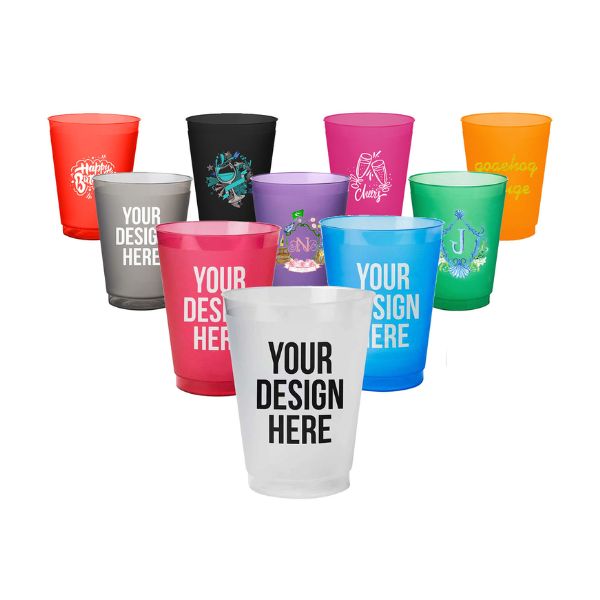
Frost-Flex Cups
Soft, flexible frosted PP with a premium hand feel and the stadium cup standard. Two limits worth knowing before the artwork is drawn: the frosted surface is normally restricted to a single imprint colour, and some frost-flex bodies have no matching lid.

Clear PET Stadium Cups
The highest clarity option available, showing the colour and the head of the beer — which is exactly why taprooms and brand activations choose it. Cold drinks only, and lighter in the hand than PP.
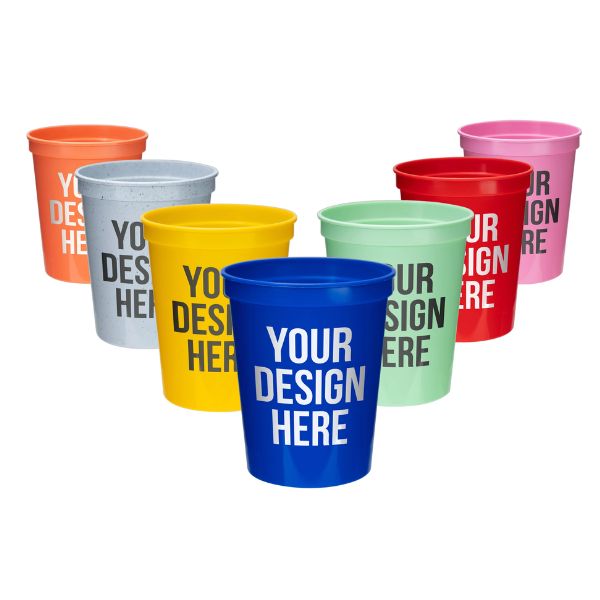
Half-Pint Cups
284 ml to line, built for half pours, tasting flights and venues that need to serve a controlled measure without pouring short. Can be supplied with a printed or embossed gauge mark.
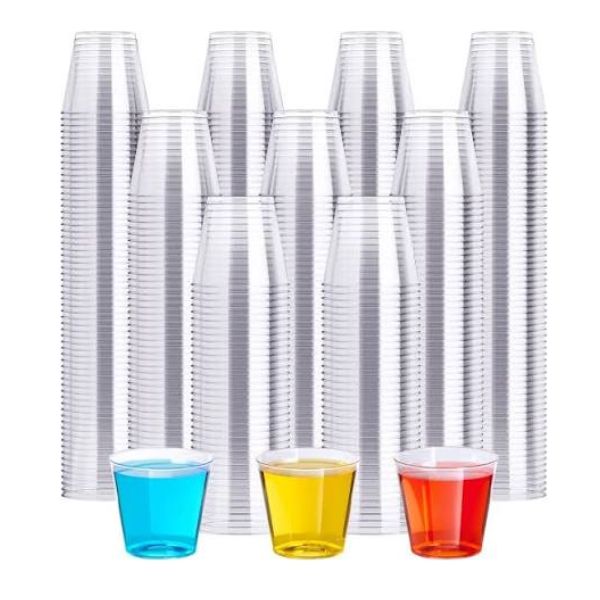
Tasting and Sample Cups
4 oz to 8 oz for taproom flights, festival samplers, launch events and brewery tours. The cheapest way to put a logo into a large number of hands, and the fastest to reorder when the next release lands.

XL Festival and Sharing Cups
20, 24 and 32 oz for festivals, sharing pours and long event days. More print area per cup, which usually means a lower cost per impression and artwork that still reads from across a crowd.
TAG
Make Every Cup Match Your Beer Brand
Cups are read at arm’s length, in low bar lighting, often with condensation on the wall and beer sitting behind the print. Print method, ink coverage, wall clarity and the shape of the artwork all change the final appearance.
Screen Printing
The most cost-effective route for bold spot-colour logos and the standard for large runs. What it cannot do is gradients or photographic detail. On a reusable cup, the print is what limits service life — not the cup.
In-Mold Labeling (IML)
The printed label is placed in the mold before injection and fuses into the cup wall, so the design cannot scratch, peel or fade. The longest-lasting option by a wide margin, with higher minimum quantities and film tooling.
Heat Transfer Printing
Full-colour artwork wrapped around the curved surface in a single pass. Handles 360-degree designs and gradients that screen printing cannot. Typical life is shorter than IML.
Digital and UV Printing
Full CMYK and photo-realistic artwork from low minimums, which makes it the practical answer for short runs, seasonal designs and several versions inside one order. Digital inks read slightly less saturated on a curved translucent wall than on a flat proof.
Capacity, Colour, Lids and Packing
Confirm capacity to line or to brim, rim diameter for lid fit, resin colour, artwork sides and carton allocation together. Artwork is prepared on a fan-shaped template calculated from the cup's upper and lower circumferences — a flat rectangle distorts when it wraps a tapered wall.
Choose Reusable or Single-Use First
Start material selection by deciding what happens to the cup after the pour, because in Europe that is now a regulatory question before it is a cost question. The EU Single-Use Plastics Directive does not ban standard PP or PET beverage cups — it bans expanded polystyrene ones — but it does apply consumption-reduction obligations measured against 2022 levels by 2026, extended producer responsibility fees, and standardised plastic-content markings on the cup itself, while the Packaging and Packaging Waste Regulation adds recycled-content and recyclability requirements from 2030. The practical conclusion for anyone selling into Europe is to specify reusable PP and ask for the current notes for the destination market. Where a single-use cup genuinely is the right answer, GRS-certified rPET and industrially compostable PLA are available, with two honest limits: PLA is cold-drink only, and it only composts where industrial collection actually exists.
Specify the Wash Cycles Before You Pick the Print
The cup will outlive the print, so the number of dishwasher cycles decides the decoration method — not the other way round. In commercial washing at roughly 85 degrees with alkaline detergent, screen printing with a UV topcoat typically lasts 100 to 300 cycles, heat transfer 200 to 500, and in-mold labeling 1,000 or more, because the design is sealed inside the wall instead of sitting on top of it. A pint cup going through a glasswasher every night for a year needs IML; a one-weekend festival with take-home cups does not, and paying for IML there is wasted budget. Two things to settle before artwork goes out: how many cycles the cup has to survive, and whether the artwork has been drawn for a tapered wall. Send vector files with fonts converted to outlines, and approve against a physical printed sample washed in your own machine rather than a flat proof.
FAQ About Custom Plastic Beer Cups
Choose according to wash cycles, clarity, service duration and budget. PP is the reusable workhorse and survives commercial dishwashing; PET has the highest clarity and shows the beer best but is cold-drink only; rPET carries recycled content with GRS documentation. Confirm the exact construction before ordering.
IML, and it is not close — roughly 1,000 commercial cycles or more, because the design is sealed inside the cup wall. Heat transfer typically manages 200 to 500 cycles and screen printing with a UV topcoat 100 to 300. If the cup is washed nightly for a year, specify IML.
It bans expanded polystyrene cups, not standard PP or PET beverage cups — this is widely misread. What applies instead is consumption reduction by 2026 against 2022 levels, extended producer responsibility fees, standardised plastic-content markings on the cup, and recycled-content requirements from 2030. If you sell into Europe, plan for reusable.
Provide PMS references and we will match them on the specified material. Full-colour and photographic artwork runs through digital printing or heat transfer. Ink reads differently on translucent PP than on frosted or clear PET, so a physical colour sample is produced for approval before bulk.
BeerPromoPro’s general guidance is approximately 7 days for sampling and 25 to 35 days for bulk production. Minimums start from around 1,000 cups for printing on stock shapes and around 3,000 for in-mold labeling, and most printed cups fall between USD 0.10 and 0.70 per unit depending on material, print method, colour count and quantity. New tooling, multiple artwork versions, IML film, special packing, order quantity, holidays and transport routes can change both price and schedule.