
Custom Bottle Displays and Shelf Promotion for Beer Brands

Bottle displays do their work in the two seconds a shopper spends at the shelf. BeerPromoPro is a China-based manufacturer and wholesale supplier of custom bottle displays — neck-hanger trees, countertop risers, shelf talkers and poster stands — serving breweries, distributors and retail merchandising teams. Buy in bulk and let one production run supply every store on your list.

OUR PRODUCT

Choose the Right Custom Bottle Display for Your Program

These pieces are sized by the shelf, not by the artwork. Send the bottle and the shelf measurements before anyone draws a file.

bottle-neck-hanger-trees

Bottle Neck-Hanger Trees

Hang-selling trees hold six to twelve bottles by the neck ring, keyed to the flare under the crown rather than the body. Wire versions weigh less and ship cheaper; 3 mm acrylic versions hold shape under load. The slot width must match the bottle you actually ship — change supplier and the tree stops working.
bottle-neck-hanger-trees

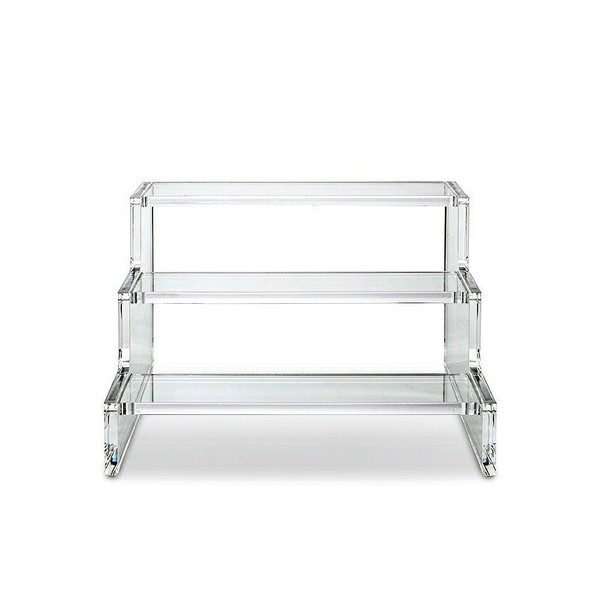
Countertop Stepped Risers

Three- and four-step risers lift back rows into view on a 300 x 250 mm to 450 x 300 mm footprint, with each step 60 to 90 mm high and 80 to 110 mm deep. Acrylic comes in 3 to 5 mm; wire versions let dust and spills through. A riser deeper than the counter gets pushed to the back.
Wire and Acrylic Shelf Bottle Racks

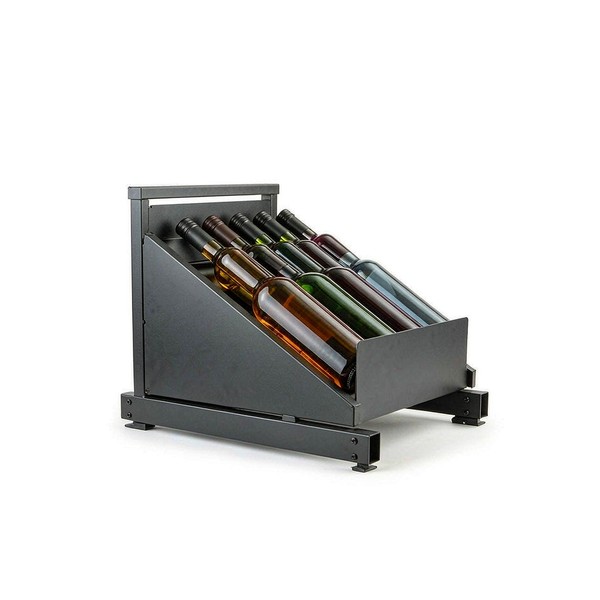
In-shelf organizers gravity-feed bottles forward on a 5 to 8 degree incline, six to ten bottles per lane, so facings stay full after the first sale. They jam on short-neck and wide-shoulder shapes, and they will not fit behind a chiller door bar — measure both before specifying, because this is the least forgiving format in the range.
shelf-edge-wobblers-talkers-rail-inserts

Shelf-Edge Wobblers, Talkers and Rail Inserts

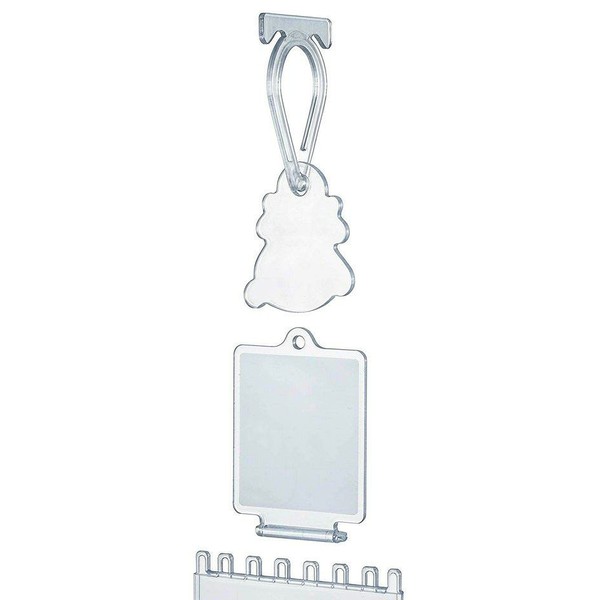
Wobblers are a 75 to 125 mm die-cut face on a flexible PET arm, stuck to the shelf edge. Talkers and price-rail inserts are sized by the rail, not the art: typical talkers run 75 x 100 mm, strips near 32 x 280 mm. Clearance between the rail and the shelf above varies from 50 to 200 mm aisle to aisle.
aisle-invasion-blades-shelf-crowners

Aisle Invasion Blades and Shelf Crowners

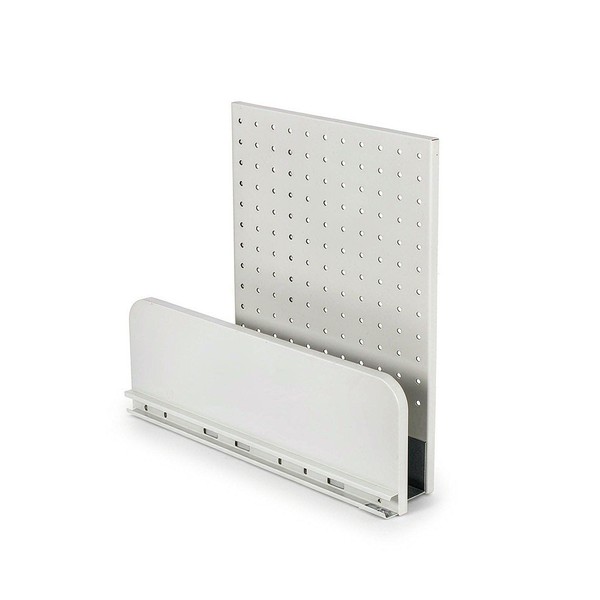
Blades project into the aisle at 100 x 200 mm to 150 x 300 mm, stopping a shopper already walking past. Chains cap protrusion separately from face size, commonly around 100 to 150 mm, and exceeding it gets the piece pulled. Crowners sit above the shelf, facing forward at roughly 1.5 to 1.7 m.
snap-poster-frames-rigid-poster-stands

Snap Poster Frames and Rigid Poster Stands

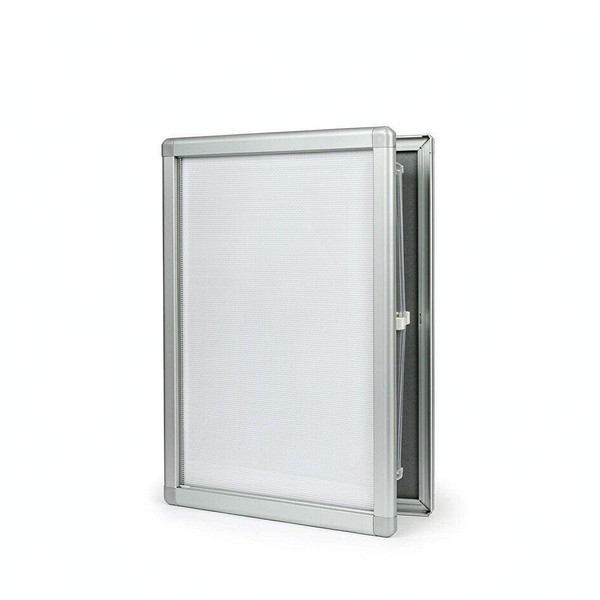
Snap frames use a 25 to 32 mm aluminum extrusion with spring-loaded sides, mitred corners, an anti-glare PET cover and a rigid back panel, taking A4 through A1 — B2 (500 x 707 mm) in Europe, 18 x 24 in for US programs. The cover sheet is what scratches; replacement covers cost less than new prints.
TAG

Branding and Customization

These formats are read at between half a meter and ten meters. Decide the reading distance and the print method follows.

UV Flatbed Printing on Rigid Panels

UV flatbed prints directly onto acrylic, PVC foam, aluminum composite and coated board, curing instantly so fine text and photographic coverage hold without lamination. Ink sits above the surface, so it abrades on anything a basket slides across — edge print, not face print, survives longest.

Screen Printing on Wire and Curved Surfaces

Flat wire frames, bottle-shaped prints and curved riser panels take a gloss screen ink that covers darker substrates. Registration runs near ±1 mm, each color adds a setup, and very fine type is not realistic — apply a printed plate or label instead of printing the wire itself.

Dye-Sublimation Textile for Light Boxes

Fabric graphics for backlit frames print by sublimation onto polyester and give richer color under LED lighting than paper does. The film must resist yellowing at 40 to 60 degrees, so we specify coated textile rather than standard paper, which browns within weeks of continuous illumination.

Die-Cut Shape and Perforation Detail

Die-cutting turns a flat print into a recognizable bottle silhouette, with a 3 mm bleed and 2 mm safe margin on every cut line. Perforated tear-off coupons need a 4 to 6 mm neck between perforations or they detach in the carton, which is the failure we see most.

Printed Insert Cards and Swappable Graphics

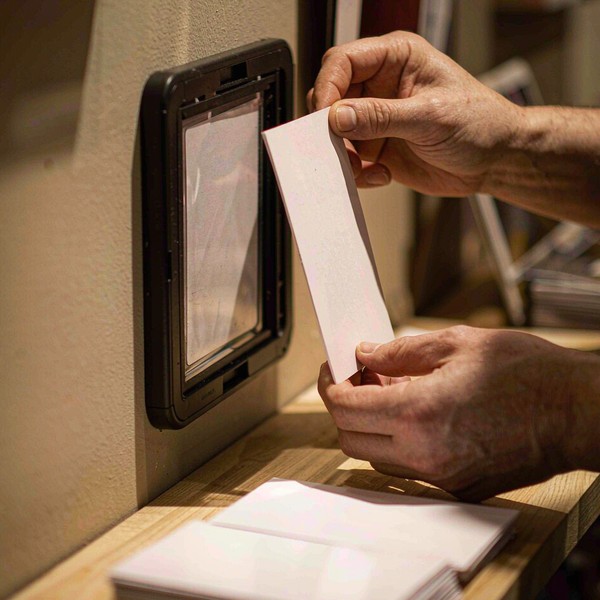
Snap frames and poster pockets exist so the graphic changes by campaign without replacing hardware. Inserts print on 250 to 350 gsm coated card, or waterproof polypropylene for chiller doors where condensation runs behind the cover. Standardize one size and you buy replacement prints, not frames.

Measure the Shelf Before You Measure the Artwork


Every piece here is limited by something physical, and none are limited by your design file. The clearance between the price rail and the shelf above decides the talker height, and that gap runs from 50 to 200 mm and changes from aisle to aisle. Check power and temperature early: an LED light box draws 20 to 40 watts, and with no socket within two meters the correct call is a rigid poster stand rather than a backlit frame. Then the bottle itself — send a physical unit and we cut the slot or lane width to it. Wide shoulders and short necks jam a gravity-fed organizer, and acrylic turns brittle when chilled and knocked, so those two combinations are the ones we talk clients out of. Finally ask what protrusion into the aisle the retailer allows; most chains cap it near 100 to 150 mm, and exceeding that gets the piece pulled.

What Sizes, Packs and Prices Depend On


Send the bottle dimensions and base diameter, neck diameter under the crown, facings per facing, number of stores, whether shelves carry a price rail and its internal channel height, poster standard by market, and quantity per SKU. Minimums run roughly 100 pieces per printed version and 200 per frame or hardware item, and every extra size or artwork version restarts that count. Unit price follows material gauge and rigidity, print method, whether the frame needs extrusion tooling, and how many pieces pack into one carton. Frames are the freight problem; printed panels are not — snap frames ship ten to twenty per carton while the graphics travel separately and slide in at store level, so most programs save by shipping them apart. Allow seven days for a sample, twenty-five to thirty-five days for bulk, then sea freight from China.

Frequently Asked Questions About Custom Bottle Displays


Printed shelf pieces start around 100 per artwork version, and frames or hardware items around 200. Bottle trees, risers and acrylic units are quoted from 100 to 300 depending on tooling. Mixing versions inside one run is possible, but each size restarts its own count.


Printed wobblers and shelf talkers run USD 0.15 to 0.80 each, print-and-cut bottle cards USD 0.40 to 1.50, acrylic risers USD 6 to 20, and a snap frame USD 8 to 35. Frame hardware, not print, is what usually decides the total.


Yes, in about seven days. Test it on the actual shelf rather than a desk: clip it to a real rail, load it with your own bottles, and stand eight meters back to check whether the message still reads at the distance a shopper actually sees it.


Standard coated card curls and grays inside a chiller where condensation sits behind the cover; waterproof polypropylene or PET holds there. UV print on acrylic survives cleaning with a damp cloth but not a scouring pad. Under backlighting, dye-sub textile keeps its density where paper yellows.

What poster sizes do your stands take, and which should we pick?

A4 through A1 in ISO markets, B2 (500 x 707 mm) where space allows, and 11 x 17 in or 18 x 24 in for US programs. A4 suits a counter, A2 and A1 an aisle end. The rule is reading distance: type readable at one meter disappears at eight.

Scroll to Top