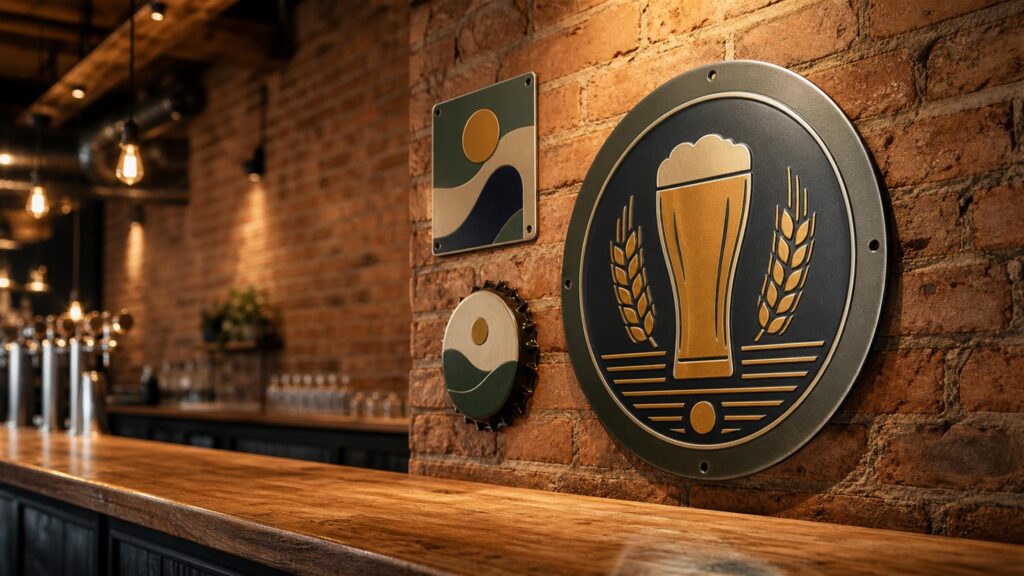
A tin tacker is a lightweight metal sign used for branding, decoration, and point-of-sale display. You will often see them in bars, breweries, restaurants, garages, retail stores, and event venues. They commonly feature a logo, artwork, slogan, or product image and are designed to be mounted on a wall with pre-drilled holes.
Despite the name, a tin tacker is not always made from tin. Many commercial versions are made from aluminum because it is lightweight, corrosion-resistant, and suitable for embossing, printing, and custom shapes. For a wholesale buyer, a tin tacker is more than wall décor: it can become long-lasting branded merchandise, a retail display item, or a promotional giveaway.
What Is the Difference Between a Tin Tacker and a Regular Metal Sign?
“Tin tacker” is a common promotional-products term for a decorative branded metal sign. Compared with a standard industrial sign, it is usually designed for visual appeal and brand recall rather than safety instructions or wayfinding.
Typical characteristics include:
- Thin metal construction, often aluminum
- Printed or embossed artwork
- Pre-drilled mounting holes
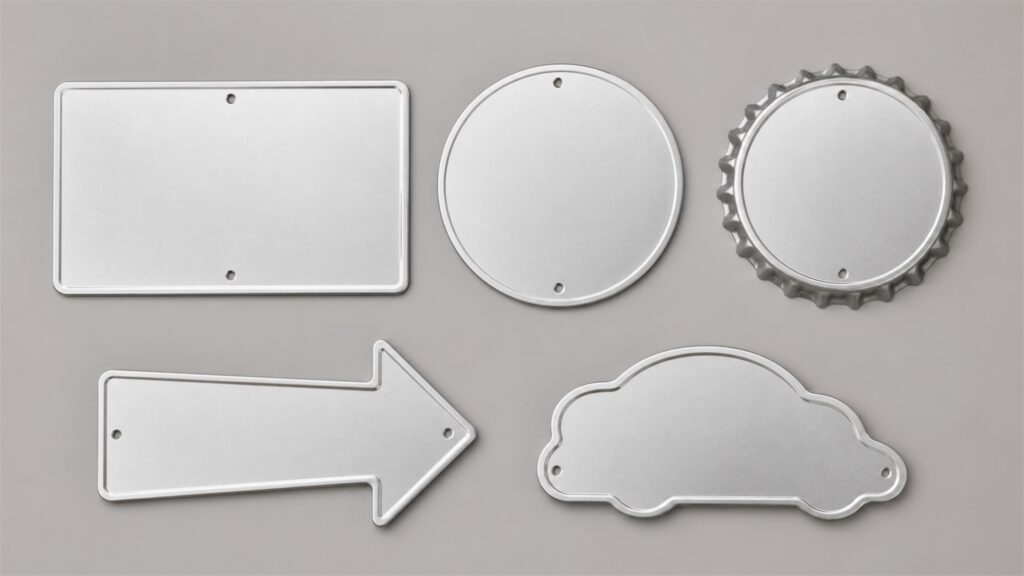
- Round, rectangular, bottle-cap, arrow, or custom die-cut shapes
- Optional clear coating, raised details, folded edges, or individual wrapping
A regular metal sign may be purely functional. A tin tacker is generally intended to make a space feel more branded, collectible, or themed.
Common Types of Tin Tackers
Rectangular Tin Tackers
Rectangular signs are the most familiar option. They work well for brewery logos, beverage promotions, restaurant décor, menus, garage art, and retail displays. Their simple shape makes artwork setup and carton packing more straightforward.
A common trade-off is that a rectangle provides efficient printable area but may be less distinctive than a custom silhouette. It is a practical starting point for buyers testing a new promotional range.
Round Tin Tackers
Round tin tackers are popular for beer, spirits, sports, and vintage-style branding. They can resemble traditional pub signs or coasters enlarged for wall display.
Round signs work especially well when your logo is circular or badge-shaped. Before ordering, confirm the usable artwork area, because text or fine details close to the curved edge can be harder to reproduce cleanly.
Bottle-Cap and Can-Shaped Tin Tackers
Bottle-cap, beer-can, and bottle-shaped signs offer stronger shelf and wall impact because the shape directly relates to the product. They are a natural fit for breweries, beverage distributors, gift shops, and promotional campaigns.
These shapes may require more complex tooling, packing, and inspection than rectangles. Buyers should ask whether the sign is flat, embossed, or deep-drawn and request a physical sample before bulk production.
Custom Die-Cut Tin Tackers
A custom die-cut tacker follows the outline of a logo, mascot, bottle, vehicle, or other branded visual. This can make a promotion more memorable, but it also raises the importance of design review.
Check narrow points, sharp corners, mounting-hole placement, and packaging protection. An attractive silhouette should still be sturdy enough for shipping, handling, and display.
Materials and Production Features to Compare
Aluminum is widely used for custom tin tackers because it is relatively light and resists rust better than untreated steel. Some suppliers also offer tinplate or steel-based options. The right choice depends on display conditions, desired finish, target price, and destination market.
Important production options include:
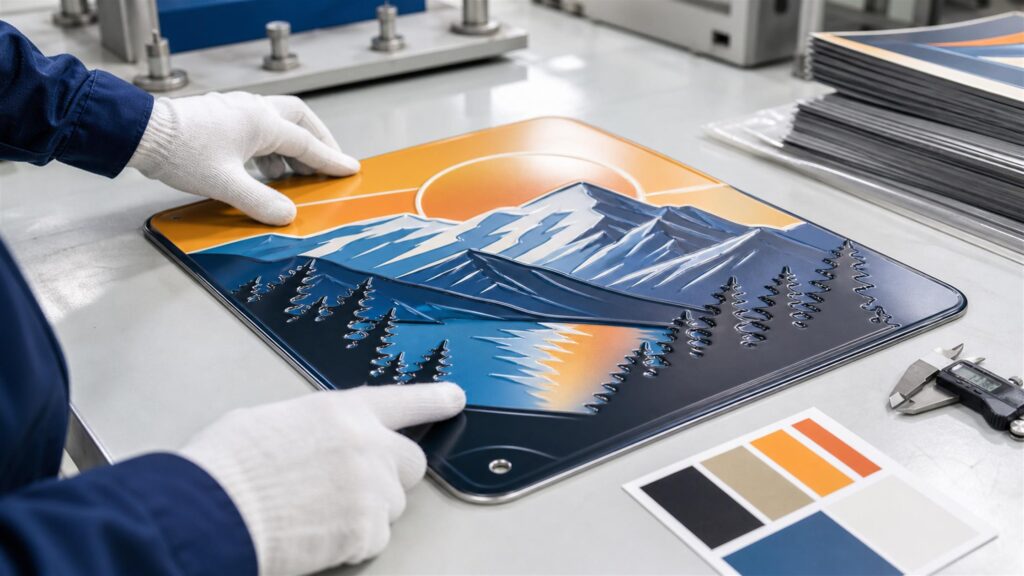
- Flat or embossed surface: Embossing adds visible depth and a tactile feel, but can increase setup complexity.
- Digital print or screen print: The best method depends on artwork, color count, order size, and finish requirements.
- Clear coating: A protective coating can help preserve the printed surface during handling and display.
- Folded or sanded edges: Edge finishing affects perceived quality and handling safety.
- Mounting holes: Confirm the number, diameter, and exact position of holes.
- Single-sided or double-sided printing: Most decorative tackers are single-sided; double-sided designs should be specified early.
Some suppliers offer standard shapes with a low minimum order quantity, while fully custom signs may have different MOQ, setup, and lead-time requirements. For example, several North American suppliers advertise minimums around 25 units for certain custom or semi-custom products, but this should never be treated as a universal industry standard. Beercup’s custom tin tacker overview
Where Are Tin Tackers Sold and Used?
Tin tackers are especially relevant where a brand needs to remain visible after a campaign ends. Common sales and use cases include:
- Brewery taprooms and bars
- Restaurants and franchise locations
- Liquor and convenience-store displays
- Gift shops and souvenir stores
- Automotive, garage, and workshop décor
- Music, sports, and event merchandise
- E-commerce home décor listings
- Distributor promotional kits
For beverage brands, a tacker can become a durable point-of-sale piece. For retailers, a coordinated series of designs can create a collectible range. For restaurants, a custom sign can support a themed interior while remaining easy to ship and hang.
How to Choose Tin Tackers for Wholesale
Start with the sales channel. A large embossed sign may suit a bar display, while a smaller, lighter item may be more appropriate for an online gift range. Then define the commercial details before requesting quotes.
1. Match Shape to Your Brand and Display Space
Choose a rectangle for flexible artwork, a circle for badge-style branding, or a die-cut shape when the product outline is central to the campaign. Ask the supplier for the final outside dimensions and the safe print area.
2. Approve Artwork Before Production
Supply vector artwork where possible. Keep essential text and logos away from edges and mounting holes. If your design contains small text, gradients, or detailed illustrations, request a digital proof and a physical pre-production sample.
3. Check Embossing and Edge Quality
For embossed designs, verify that raised details are crisp and aligned with the printed artwork. Inspect edges for sharp burrs, uneven folds, paint damage, and inconsistent coating.
4. Consider Packaging Early
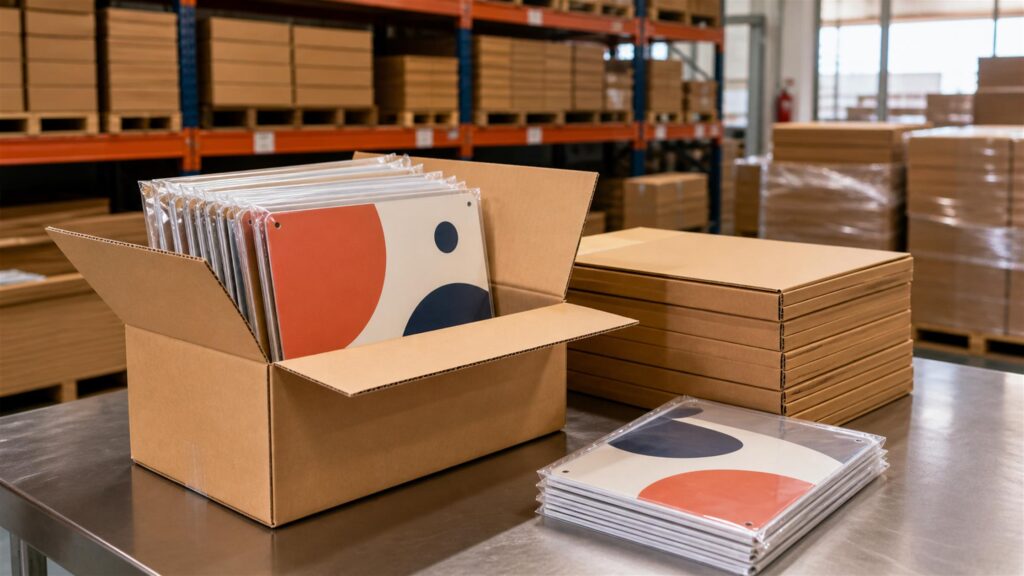
A sign may look good in a photo yet arrive scratched if it is packed poorly. Ask about individual polybags, shrink wrapping, protective paper, cardboard dividers, inner cartons, and master-carton strength. Different shapes can create different breakage or abrasion risks.
5. Separate Price From Total Landed Cost
A lower unit price is only one part of the decision. Consider tooling, sample fees, setup, export packaging, freight volume, import duties, damage risk, and storage requirements. Oversized or unusually shaped signs may take more carton space than a flat rectangular alternative.

Custom Tin Tacker Sourcing Checklist
Before placing a bulk order, confirm:
- Material and thickness
- Shape, final dimensions, and tolerances
- Flat, embossed, or deep-drawn construction
- Print process and coating
- Color standard or approved color reference
- Hole quantity and placement
- Edge treatment
- Artwork proof and sample approval
- Individual and export-carton packaging
- MOQ, lead time, and split-shipment options
- Quality-inspection standard
- Destination-market documentation required for coatings or materials
Do not assume that one supplier’s price, MOQ, weather resistance, or production lead time applies to every configuration. For example, published products show a wide range of shapes, sizes, minimums, and production approaches. Custom Tin Tackers’ product range, BeverageCraft’s embossed sign options
Quality Problems to Watch For
The most common avoidable issues are cosmetic:
- Scratches caused by insufficient separation in transit
- Dented corners or distorted embossed areas
- Off-center holes
- Color variation against the approved proof
- Weak adhesion or surface defects
- Rough edges
- Missing hardware or inconsistent individual packaging
A practical inspection plan should check artwork accuracy, dimensions, hole positions, surface finish, embossing alignment, edge condition, and packing method. For an order with multiple designs, inspect each SKU rather than approving only one sample.
Can Tin Tackers Be Used Outdoors?
Some metal signs are marketed for indoor and outdoor use, but outdoor performance depends on the exact material, coating, print method, mounting environment, and exposure to moisture, UV light, salt, or temperature changes. Treat outdoor suitability as a product-specific requirement.
If your customer plans to use the sign outdoors, request written confirmation of the proposed material and finish, relevant test information where available, and a sample for real-world evaluation. Do not rely on generic “weatherproof” wording alone.
FAQ
Are tin tackers really made from tin?
Not necessarily. “Tin tacker” is a category name. Many promotional versions are made from aluminum, while others may use tinplate or steel.
What is the best size for a custom tin tacker?
The best size depends on the display location and retail channel. Smaller signs may suit gift and e-commerce sales, while larger round or rectangular signs can work better behind a bar or in a store display.
Can I add my own logo and artwork?
Yes. Custom artwork, colors, shapes, and embossing are common options. Confirm file requirements, safe print areas, and proof approval before production.
Should I choose flat or embossed signs?
Flat signs are usually simpler and may be more cost-efficient. Embossed signs create more visual depth and a premium feel, but need closer proofing and quality inspection.
Final Thought
Tin tackers are a useful promotional product for brands that want physical visibility beyond a short campaign. The strongest wholesale choice is not simply the cheapest sign—it is the combination of shape, material, artwork, finish, packaging, and inspection standard that fits your sales channel.
If you are sourcing custom tin tackers from China, begin with a clear artwork brief, target size, finish requirements, expected quantity, and destination market. A sourcing partner can help compare suppliers, arrange samples, inspect production, consolidate orders, and reduce packaging-related damage before shipment.