Quality control for promotional products in China starts before production: define the item, approve a representative sample and agree on measurable acceptance criteria. Then check the production batch, packaging and shipment identity against those requirements. For beer merchandise, both the product’s function and the accuracy of the branding need attention.
A bucket can look correct but leak. A bar mat can work well but carry the wrong logo. Your inspection plan should capture both kinds of failure before the products reach a bar, distributor or event.
Define What “Acceptable” Means Before Ordering
Give the supplier and inspector a controlled specification containing the latest artwork, dimensions, materials, performance requirements and packing instructions. Identify the approved sample by version and date.
Keep product requirements separate from preferences. If a logo position is essential, define its measurement points and tolerance. If a small finish variation is acceptable, show an agreed example where practical.
For a multi-item kit, create one specification for each product and another for the kit contents. A perfect bucket does not compensate for a missing opener in every box.
Your approval file should contain:
- SKU and order quantity, including logo/color splits.
- Approved drawing and artwork version.
- Material and component descriptions.
- Reference sample and any disclosed production differences.
- Inspection methods and acceptance criteria.
- Packaging, labels and carton allocation.
- Required laboratory or compliance documents.
- Named person authorized to approve deviations and release shipment.
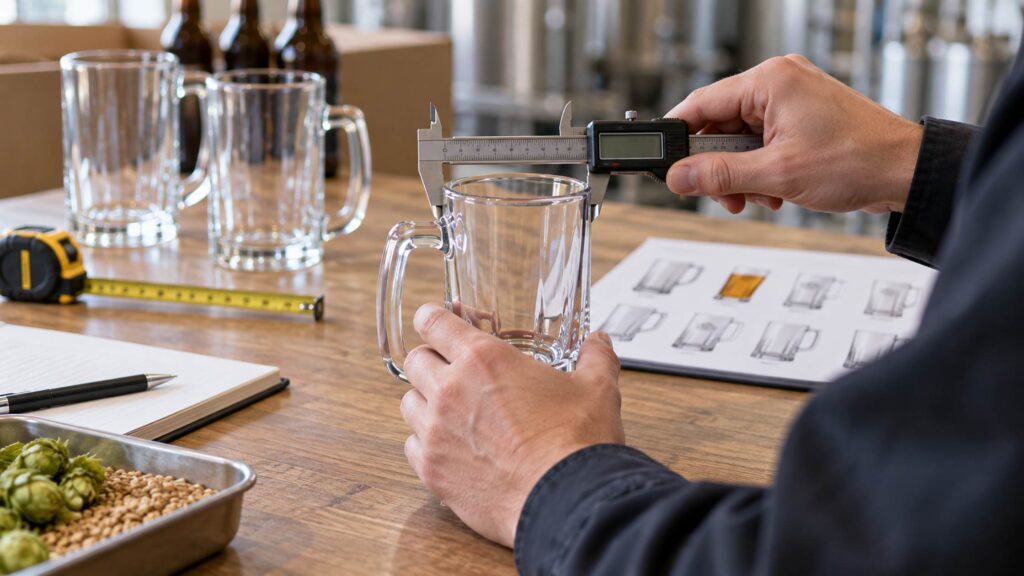
Choose the Right Check for the Question
Quality control can involve several different activities.
| Activity | Main question it answers | What it does not establish alone |
|---|---|---|
| Supplier assessment | Does the supplier have relevant systems and capability? | Whether a particular batch meets the order |
| Sample approval | Is the proposed product acceptable? | Consistency of the whole production run |
| On-site inspection | Do selected goods match agreed requirements? | Every chemical or long-term performance characteristic |
| Laboratory testing | Does the tested sample meet the specified test requirements? | Identity and condition of every shipped unit |
| Loading/dispatch verification | Are the identified goods and quantities being dispatched? | Product compliance without supporting checks |
Testing and inspection providers offer these as distinct services. Select the scope around your concern rather than asking for a general “quality certificate.” QIMA’s promotional-product services.
Check at the Stage When a Problem Can Still Be Corrected
Before production
Confirm materials, artwork, sample approval and test requirements. Resolve ambiguous descriptions such as “rubber/silicone/PVC” before materials are purchased.
Review how the product will be made. If the approved sample was produced differently from the batch, identify what additional check will establish that the production process gives an acceptable result.
During production
Consider an early production check for a new supplier, new construction or demanding artwork. It can identify problems before the full quantity is finished.
For example, check actual printed pieces for artwork orientation and appearance, or examine assembled bag handles before all units are packed. The useful timing depends on the manufacturing sequence.
Before shipment
Agree on inspection readiness: the identified lot should be sufficiently complete and accessible for the planned checks, including packaging. Record any part of the order that is not ready.
A pre-shipment inspection can cover dimensions, appearance, quantities, packing and markings. Supply the inspector with your own order requirements. SGS pre-shipment inspection scope.
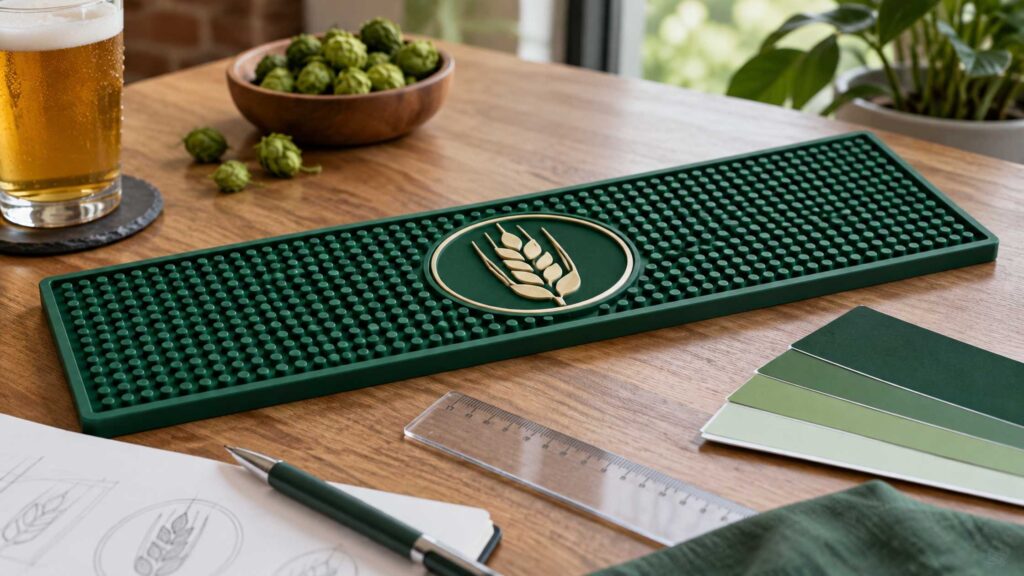
Use a Product-Specific Inspection Checklist
The table below identifies what to check. Test loads, times, temperatures and tolerances must be agreed for the product; they are not universal standards.
| Product | Visual and dimensional checks | Functional checks to define | Packing checks |
|---|---|---|---|
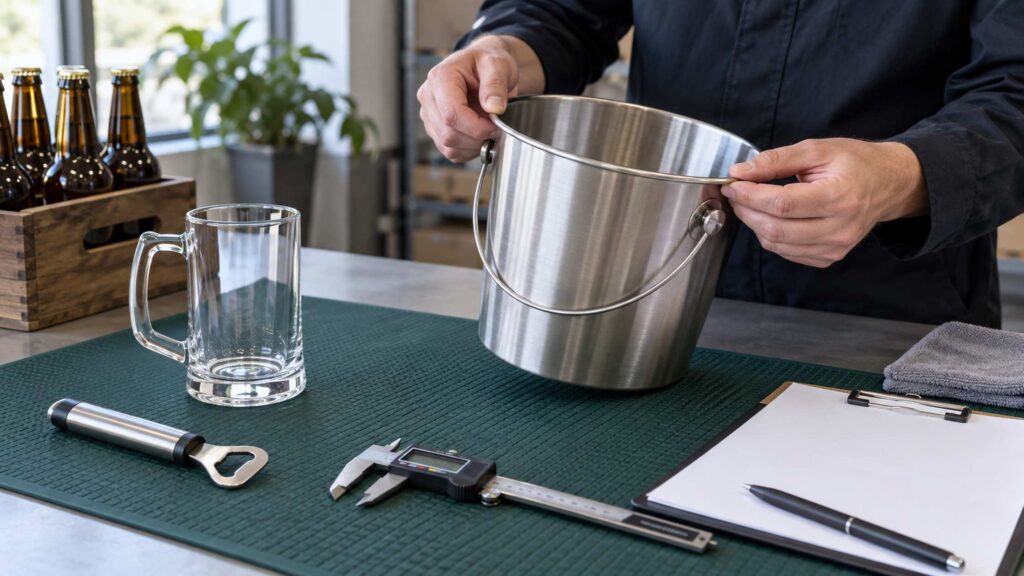
| Beer bucket | Dimensions, finish, seams, rim and handle attachment | Loaded carrying, stability, leakage under specified use | Protection between nested units; resistance to movement and scuffing |
| Bar mat | Material identity, dimensions, flatness and logo detail | Stability on the intended surface; agreed cleaning procedure | No persistent deformation from packing; correct version |
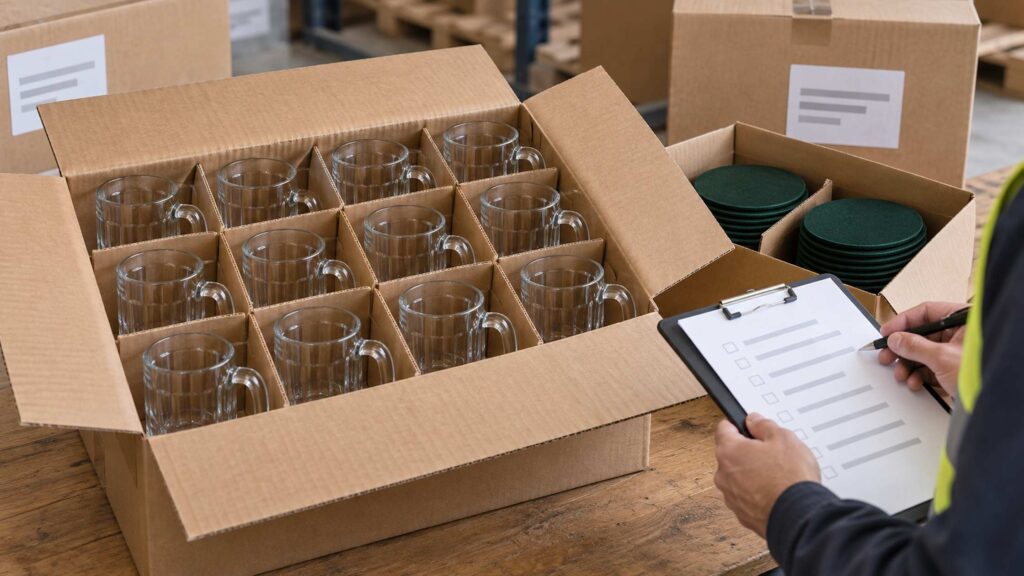
| Beer mug/glass | Rim condition, dimensions, decoration and visible defects | Serving volume, stability and intended cleaning performance | Partitions, protection and separation of pieces |
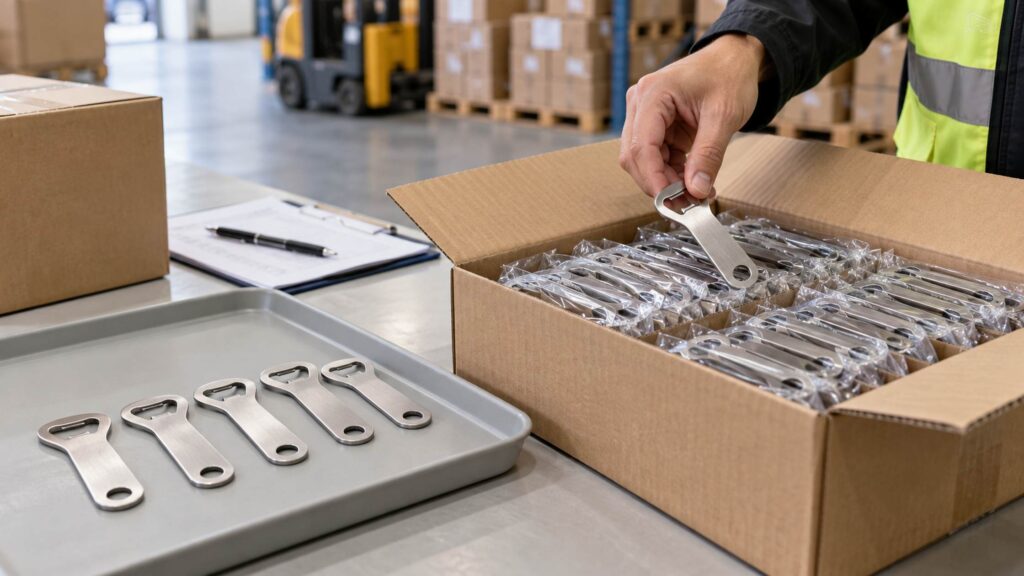
| Bottle opener | Edges, finish, logo and opening geometry | Repeated opening of the specified cap type | Surface protection and pack count |
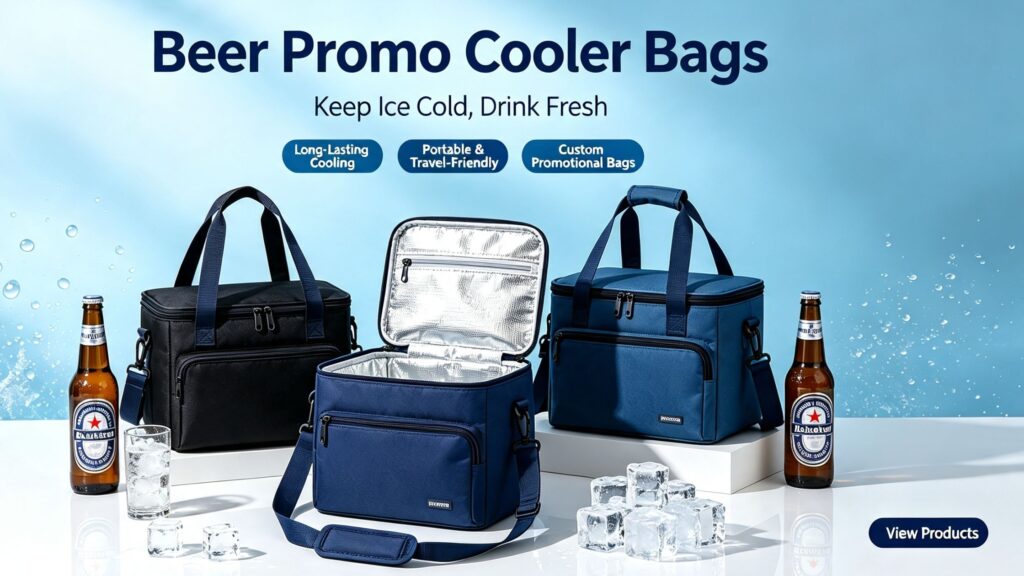
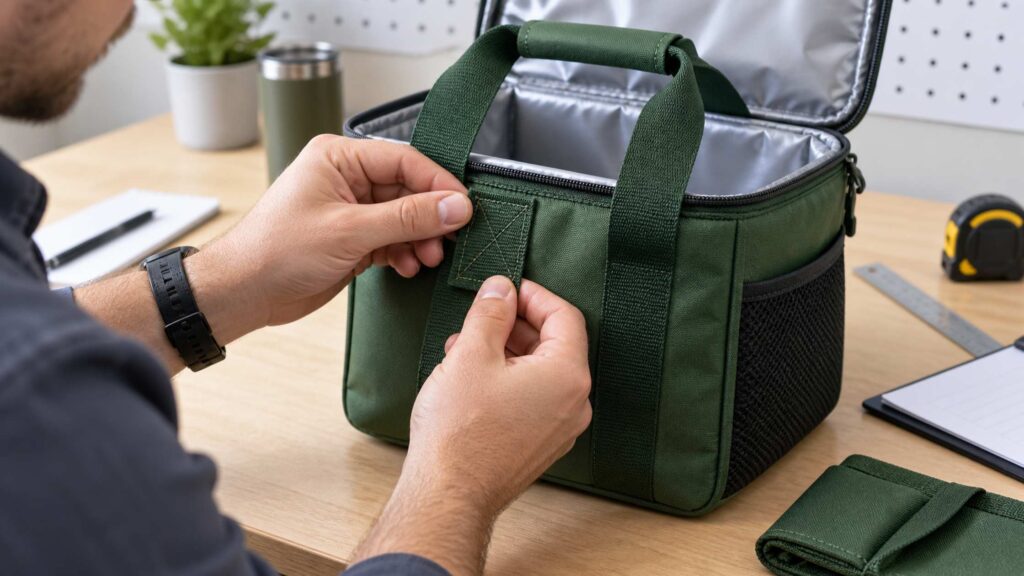
| Cooler bag | Dimensions, stitching, lining, closure and branding | Loading, handle/strap attachment, zipper operation; leakage if claimed | Correct folds, accessories and labels |
| Coaster | Size, thickness, print and surface condition | Moisture handling and print transfer under an agreed procedure | Pack count, edge protection and moisture protection |
For custom beer mugs, specify the difference between the intended serving volume and brimful capacity. For buckets and bags, supply the actual bottle or can dimensions used in the campaign.
Inspect Branding as a Separate Requirement
Artwork identity
Check that the correct brand, regional logo, wording and version appear on the product. Compare against the approved production file, not a supplier’s older sample photo.
For campaigns with several versions, include each version in the inspection plan. A sample of one logo does not establish that the others are correct.
Position and readability
Define where measurements begin. “Logo centered” is less precise than a drawing showing the print area and reference edges.
Assess the logo in normal use: whether the bucket handle obscures it, whether the mat faces the right direction on the counter, or whether a bag seam interrupts essential lettering.
Color
Agree on a physical reference or a defined measurement method. If visual assessment is used, identify the viewing conditions and acceptable reference samples.
For custom bar mats, check the base color and logo colors separately. In mixed kits, review how the items look together as well as whether each meets its own standard.
Decoration durability
Choose a test appropriate to the surface and expected use. Document the rubbing, washing or adhesion procedure, including conditions and acceptance criteria.
Do not substitute an improvised fingernail scratch for an agreed method. A cleaning claim should be assessed using the intended cleaning conditions, not an unrelated quick demonstration.
Verify Material and Compliance Evidence Separately
Visual inspection can reveal some construction differences, but it cannot establish every material property or chemical requirement. Match supplier material records and relevant test documents to the approved product.
For EU food-contact products, the assessment needs to consider applicable framework, manufacturing and material-specific requirements. A change in material or coating may require the documentation to be reviewed again. European Commission food-contact legislation.
Ask the laboratory or responsible specialist whether the selected color and decoration are covered. Do not assume a passing report for an undecorated item resolves every question about a decorated version.
Retain sample identification and batch records so the tested product can be connected to the order. If the supplier proposes a substitute, hold the affected decision until its implications are understood.
Agree on Defect Categories Before Inspection
Defect classification tells the inspector which problems carry greater consequences. Define categories with the inspection provider and your product specialist.
| Example concern | Why it matters | How to treat it in the plan |
|---|---|---|
| A sharp accessible edge that can injure the user | Safety | Define as a safety-critical concern and specify the hold/escalation action |
| Wrong logo or unusable opening function | Campaign or functional failure | Set an explicit rejection rule for the agreed category |
| A small cosmetic variation | Appearance | Define acceptable boundaries and reference examples |
These examples illustrate the classification process; they are not a universal defect list. A cosmetic issue can become commercially serious when it affects a prominent brand mark.
Agree on how multiple defects on one unit are counted. Counting defects and counting nonconforming units are different approaches; the report and sampling plan need to use the same basis.
Understand What AQL Sampling Can—and Cannot—Tell You
AQL means acceptance quality limit. In an agreed acceptance-sampling scheme, selected units are examined and the result is used to make a decision about the lot. ISO 2859-1 describes AQL-indexed schemes for lot-by-lot inspection. ISO 2859-1.
Have the inspection provider document:
- The standard and edition being used.
- What constitutes each inspection lot.
- Lot size and coverage of product versions.
- Inspection level and sampling plan.
- Defect categories and agreed AQLs where applicable.
- Acceptance and rejection numbers.
- Any separate functional or destructive test sampling.
Do not treat “AQL 2.5” as permission to ship exactly 2.5% defective goods or a promise that the actual defect rate is below that figure. Sampling does not examine every unit, and a passing result does not eliminate all risk.
For critical characteristics, discuss whether additional controls or full screening are appropriate. Specify the response to a detected safety issue rather than hiding it inside a general cosmetic sampling rule.
Make the Test Instructions Reproducible
Use a format that lets another person repeat the check:
Item/characteristic: Bucket handle attachment.
Reference: Approved SKU and sample version.
Method: Agreed load, lifting procedure, repetition count and duration.
Acceptance: Agreed limits for detachment, deformation or loss of function.
Record: Sample identifiers, measurements, photographs and result.
Fill in the actual conditions with the supplier and inspection specialist before the inspection. “Check handle strength” alone leaves too much to interpretation.
Use the same structure for leakage, cleaning, zipper operation and carton testing. Distinguish routine factory checks from independent verification.
What to Do When the Goods Fail
Hold shipment release for the affected goods and ask for a corrective-action proposal. It should identify the defect, affected quantity, likely cause, proposed correction and revised readiness date.
Decide whether goods can be reworked, need sorting, or must be replaced. Then verify the corrected lot under an agreed reinspection plan. A photograph of a few repaired units does not establish that the rest of the batch has been corrected.
Do not let replacement samples chosen by the supplier silently substitute for the failed inspection. Record how the reinspection samples are selected and how the corrected goods are identified.
If considering a commercial concession for a non-safety deviation, have the authorized buyer document exactly what is accepted. That decision should not imply acceptance of unrelated defects or unresolved compliance requirements.
Protect the Approved Result Through Dispatch and Receiving
Check carton quantities, SKU allocation, marks and shipping documents against the inspected lot. If packing changes after inspection, assess whether another check is needed.
For mixed-brand campaigns, retain a carton-level allocation list. For fragile or nested products, confirm the approved protection remains in place.
At destination, record carton condition, inspect promptly and keep batch references. Feed recurring defects back into the next specification or inspection plan. A useful QC system improves with actual receiving and venue feedback.
Frequently Asked Questions
Who should pay for inspection?
Agree this commercially before ordering. Also specify who pays for reinspection following a failure. Payment responsibility should not leave the supplier as the only party deciding whether its own goods pass.
Can the factory choose the inspection samples?
For an independent random inspection, agree that the inspector selects samples from the accessible lot. Supplier-selected presentation samples answer a different question and should be identified as such.
Do low-value giveaways need quality checks?
Set the scope according to risk, intended use and brand requirements. A low unit price does not make sharp edges, incorrect branding or missing components acceptable. Keep the checks proportionate and product-specific.
Is one inspection enough for a repeat supplier?
Review the supplier’s history, product changes and order risk. Stable repeat items may need a different plan from a new material or new design. Keep the decision evidence-based rather than assuming every repeat order is identical.
Put Your Acceptance Standard in Place Early
Effective QC gives the supplier a clear target and gives the buyer a documented release decision. Start with the approved specification, choose the checks that answer real risks, and resolve failures before dispatch.
Discuss your beer-merchandise requirements with BeerPromoPro. Share the product list, intended use, market and any brand-specific acceptance rules so sampling and inspection requirements can be considered before production.