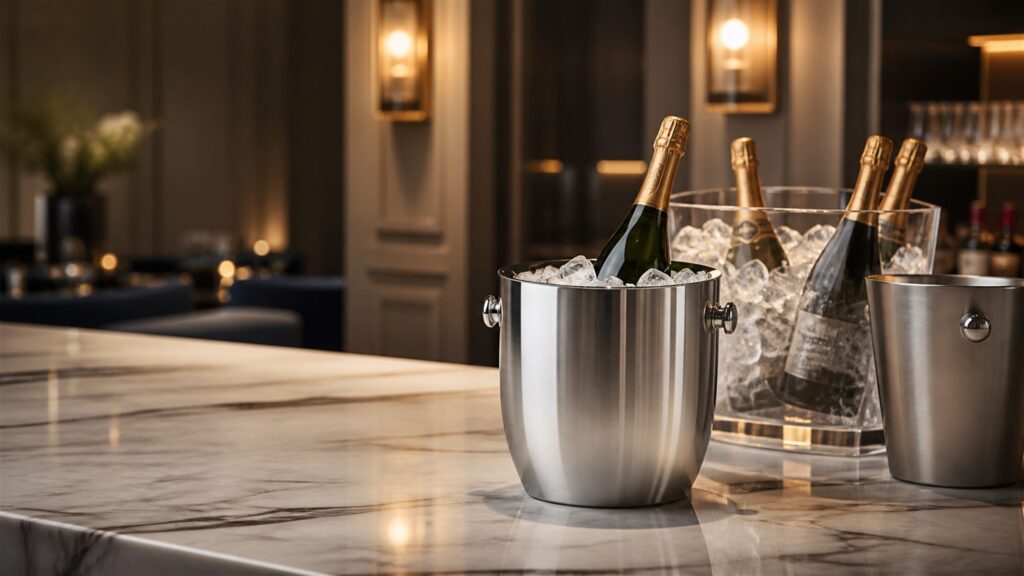
Champagne ice buckets—also called champagne coolers, wine buckets, or bottle chillers—hold ice and water around a bottle to chill it and keep it cold during service. They may look like a simple barware item, but for a wholesale buyer, the right choice affects presentation, breakage risk, freight cost, cleaning, and the kind of customer you can sell to.
This guide helps importers, hotel and restaurant buyers, event-rental businesses, retailers, and promotional-product brands choose the right configuration before placing an order. The practical question is not simply “which bucket looks best?” It is whether the bucket fits the bottle format, service style, target price level, and packaging requirements of your channel.
What is a champagne ice bucket?
A champagne ice bucket is a vessel sized to surround one or more sparkling-wine bottles with ice, usually with some water for close contact around the bottle. It is different from a small tabletop ice bucket for serving loose ice: a champagne bucket needs enough opening width and depth for a bottle plus the chilling medium.
For B2B buyers, the category overlaps with wine coolers and beverage tubs. Some retailers list champagne and ice buckets together, while foodservice catalogues also offer stand-mounted buckets and larger tubs. That overlap creates an opportunity to build a coordinated range—but it also means product names alone are not enough. Ask for the usable internal dimensions, not just an external diameter or a marketing capacity claim.
Main types of champagne ice buckets
Single-bottle tabletop buckets
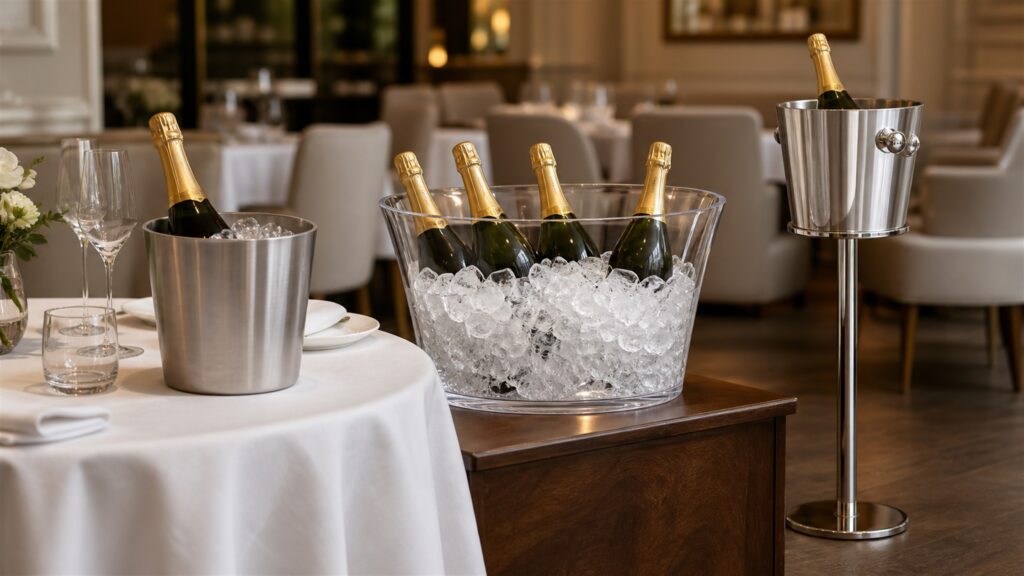
This is the core SKU for restaurants, hotels, wineries, gifting, and home-entertaining retail. A tapered round or oval form is common. Look for a stable base, a smooth rolled rim, and handles that stay secure when the bucket is filled.
Single-bottle buckets are easy to merchandise and pack, but the bottle format matters. Confirm fit with the sparkling-wine bottles your customer actually uses; a wider Champagne-style bottle and a tall Prosecco-style bottle can create different clearance needs.
Multi-bottle champagne coolers and beverage tubs
Large oval, rectangular, or round coolers can serve several bottles at an event, bar, hotel buffet, or outdoor party. Clear acrylic and metal tubs are common options. Their larger display area can help an event supplier or retailer create a higher-ticket assortment, but extra volume increases cube, carton, and freight requirements.
Buyers should specify the intended bottle count with ice, not simply the maximum number of empty bottles that can be placed inside. For a multi-bottle item, test access: staff must be able to retrieve one bottle without disturbing the rest.
Buckets with stands or table brackets
Floor stands keep chilled bottles off a crowded table; table-edge brackets provide similar space-saving benefits. These styles suit restaurants, banquet service, and hospitality projects. They add parts, assembly, and stability checks, so they should be packed and inspected as a system—not just as a bucket plus an accessory.
Insulated, decorative, and LED styles
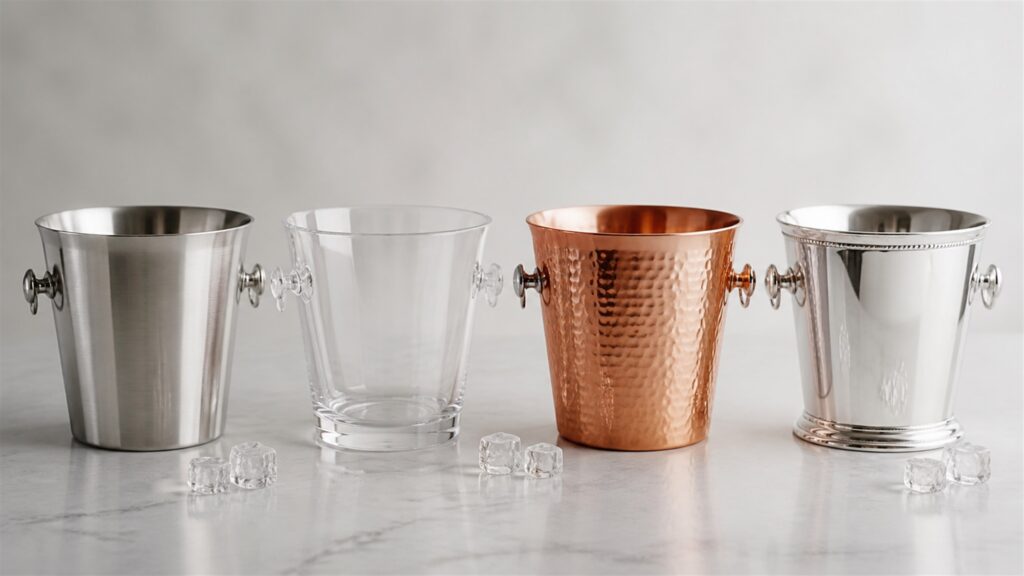
Double-wall metal buckets can reduce exterior condensation compared with a simple single-wall design. Decorative finishes such as hammered metal, copper tone, antique brass, or silver plate can support a premium gift or event position, though they need finish-consistency and care-instruction checks. LED acrylic buckets target bars, clubs, and promotional events; batteries, electronics, charging components, and destination-market requirements make them a separate sourcing project from a non-electric bucket.

Choosing the right material
Stainless steel
Stainless steel is a practical option for hospitality and mainstream retail because it is durable, easy to clean, and available in brushed, mirror, hammered, painted, or plated-looking finishes. A double-wall construction can be useful where condensation control and a more premium feel matter. Ask the supplier to identify the material grade, wall construction, finish process, and care guidance; do not assume these details from product photos.
Acrylic or polycarbonate
Transparent plastic coolers are lightweight and visually let bottles and ice do the selling. They are especially relevant for events, poolside environments, promotions, and multi-bottle displays. Confirm the resin type, wall thickness, impact resistance, edge finishing, and whether the intended use involves direct food contact or only sealed bottles and ice. Clear items also show scratches readily, so protective film and individual packing matter.
Copper-, brass-, silver-, and plated-metal looks
These finishes can create a premium, vintage, or wedding-oriented appearance. The trade-off is maintenance and finish durability. Request sample testing for staining, fingerprints, coating adhesion, and cleaning compatibility. If the item has a lacquer, plating, paint, or decorative inner coating, obtain material documentation for the actual intended conditions of use.
Glass, crystal, ceramic, and wood-accented designs
These designs suit gift-led or luxury channels, but they are usually less forgiving in commercial service and more demanding to ship. A wooden outer body should normally use a suitable inner liner rather than hold ice directly. For fragile options, build the protective packaging into the product brief from the beginning.
Key specifications to put on your RFQ
A usable request-for-quotation sheet prevents suppliers from quoting visually similar but operationally different products. Include:
- Intended bottle format and desired bottle count with ice
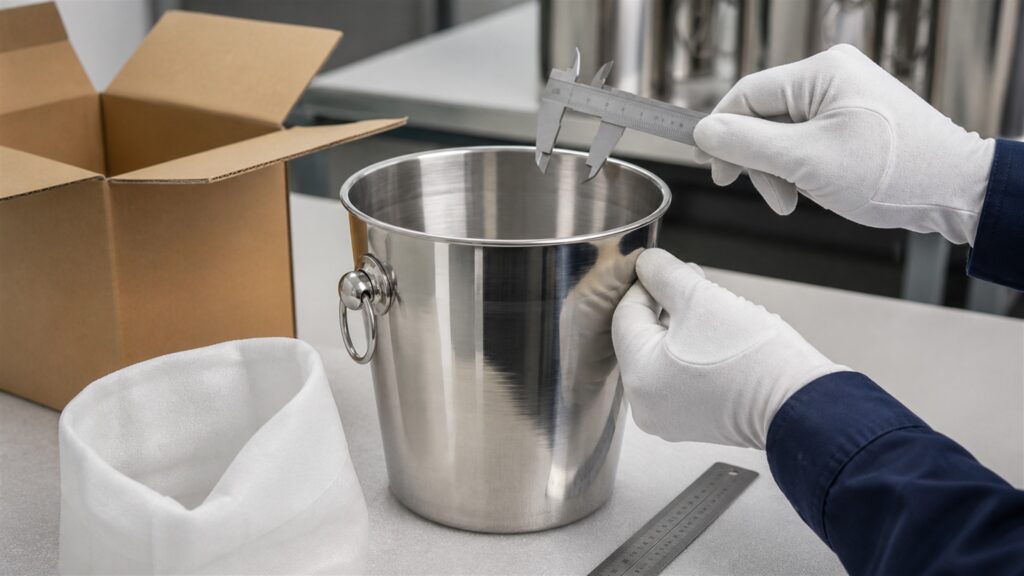
- Internal opening, internal depth, external dimensions, and net weight
- Material grade or resin, wall thickness, and single- or double-wall construction
- Finish: brushed, mirror, hammered, plated, powder-coated, clear, frosted, or colored
- Handle type, attachment method, and loaded-handle test requirement
- Base design, anti-slip protection, and stand/bracket specifications where applicable
- Accessories: tongs, lid, drip tray, stand, liner, or bottle divider
- Unit packaging, master-carton dimensions, drop-test expectation, and shipping marks
Photos can hide sharp edges, uneven rims, weak handle fittings, thin walls, and an unstable base. Approve a physical sample before confirming production, particularly for a new mold, a custom color, or a decorative finish.
Where champagne ice buckets sell best
The same product can be positioned very differently by channel:
| Channel | Good product direction | Commercial consideration |
|---|---|---|
| Restaurants and hotels | Durable metal, single-bottle buckets, stands | Easy cleaning and repeatable service matter more than gift packaging. |
| Event rental and catering | Acrylic tubs, multi-bottle coolers, stands | Low breakage risk, storage, and quick reset are important. |
| Retail and ecommerce | Styled metal, gift sets, compact single-bottle styles | Unboxing, photo appeal, and parcel protection influence returns. |
| Wineries and beverage promotions | Branded metal or clear plastic, display tubs | A visible logo area and a suitable bottle fit are essential. |
| Bars and clubs | Acrylic or LED display styles | Treat lighting/electrical specifications and local requirements separately. |
Retail listings show the category spans entry-level barware through luxury gifting, so it is usually better to build a clear price ladder than to compete with one generic bucket. A simple brushed-steel hospitality SKU, a display-oriented clear tub, and a premium personalized style can serve distinct buyers without confusing the range.
Customization options that make sense
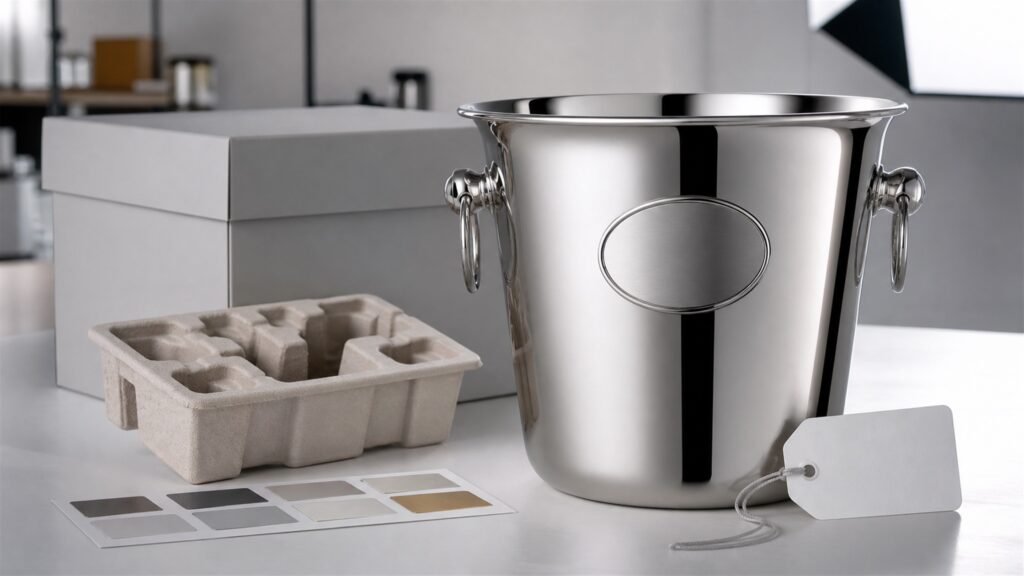
Branding should fit the material and purchase volume. Common options include laser engraving or etching on metal, screen printing or UV printing on suitable plastic, debossed logo plaques, custom colors, special finishes, and retail gift boxes. For a beverage brand, a detachable plaque or neutral base can sometimes make a standard bucket adaptable to several campaigns.
Ask where the artwork will go and request a digital proof showing its size, contrast, and placement. A large dark logo may work on a clear acrylic tub but be difficult to read on a reflective mirror finish. For engraved metal, confirm whether the logo will remain visible after normal handling and cleaning.
Quality-control and packaging checklist
Before shipment, inspect samples and production units for the following:
- Smooth rim and interior with no sharp edges, burrs, pinholes, or exposed weld marks
- Even shape and stable base on a flat surface
- Handles aligned, secure, and tested under an agreed filled-load condition
- Consistent color, plating, polish, hammering, and logo placement across the lot
- No cracks, haze, deep scratches, or stress marks on acrylic items
- Accurate accessory count and correct stand/bracket fit
- Protective bags, foam, molded pulp, or dividers that prevent metal-on-metal abrasion and breakage
- Master cartons that protect the loaded product through the shipping route you actually plan to use
For any claim about insulation, ice retention, corrosion resistance, dishwasher safety, or food contact, define the test method and acceptance criteria in writing. These are configuration-specific claims, not promises that automatically apply to every champagne bucket.
Food-contact and compliance checks
An ice bucket can involve food-contact questions if ice, water, garnish, or beverages may contact its internal surface. Requirements depend on the destination market, material, coating, colorant, and intended conditions of use. In the EU, the framework for food-contact materials requires materials not to transfer constituents at levels harmful to health or unacceptably change food’s composition, taste, or odor. In the US, FDA evaluates food-contact substances according to their identity, intended use, and conditions of use.
Do not treat a marketplace “FDA” or “LFGB” badge as sufficient evidence. Ask the supplier for SKU-specific material details and applicable test reports or declarations, then have your importer, compliance team, or destination-market adviser confirm relevance. This is especially important for acrylic, coatings, plated finishes, colorants, and any product sold with a food-contact claim.
How to source champagne ice buckets from China
Start with a short list of suppliers that can make the material and finish you need, then compare like with like. Send the same RFQ specification to each supplier, request a sample, and review the sample against your approved dimensions, finish, logo, packaging, and loaded stability requirements.
For mixed-SKU orders, ask early whether colors, finishes, or sizes can share production or carton quantities. Confirm lead time after artwork and sample approval rather than relying on a catalogue estimate. A pre-shipment inspection can focus on the defects that matter most here: handle strength, rim quality, finish consistency, acrylic clarity, logo accuracy, accessory count, and carton protection.
If you are building a coordinated barware range, consolidation can reduce complexity by combining compatible champagne buckets, ice buckets, tongs, trays, and related promotional products into a single quality-control and shipping plan.
FAQs
What size champagne ice bucket should I buy wholesale?
Choose based on the actual bottle formats and bottle count you will sell or serve. Ask for internal dimensions and test with representative bottles plus ice; exterior size alone does not confirm a practical fit.
Is stainless steel or acrylic better for champagne ice buckets?
Stainless steel generally suits durable hospitality and premium retail positioning. Acrylic is lighter and useful for display-led, multi-bottle, or lower-breakage environments. Select based on service conditions, visual style, freight, and packaging—not only unit cost.
Can I put my logo on a champagne bucket?
Usually, yes. Suitable options depend on the material and finish. Approve artwork placement and a physical sample so you can assess legibility, adhesion or engraving quality, and appearance after handling.
Do champagne ice buckets need food-contact certification?
There is no universal one-document answer. If the bucket is intended to contact ice, water, garnish, or beverages, verify the relevant material and intended-use requirements for the destination market with SKU-specific documentation and qualified advice.
Final thought
The best champagne ice bucket is the one that matches your service format and commercial position: a durable stainless-steel single-bottle bucket for hospitality, a clear multi-bottle tub for events, or a custom-finished piece for a branded promotion. Define the bottle fit, material, finish, packaging, and verification requirements before you compare quotes. That turns a decorative barware purchase into a repeatable sourcing program.