The most useful questions to ask promotional product suppliers in China cover exact specifications, MOQ, sample approval, production timing, quality checks and delivery responsibility. Ask for evidence and written terms alongside each answer. For beer brands and agencies, “yes, we can” is only the beginning of a procurement conversation.
Use the questions below in stages. Start with product fit, then investigate the details before paying for samples or approving an order. This keeps the first inquiry manageable while protecting the decisions that follow.
Give the Supplier Enough Information to Answer
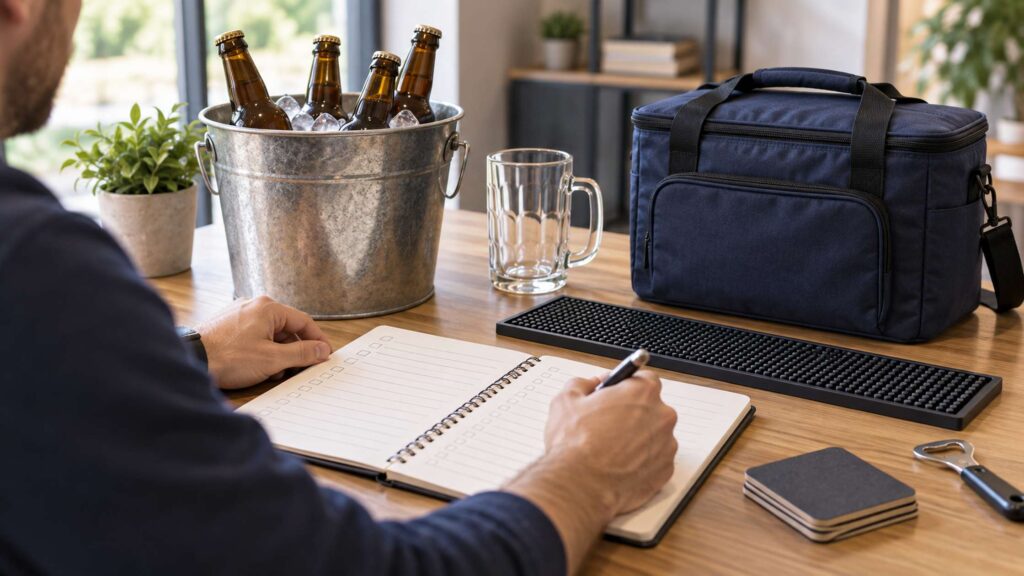
Send your product list, quantities per design, destination, intended use, artwork and required arrival date. If a detail is undecided, say so and ask for separately priced options.
For example, “a beer bucket with our logo” leaves material, size and decoration open. “A bucket for six specified bottles plus ice, with two logo positions and delivery to our warehouse” gives the supplier a practical task to assess.
You do not need to know every manufacturing detail. You do need to describe the result your campaign requires.
First Inquiry: Establish Product Fit and Comparable Pricing
1. Which product construction do you recommend for our intended use, and why?
Ask the supplier to connect its recommendation to the application. A reusable bar-service item needs a different discussion from a one-event giveaway.
Look for: a proposed material, dimensions, construction and explanation of trade-offs. Ask the supplier to list assumptions so they do not become hidden specifications.
2. Which processes do you perform, and which are subcontracted?
A company may coordinate several factories for a mixed merchandise order. You need to know who controls the work and resolves problems.
Look for: an explanation of the relevant processes and the party responsible for final quality. “Everything is factory direct” does not explain how a bucket, bag and printed coaster are produced.
3. What is the MOQ per product, color, logo and packaging version?
MOQ means minimum order quantity, but the total order may not be the relevant unit. Six logos can mean six decoration runs.
Look for: a breakdown that distinguishes the base product from each customization. Ask whether a smaller run is possible at a different setup charge or unit price.
4. What exactly is included in the quoted price?
Request separate lines for product, decoration, tooling, samples, packaging and shipping scope. Identify the currency and quotation-validity period.
Look for: a quote you can compare with another supplier without guessing whether the same work is included.
5. What information is missing before you can confirm the price?
A preliminary price may be reasonable when the design is incomplete. The problem is treating that price as final.
Look for: a short list of unresolved inputs, such as final print size, material, carton format or quantity split. Record when the quote will be revised.
6. Can you meet our required arrival date, and what must we approve by when?
State the warehouse or venue deadline. Ask whether the answer includes sampling, production, inspection, international transport and local delivery.
Look for: dated milestones and approval conditions. A production duration alone does not establish delivery feasibility.
Before Sampling: Define What You Will Approve
7. Is this a stock sample or a custom pre-production sample?
A stock sample helps assess general construction. A custom sample should represent the agreed product and decoration, subject to any disclosed differences.
Look for: a written description of what the sample includes and what will change in bulk production.
8. Which logo method suits our artwork and cleaning routine?
Supply vector artwork and the intended use. Ask about fine lines, gradients, curved surfaces and repeated cleaning.
Look for: a process recommendation and an explanation of artwork limits. For example, custom bar mats may use molded relief or a printed surface depending on the design and construction.
9. How will we approve color across different materials?
A single color reference may look different on a metal bucket, fabric bag and molded mat.
Look for: physical references or a defined measurement approach, agreed viewing conditions and separate approval of the items as a coordinated set.
10. Which dimensions and performance requirements will be measured?
Identify what matters in use: usable drink volume, actual bottle fit, handle loading, flatness or cleaning performance.
Look for: measurement points, units, test conditions and acceptance criteria. Avoid approving descriptions such as “large size” or “strong handle.”
11. What product documents cover this exact version and destination?
Provide the market and intended use before asking for reports. Check material, coating, decoration and model identification against the proposed item.
Look for: evidence relevant to the product rather than a folder of unrelated certificates. Food-contact drinkware, for example, needs assessment against the applicable material and use requirements. European Commission food-contact guidance.
12. What does the sample charge cover, and is any part credited later?
Ask separately about artwork setup, tooling, sample production, shipping and revisions.
Look for: any credit conditions in writing, including order quantity or deadline. Do not assume a sample payment is automatically refundable.
Before Ordering: Agree on Control and Responsibility
13. Which company signs the order and receives payment?
Request the registered business name and clarify the relationship if an export entity handles payment for a factory.
Look for: a coherent contracting and payment arrangement. Resolve mismatches before sending funds.
14. What starts the production clock?
The supplier may require the deposit, artwork, approved sample and material confirmation before production can begin.
Look for: a specific list of start conditions and whether the quoted duration uses working or calendar days. Ask whether material procurement is included.
15. What changes require our written approval?
List material, color, decoration, dimensions, factory, component and packaging changes.
Look for: an agreed change-control process, including the effect of a change on testing, price and delivery. A substitute should be presented as a decision, not discovered at receiving.
16. What inspection plan will apply to our order?
Ask what will be checked, when it will be checked, who selects samples and which documents define acceptance.
Look for: a product-specific checklist and inspection readiness criteria. Inspection providers distinguish on-site product checks from laboratory testing and supplier audits; ask for the service that answers your actual concern. QIMA promotional-product QC services.
17. What happens if the batch fails inspection?
Discuss correction, sorting, replacement, reinspection and shipment release before a failure occurs.
Look for: who pays, who approves the corrective action and how revised timing will be communicated. “We will solve it” leaves the practical decisions unanswered.
18. How will the products be packed and identified?
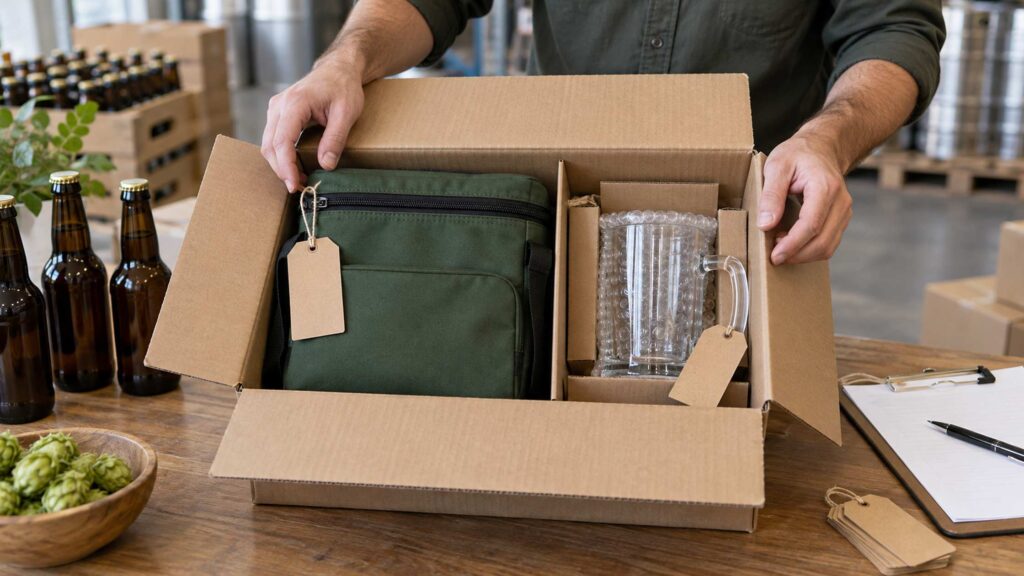
Ask for inner-pack and carton quantities, protective materials, dimensions, gross weights and carton marks. For multi-brand orders, request the version allocation.
Look for: a packing specification your warehouse can use. If the supplier changes pack quantities, require an updated allocation list.
19. Which delivery term and location does the quote cover?
Ask for the Incoterm, named place and version, plus the handling of excluded charges.
Look for: a clear import arrangement. DAP and DDP allocate import-clearance responsibility differently, so “shipping included” is not enough. ICC’s DAP/DDP guidance.
20. Who owns the molds and artwork, and how are they stored?
Tooling payments and intellectual-property permissions should be explicit. Ask whether the supplier may use your assets for other orders or show the project publicly.
Look for: written ownership and permitted-use terms, storage arrangements and the conditions for future use or transfer.
21. How will shortages, transit damage and product defects be handled?
These may involve different responsible parties. Agree on evidence requirements, notification deadlines and available remedies.
Look for: practical terms covering replacement freight and timing. Replacements arriving after the campaign may not resolve the commercial problem.
22. What will you retain to keep reorders consistent?
Ask about approved samples, artwork versions, material specifications and packaging records.
Look for: a reference system and notification of changed materials, tooling or production arrangements before the next order.

Judge the Quality of the Answer
Use three categories when comparing replies:
| Status | Meaning | Your next action |
|---|---|---|
| Confirmed | Specific answer supported by a quote, specification, sample or relevant record | Add it to the order file |
| Conditional | Feasible if identified conditions are met | Assign an owner and deadline to resolve them |
| Unresolved | Vague, contradictory or missing answer | Follow up before the dependent decision |
For a hypothetical example, compare these replies to a bucket inquiry:
“Good quality, delivery 30 days.”
“We propose the attached construction. Timing starts after the sample and deposit are approved; freight is quoted separately. Please confirm the bottle dimensions before we finalize the sample.”
The second reply still needs verification, but it identifies what is being offered and what remains open. That makes it usable for planning.
Copy This Short First-Inquiry Email
Subject: Custom Beer Merchandise — Capability and Quotation Request
We are planning [campaign] for [country] and need [products and quantities per design] by [warehouse arrival date]. Attached are our reference images, intended use and available artwork.
Please confirm:
- Your recommended construction and any assumptions.
- MOQ per product, color, logo and packaging version.
- Unit price and separate setup, sample and packing charges.
- Stock/custom sample options and the differences from bulk production.
- Production start conditions and a proposed delivery schedule.
- Manufacturing responsibilities and available product documentation.
Please highlight requirements you cannot meet and identify any additional information needed for a firm quote.
Frequently Asked Questions
Should I send all 22 questions in the first email?
Usually, start with the questions needed to establish fit. Send the sample and order-stage questions as the specification develops. For a formal procurement exercise, you can send the full questionnaire with a clear response deadline and supporting brief.
What if the supplier cannot share a customer’s inspection report?
Ask for a redacted example, a blank report format or another way to demonstrate the process. Confidentiality is reasonable; the supplier should still be able to explain how your order would be checked.
Can I accept answers given during a call?
Use the call to resolve details, then summarize the decisions in writing and ask the supplier to confirm them. Keep the approved version with the purchase order so later staff changes do not erase the agreement.
Turn Answers into an Order You Can Review
The purpose of these questions is to create clear decisions, not a large email archive. Move confirmed answers into the specification, quotation and order terms; keep unresolved issues visible until they are settled.
Send your requirements to BeerPromoPro with the questions relevant to your campaign. Product type, quantity per design, destination and deadline will help make the first reply specific.